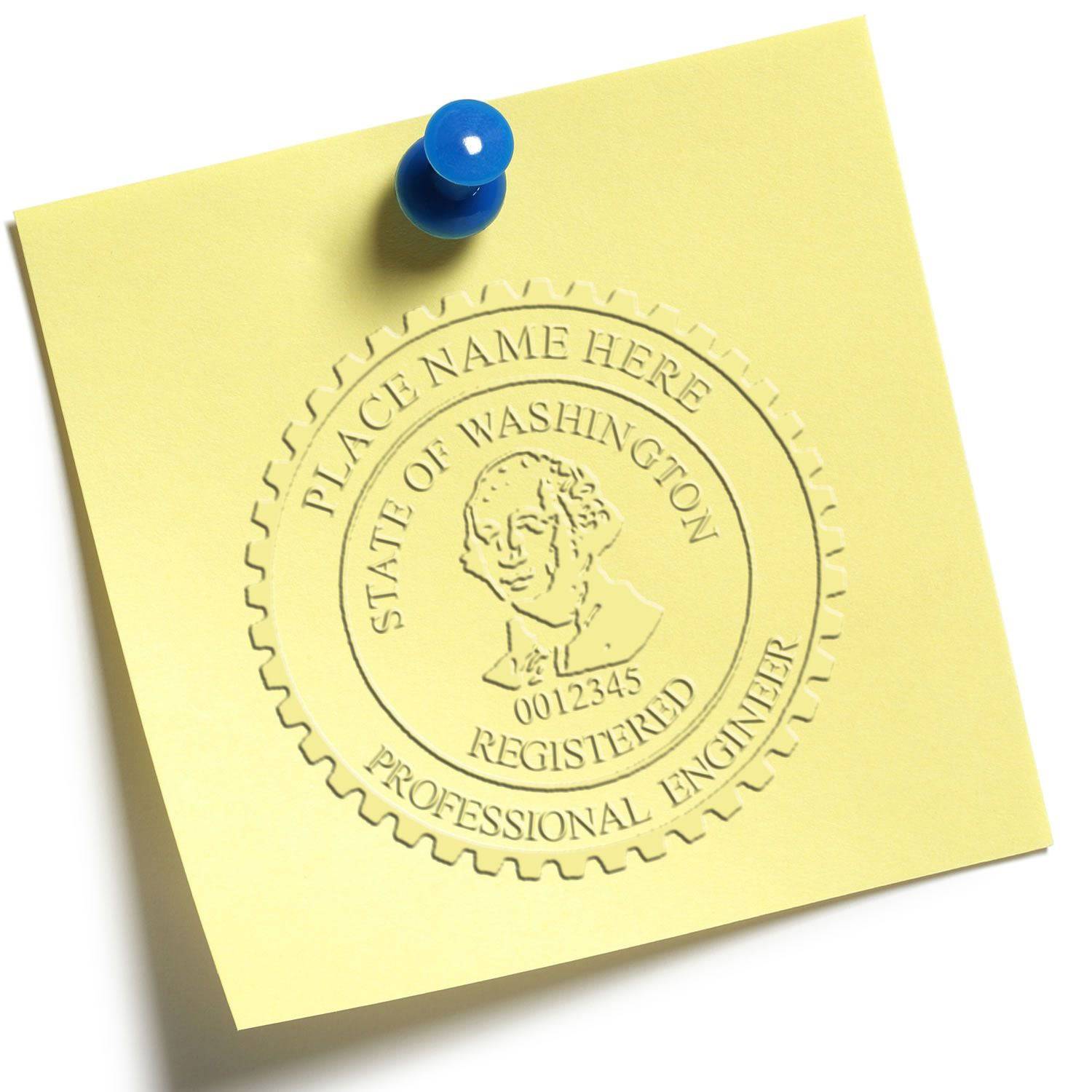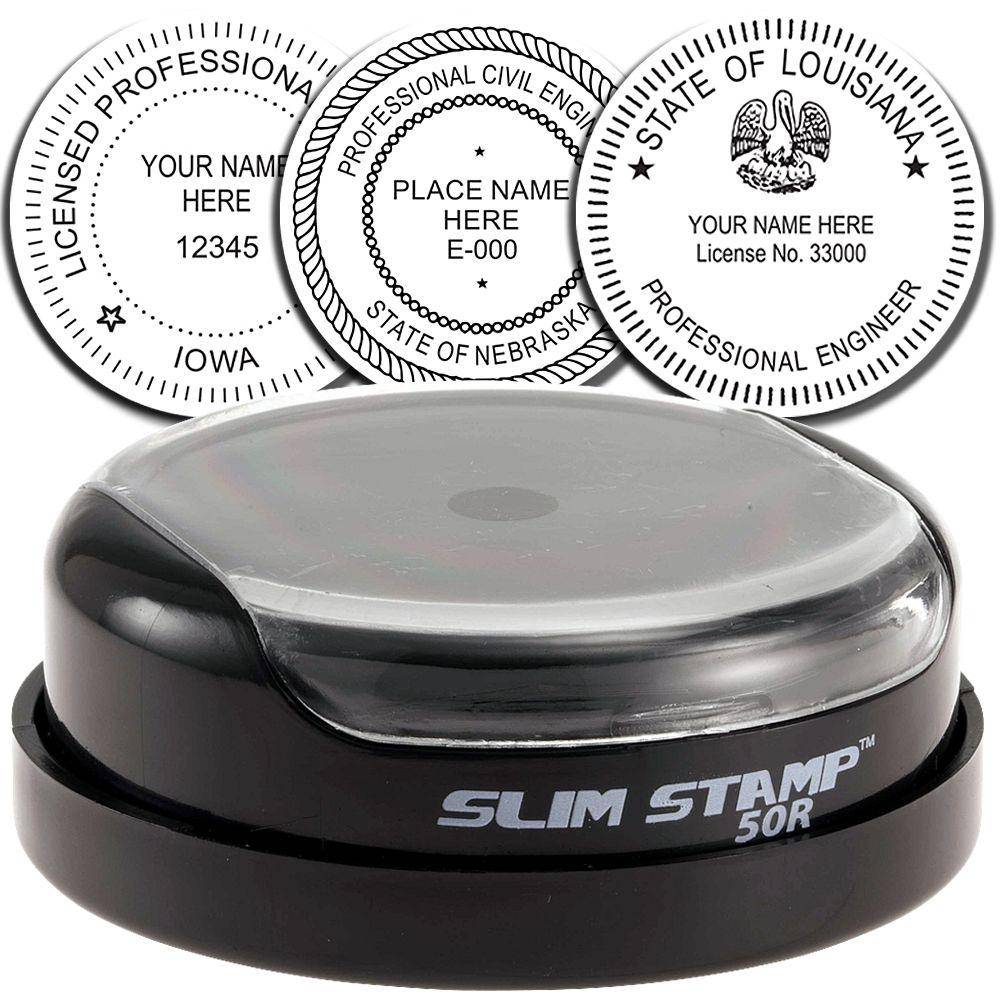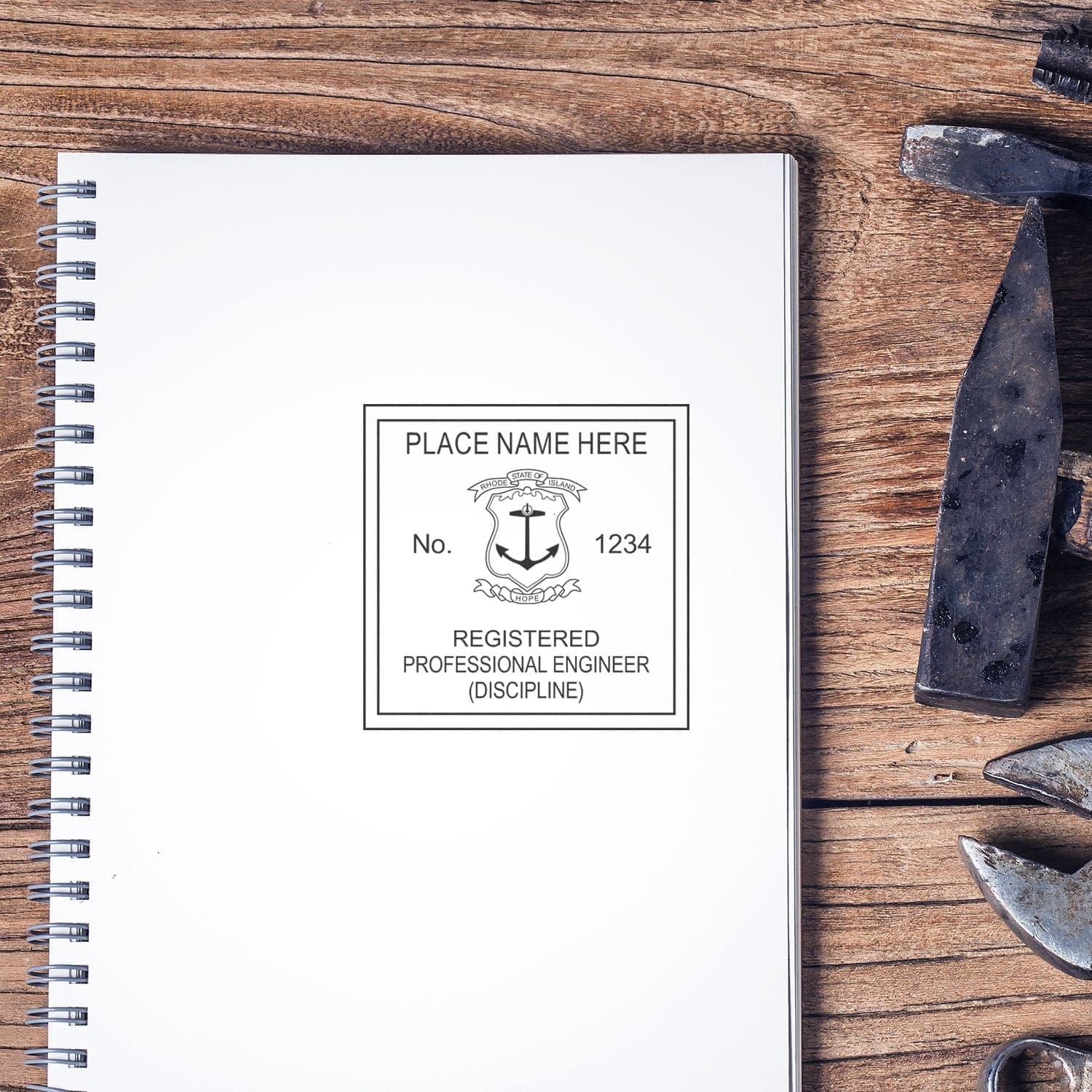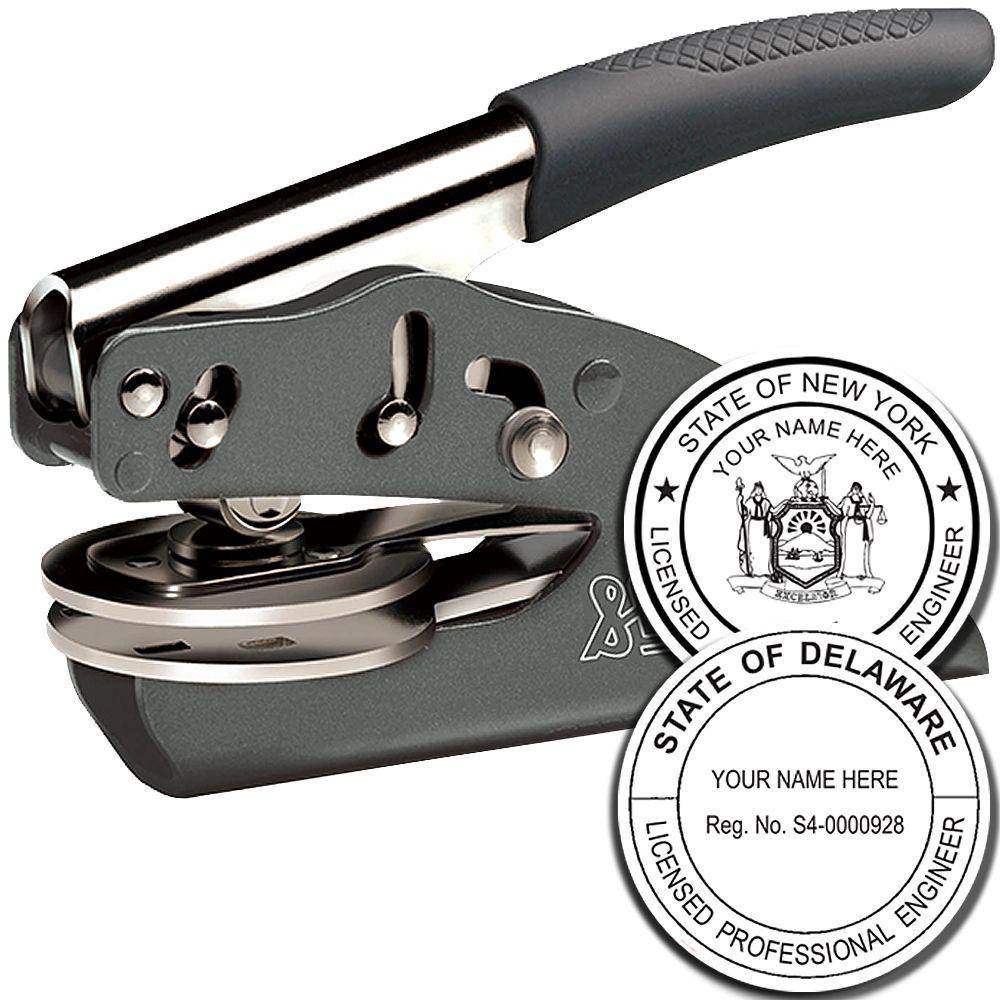

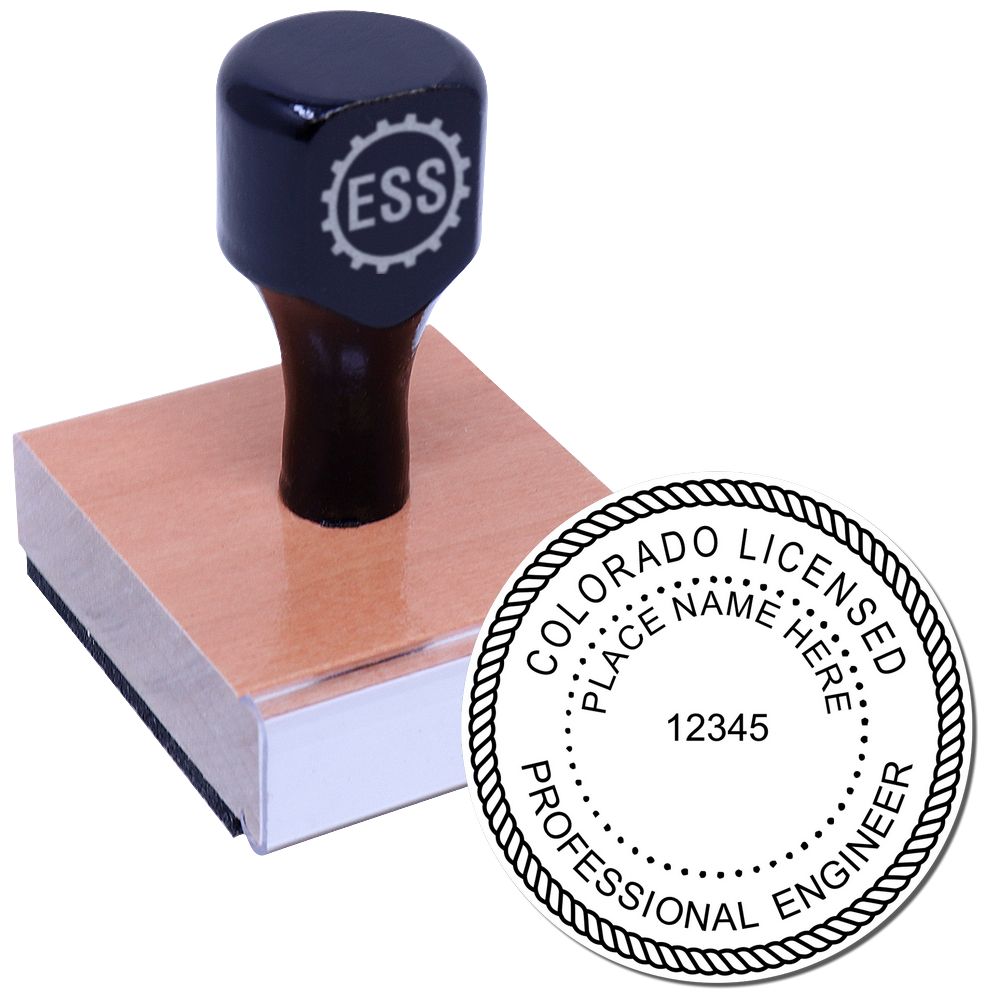
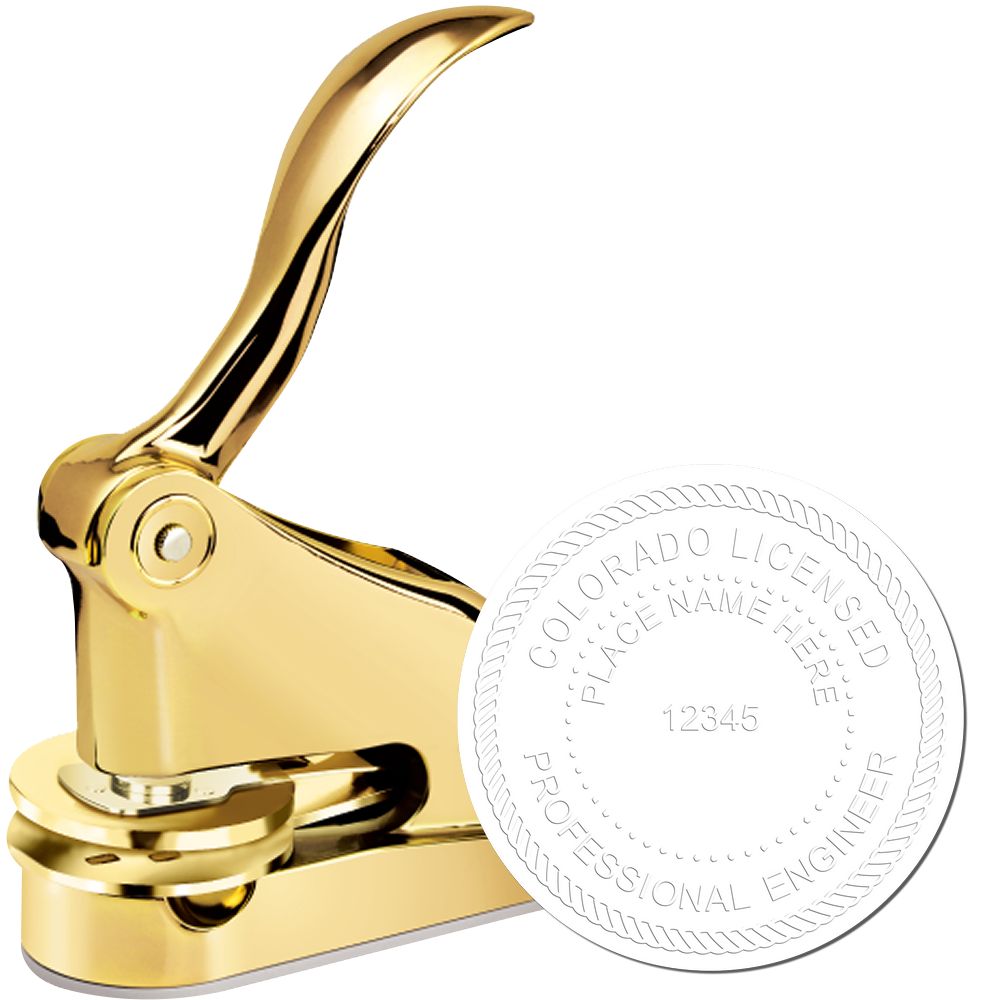
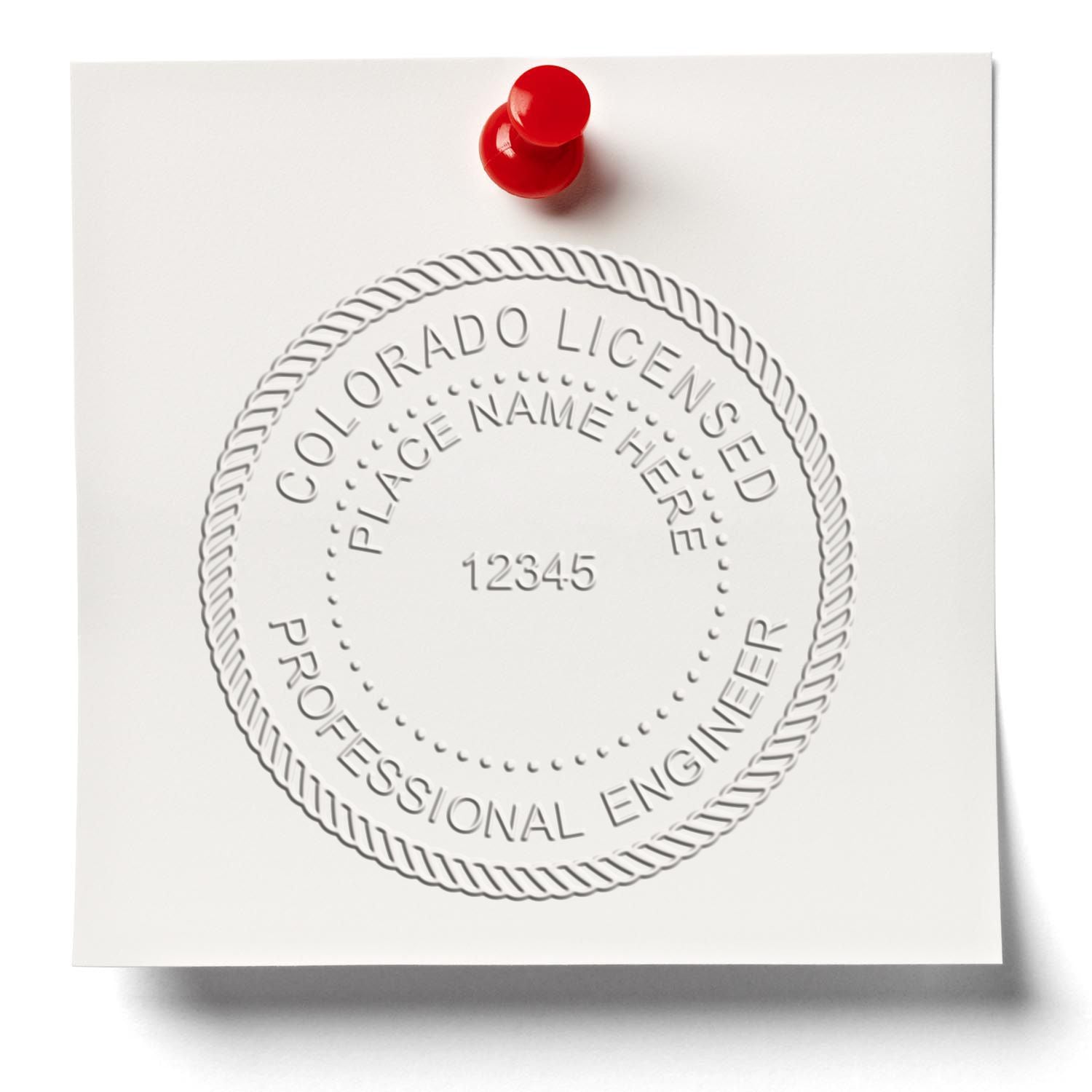
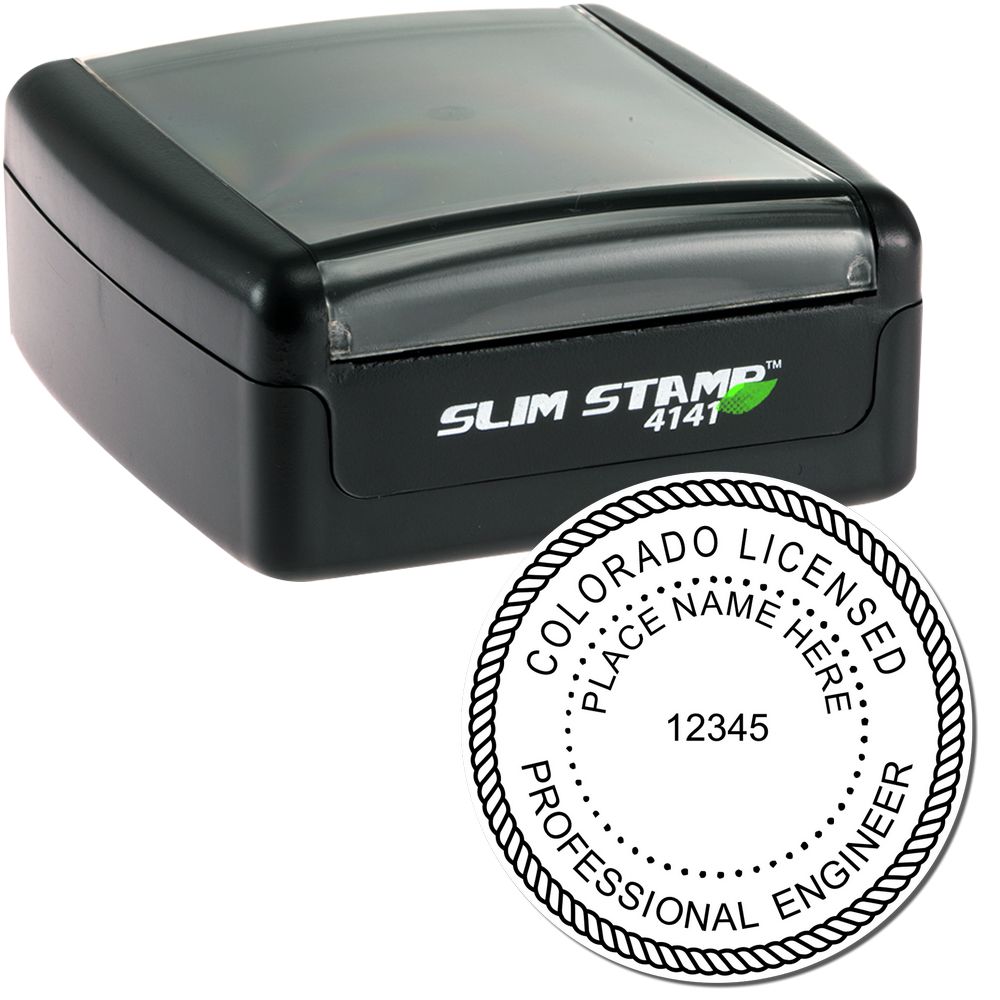
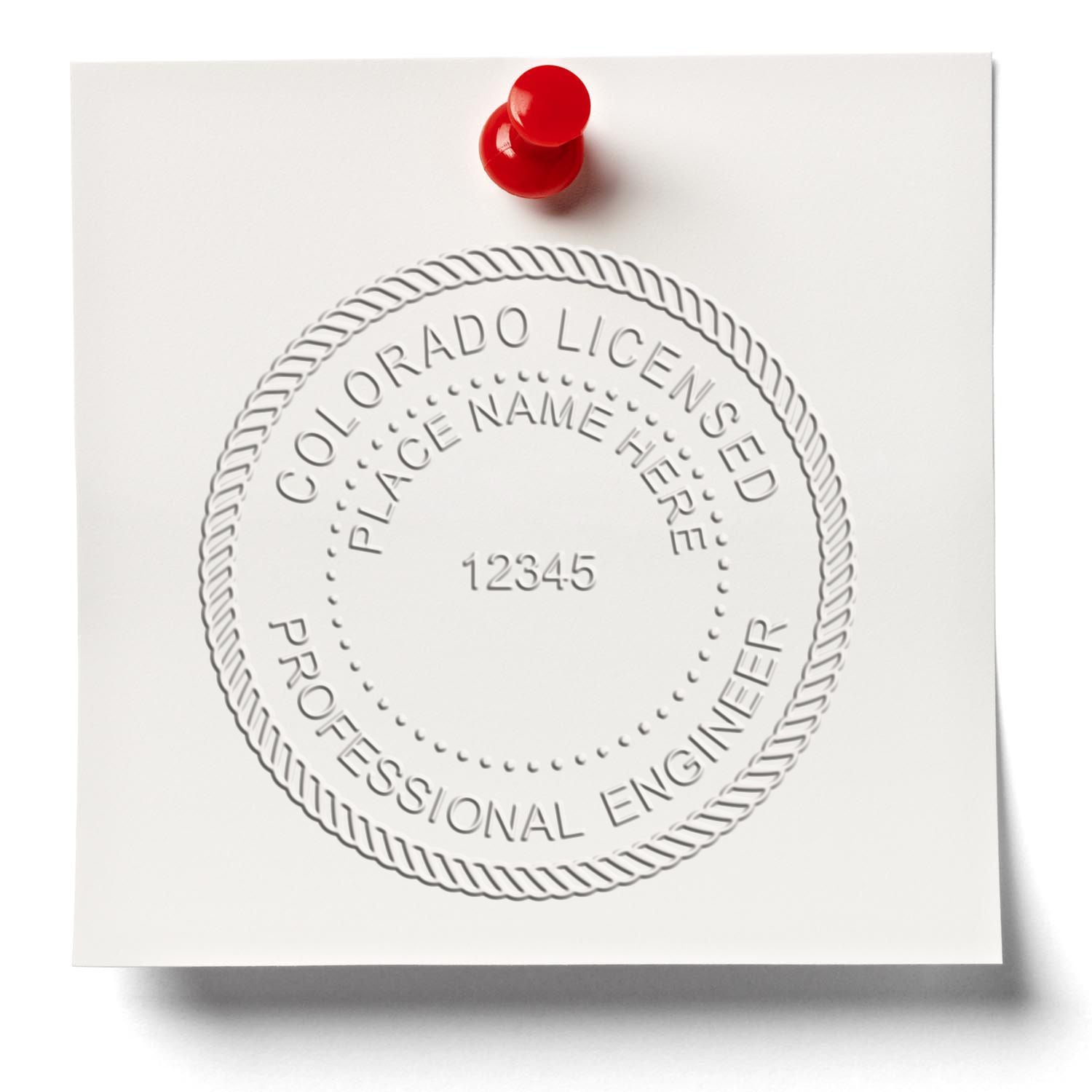
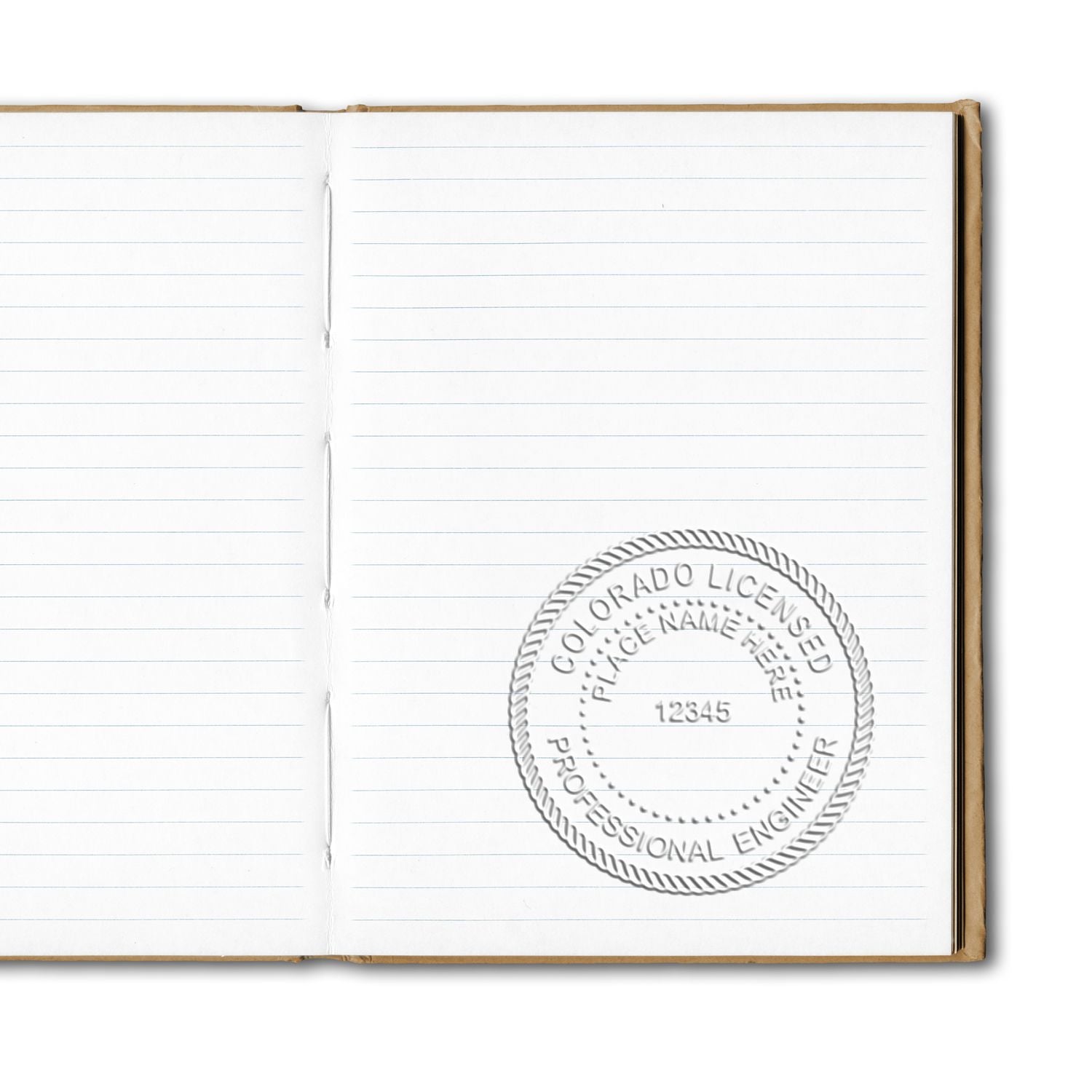
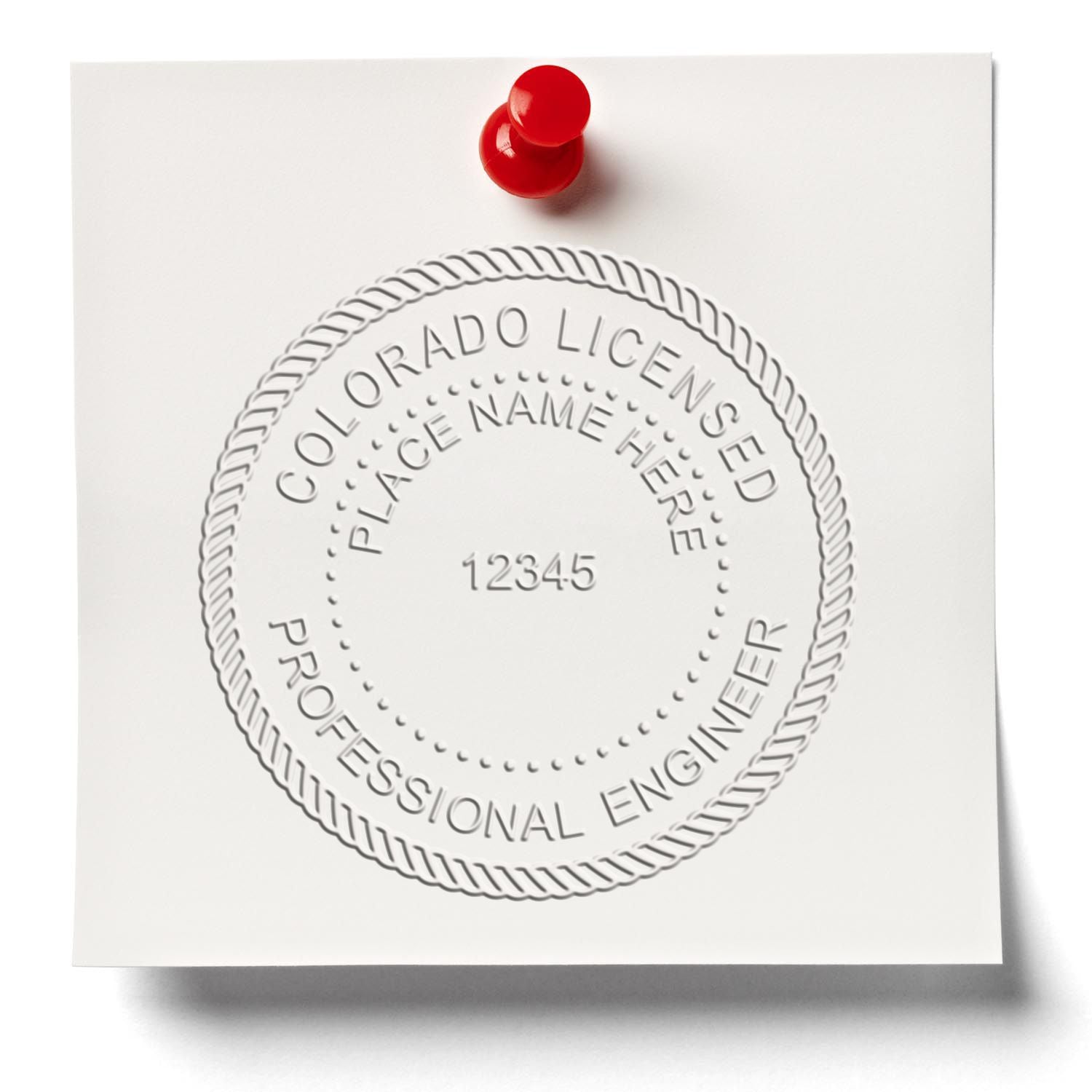
A Colorado professional engineer seal is built on two circles, a nominal 1-5/8 inch outer circle around a nominal 15/16 inch inner circle, and it may be a crimp, rubber stamp or computer generated seal. Arcs read COLORADO LICENSED and PROFESSIONAL ENGINEER, and your license number sits centered inside. This page covers wording, size, devices, signing, sealed documents, electronic use and renewal.
Engineer Seal Stamps compliance desk. Checked against C.R.S. § 12-120-216(1) and the State Board of Licensure for Architects, Professional Engineers, and Professional Land Surveyors. Sources read September 2026.
| Requirement | What the rule says | Source |
|---|---|---|
| Name | Your name appears on the seal. | C.R.S. § 12-120-216(1) |
| License number | Placed at the center of the inner circle. | C.R.S. § 12-120-216(1) |
| Arc legends | COLORADO LICENSED and PROFESSIONAL ENGINEER, each set along an arc. | C.R.S. § 12-120-216(1) |
| Size | Outer circle about 1-5/8 inches (41 mm) and inner circle about 15/16 inch (24 mm), both stated as nominal. | 4 CCR 730-1, Rules 1.5(A)(1), 1.6(A)(1) and 1.7(A)(1) |
| Devices | Crimp type (an embosser), rubber stamp type and computer generated type. | C.R.S. § 12-120-216(1) |
| Signing and dating | Your manual or electronic signature and the date you signed go on the document. | 4 CCR 730-1, Rules 1.5(A)(3), 1.6(A)(3) and 1.7(A)(1) |
| Documents sealed | Each drawing sheet, the lead pages of bound specifications and bound details, and for reports either the title page or the signature page. | 4 CCR 730-1, Rules 1.5(A)(2), (4), (5), (6) and (7) |
| Electronic seal | Permitted. The rule names two technologies. | 4 CCR 730-1, Rule 1.2(B) |
| License expiration | October 31 of every odd-numbered year, on one statewide two-year cycle. | 4 CCR 730-1, Rules 1.3(A)(3) and 1.4(I)(1) |
| Sealing after lapse | The rules relied on here do not address it. | Not addressed in the cited rules |
Licensed in more than one place? Check each jurisdiction in professional engineer seal requirements by state.
What does a Colorado professional engineer seal say?
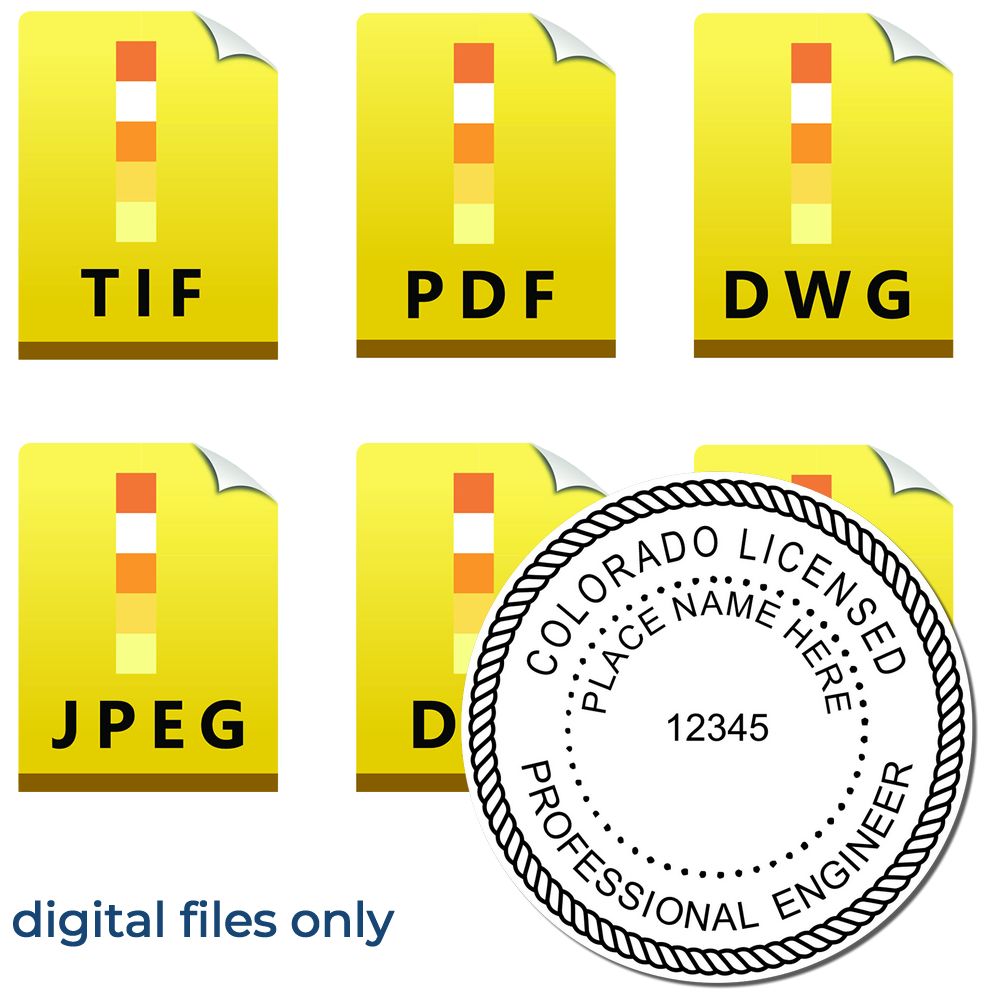
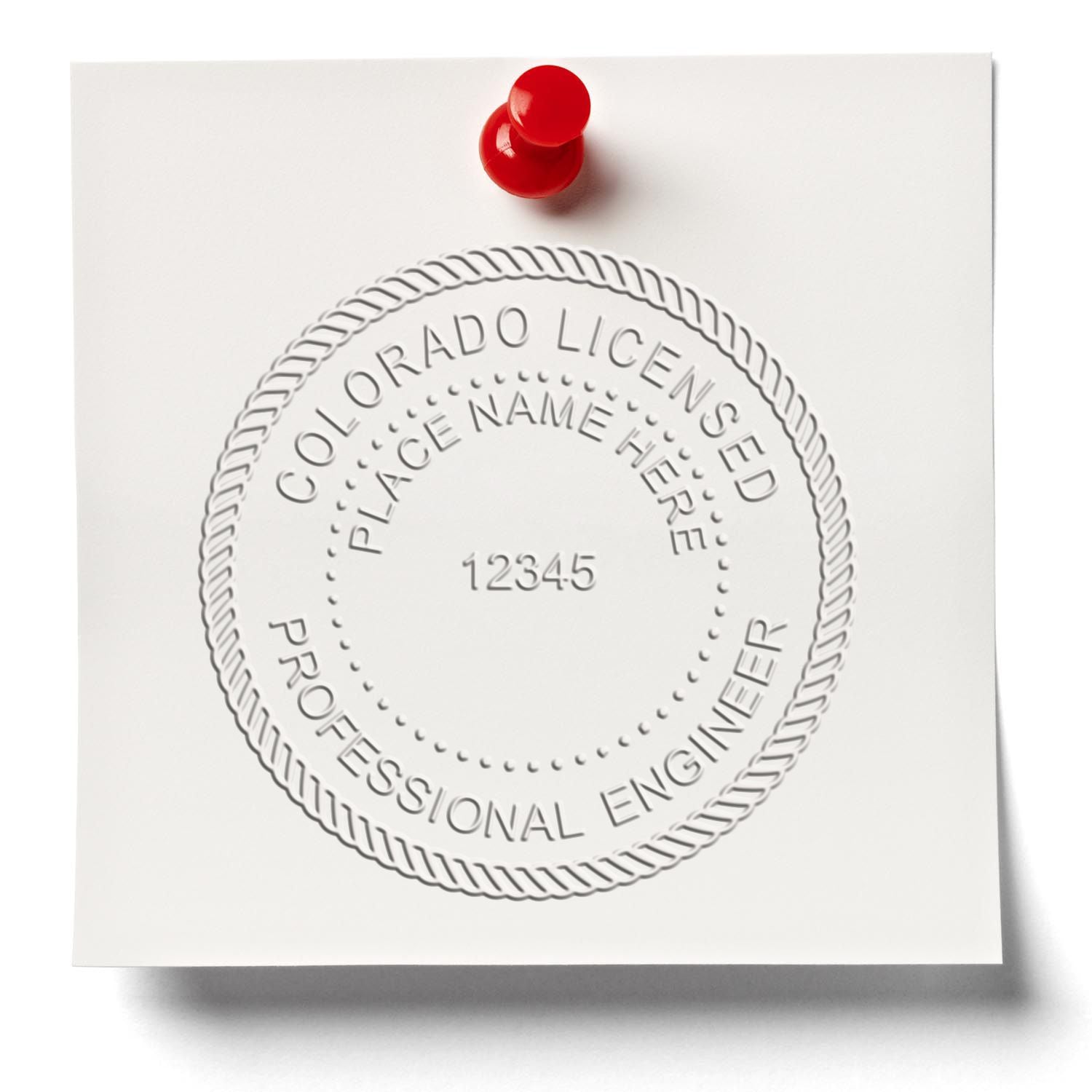
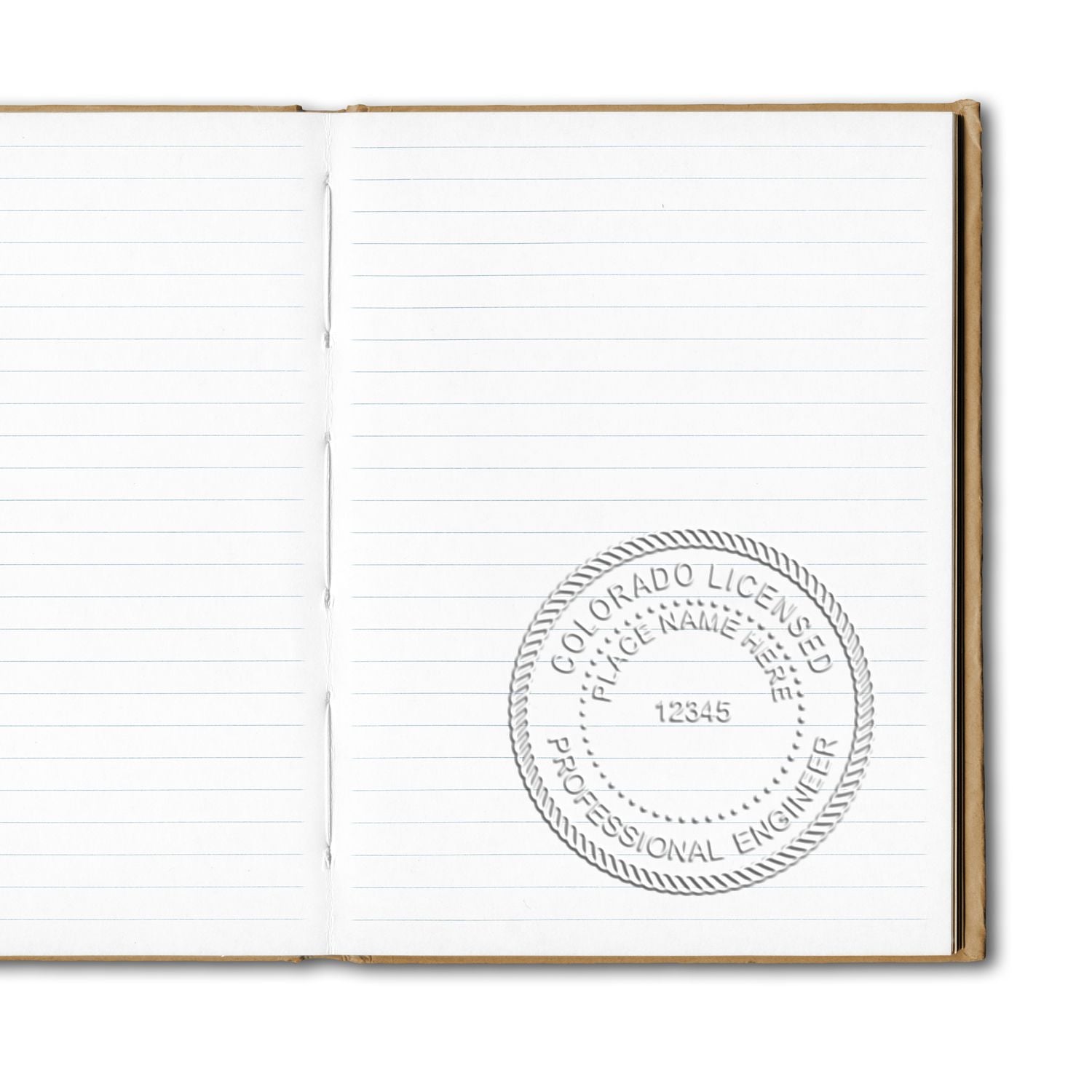
The seal carries your name, your license number at the center of the inner circle, and two curved legends: COLORADO LICENSED and PROFESSIONAL ENGINEER. C.R.S. § 12-120-216(1) is the source for all four items.
Both legends follow an arc rather than a straight line, and the number sits dead center in the inner circle. That gives the Colorado seal a fixed geometry, so a layout with straight text lines or the number pushed off center does not match the design.
Send your name and number exactly as your license shows them. For a practical walk-through of putting these items on a real stamp, see our post on applying Colorado PE stamp requirements.



How big are the circles on a Colorado engineer seal?
The outer circle measures a nominal 1-5/8 inches (41 mm) and the inner circle a nominal 15/16 inch (24 mm). Both figures come from 4 CCR 730-1, Rules 1.5(A)(1), 1.6(A)(1) and 1.7(A)(1).
Two circles are specified, so matching the outside size alone is not enough; the inner circle has its own figure, and the number has to sit centered inside it. The rule gives each size as a nominal figure with a metric equivalent alongside the inch measurement.
More on reading these figures is in our post on Colorado engineering seal guidelines.
Which devices can carry the Colorado seal?
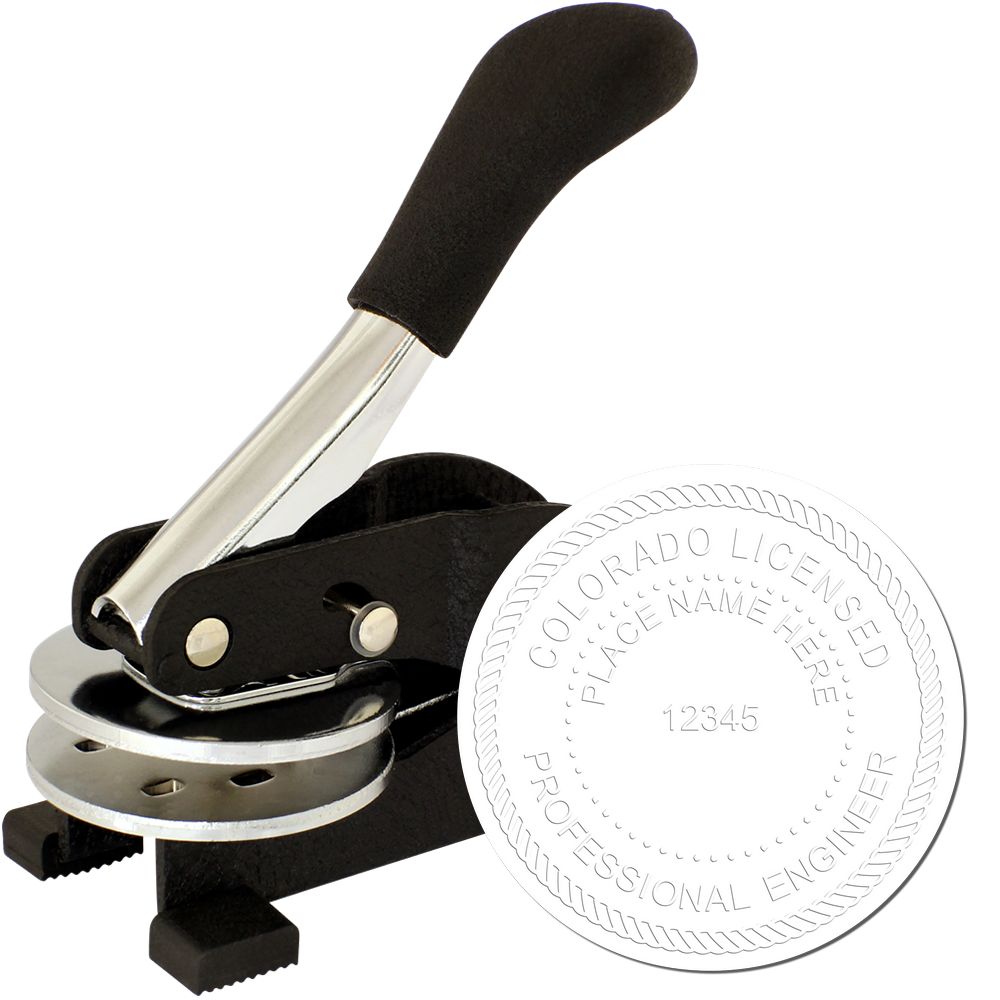
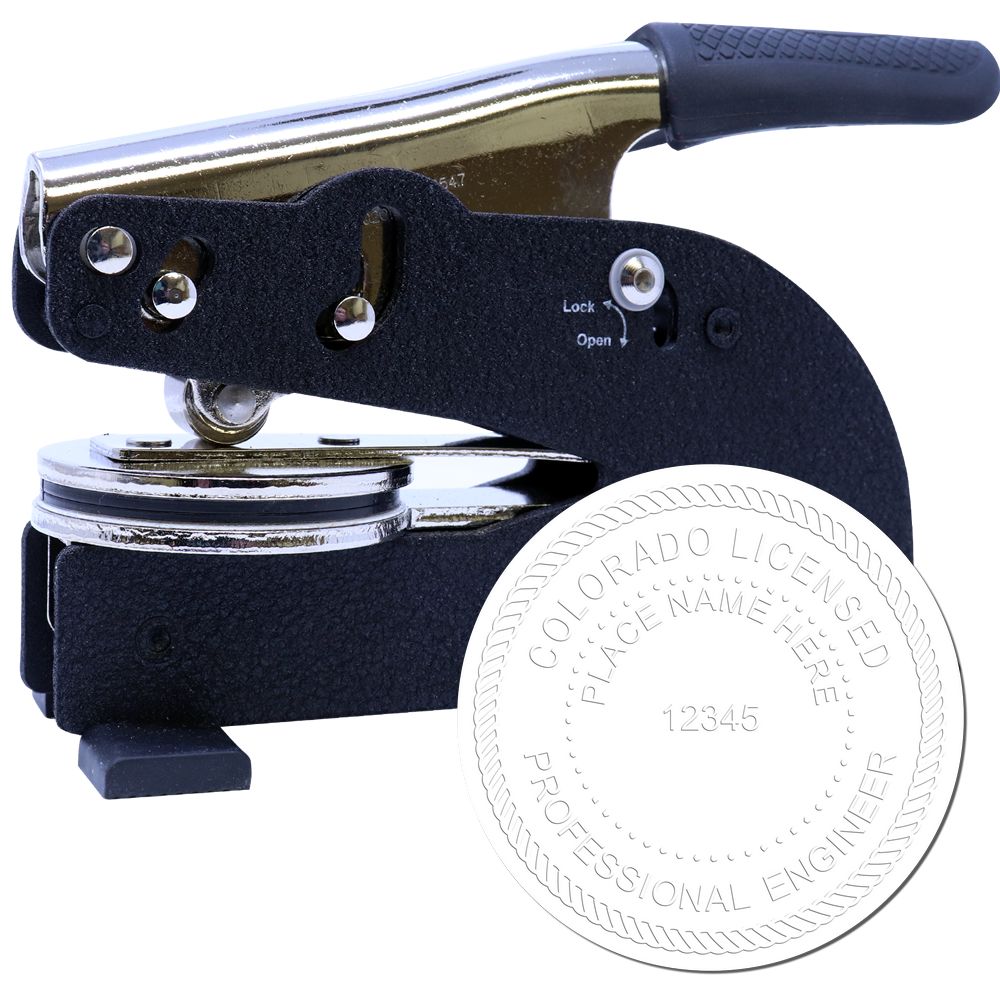
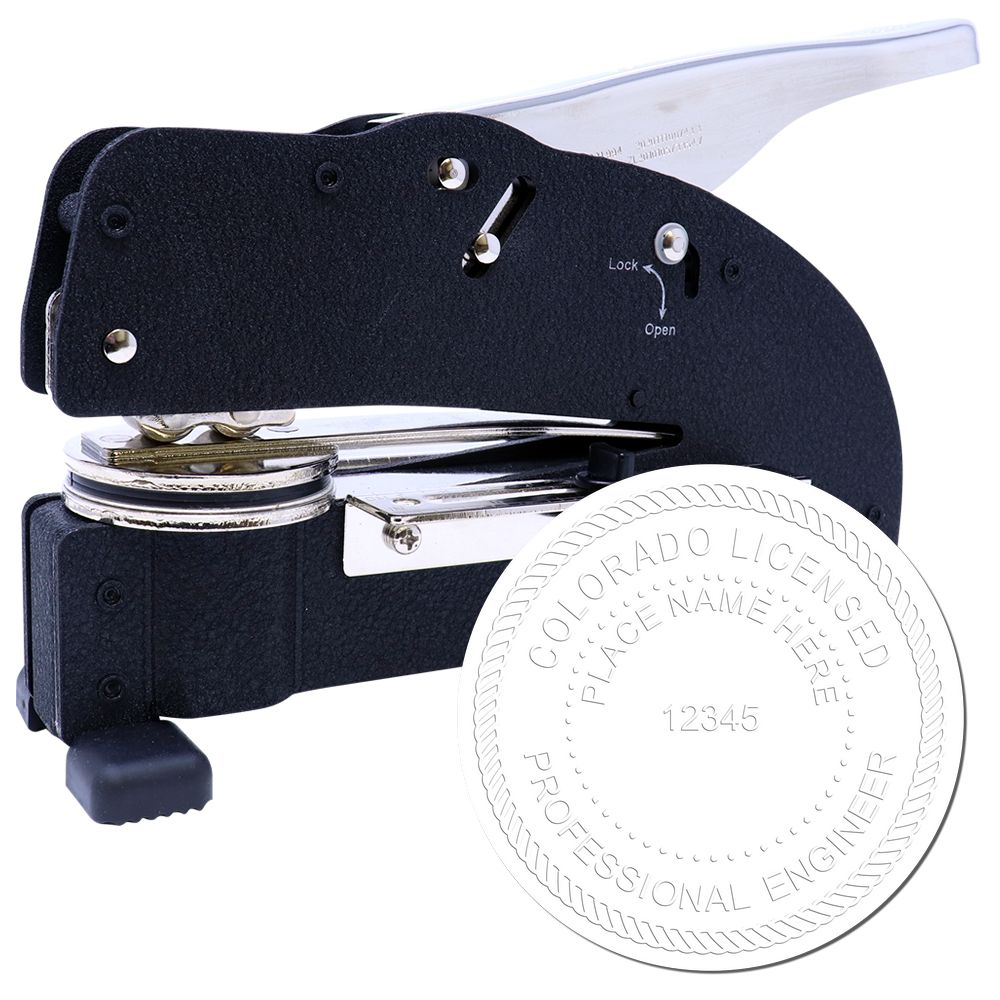
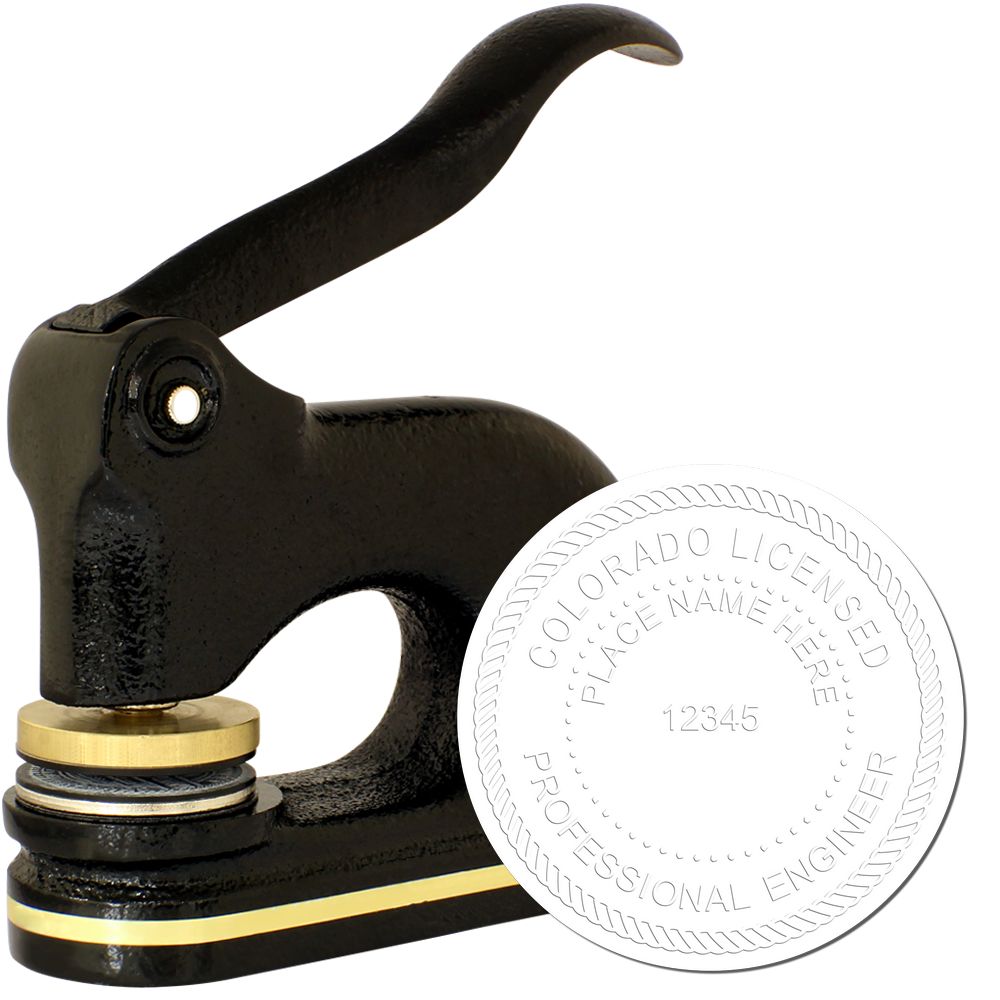
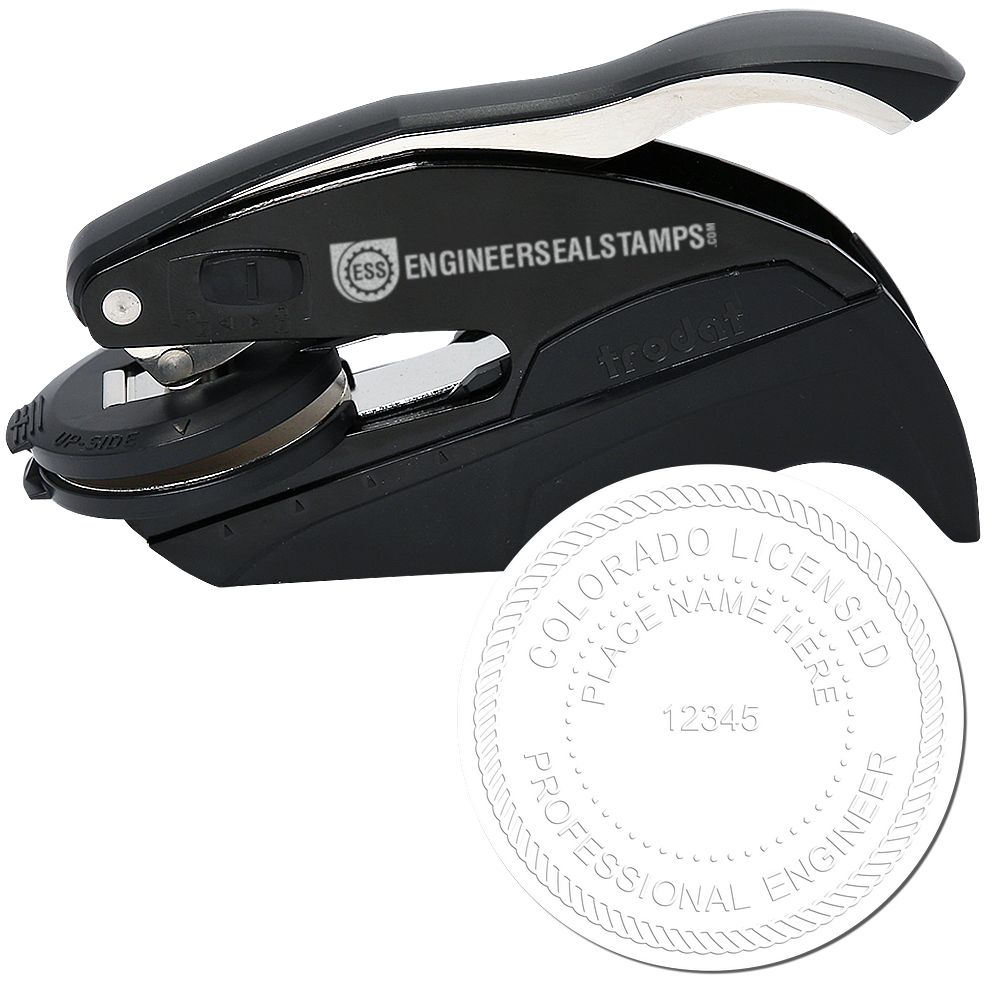
Three device types are authorized by name: crimp, rubber stamp and computer generated. Crimp means an embosser. C.R.S. § 12-120-216(1) and the Board's rule list the same three.
Choose by how your documents leave the office. An embosser presses a raised impression into the sheet, while a rubber stamp leaves the design in ink. Both are named, so either one is a Colorado seal as long as it carries the two circles and the required wording.
If the raised version is what you want, our article on the Colorado PE seal embosser covers it.
How do you sign and date a Colorado sealed document?
Rule 1.5(A)(3) calls for your manual or electronic signature and the date you signed, both placed on the document. The full citation is 4 CCR 730-1, Rules 1.5(A)(3), 1.6(A)(3) and 1.7(A)(1).
Either form of signature works, so a wet signature on paper and an electronic signature on a digital file both meet the rule. The date is the date of your signature, not the date a set was printed or sent. For where the signature sits relative to the seal, read Rule 1.5(A)(3) in full before your first set goes out.
Our article on the Colorado professional engineer stamp is a companion read on using the seal.
Which engineering documents get the seal in Colorado?
Four kinds of engineering work are covered: each sheet of drawings, the cover, title or contents pages of specifications bound as a book, the title pages of bound details that supplement drawings, and, for reports, the title page or the signature page.
That is a sheet-by-sheet rule for drawings and a front-page rule for the rest. A fifty-sheet drawing set takes fifty seals, while a bound specification book is sealed on its cover, title or contents pages. The citation is 4 CCR 730-1, Rules 1.5(A)(2), (4), (5), (6) and (7).
Does Colorado allow electronic seals?
Yes. Colorado permits electronic sealing, and 4 CCR 730-1, Rule 1.2(B) names two technologies for it. This page does not list them, so read that rule itself before you set up a digital sealing workflow.
Two other Colorado provisions point the same way. The computer generated type is one of the three authorized seal devices, and Rule 1.5(A)(3) accepts an electronic signature as well as a manual one.
When do Colorado engineering licenses expire?
Colorado licenses for architects, professional engineers and professional land surveyors all expire on October 31 of each odd-numbered year. Renewal is therefore one statewide cycle every two years, under 4 CCR 730-1, Rules 1.3(A)(3) and 1.4(I)(1).
Mark that date well ahead. No expiration date appears among the required seal items, so nothing on the stamp will remind you that renewal is due.
Can you keep using your seal after a Colorado license lapses?
The rules cited here do not address sealing after a license lapses. They fix the expiration date, but none of the provisions relied on for this page speaks to using the seal once a license has expired.
Treat that as a gap in these sources, not as permission. Finish renewal before October 31 of an odd-numbered year so the question does not arise on a live project.
What should you supply when ordering a Colorado engineer seal?
Send your name, your license number and the device type you want, such as an embosser, a rubber stamp or both. The arc legends and the two circle sizes are fixed parts of the Colorado design.
Give the license number exactly as issued. It sits alone at the center of the inner circle, where any error stands out on every sheet you seal. Our post on Colorado engineering stamp requirements is another reference before you order.
How do you check a Colorado impression before first use?
Stamp or emboss a test sheet and measure both circles: about 1-5/8 inches (41 mm) outside and about 15/16 inch (24 mm) inside. Then confirm both arc legends read correctly and your number is centered in the inner circle.
Sign and date the test sheet the way you will on a real document, with the same pen or electronic method, so you know the finished page reads cleanly.
Frequently asked questions
Can I own more than one type of Colorado seal?
The statute joins the three device types with and/or, so the wording does not limit you to one. An embosser and a rubber stamp cut to the same design are both named devices.
Does a Colorado seal show my discipline or an expiration date?
Neither appears among the required items under C.R.S. § 12-120-216(1). The list is your name, your license number and the two arc legends.
Who authorizes the Colorado seal?
The statute describes the seal as one authorized by the State Board of Licensure for Architects, Professional Engineers, and Professional Land Surveyors, in the crimp, rubber stamp or computer generated type.
Should I order by inches or millimeters?
Either works as a reference. The rule states 1-5/8 inches with 41 mm alongside it for the outer circle, and 15/16 inch with 24 mm for the inner circle.
Does the rule state a shape for the seal?
The rules cited here do not state a shape on their own terms. They describe the design through its outer and inner circles and give a nominal diameter for each.
Pick your embosser or stamp from our Colorado stamps and seals collection, with your name and license number ready to enter.