
To become a notary in Tennessee, file an application and the $12 fee with your county clerk, win election by the county legislative body, post a $10,000 surety bond and take the oath before the clerk; the Governor then issues a four-year commission. Applicants must be 18, a U.S. citizen or legal permanent resident, and live or keep their principal place of business in that county. Traditional notaries sit no state exam. This guide covers the steps, costs, seal, record book and renewal.
Engineer Seal Stamps compliance desk. Checked against the Tennessee Secretary of State, Tenn. Code Ann. § 8-16-101 et seq. and Tenn. Comp. R. & Regs. 1360-07-02. Sources read September 2026.
| Tennessee requirement | What applies | Source |
|---|---|---|
| Who is eligible | 18 or older; a U.S. citizen or legal permanent resident; living or keeping a principal place of business in the county | T.C.A. §§ 8-16-101, 8-18-101 |
| Training or course | None in the Secretary of State's steps for a traditional commission | Secretary of State, How to become a Notary |
| Exam | None for a traditional commission | Secretary of State, How to become a Notary |
| How to apply | County clerk application, then election by the county legislative body | T.C.A. § 8-16-101; Secretary of State, How to become a Notary |
| Application fee | $12: $7 to the county clerk, $5 to the Secretary of State | Secretary of State, Notary FAQs |
| Bond | $10,000 surety bond, filed with the county clerk before your first act | T.C.A. § 8-16-104 |
| Oath | Taken before the county clerk or a deputy clerk | T.C.A. § 8-16-105 |
| Commission term | Four years from the date the Governor issues it | T.C.A. § 8-16-103; Secretary of State FAQ |
| Seal | Round, name on top, electing county on the bottom, any legible ink except black or yellow. Tennessee seal rules | Tenn. Comp. R. & Regs. 1360-07-02-.01; T.C.A. § 8-16-114 |
| Record book | Record each act in a well-bound book; electronic records can qualify | T.C.A. § 8-21-1201; Tenn. Att'y Gen. Op. 14-89 |
| Renewal | Same process as the first commission | Secretary of State, Notary FAQs |
| Online notary | Current notaries may apply to the Secretary of State; $75 fee | T.C.A. § 8-16-301 et seq.; Secretary of State online notary guide |
| Surname or county change | Report to the clerk of the electing county; $7 | UT County Technical Assistance Service summary of T.C.A. Title 8, Chapter 16 |
How the Tennessee journal rule and remote notarization rule compare with the other 53 jurisdictions: see notary journal requirements by state and remote online notarization by state.
Who can become a notary in Tennessee?
Adults 18 or older who are U.S. citizens or legal permanent residents and who, at the time of election, live in the county or keep their principal place of business there. Living outside Tennessee does not rule you out if your principal place of business is in a Tennessee county.
Tennessee ties the commission to a county rather than to statewide residency. Under T.C.A. § 8-16-101, a person whose principal place of business is in a Tennessee county can be elected there while residing in another state.
Every applicant certifies, under penalty of perjury, that they have never been removed from office as a notary for official misconduct, never had a commission revoked or suspended, and never been found guilty of the unauthorized practice of law. The general disqualifications for county officeholders in T.C.A. § 8-18-101 also apply.
Which offices take part in a Tennessee notary commission?
Four of them. The county clerk takes your application, bond and oath, the county legislative body elects you, the Governor issues the commission, and the Secretary of State transmits and administers it.
That split is why Tennessee runs on a county calendar. Your paperwork begins and ends at the clerk's counter, and nothing moves until the county commission votes.
Even so, Tennessee notaries are state officials, not county officials. Once commissioned, you may notarize in every county in the state.
What are the steps to become a notary in Tennessee?
There are seven, and most happen at the county level: application, fee, election, bond, oath, state processing and the seal. The Secretary of State's notary guide lists them in this order.
- Get the application from your county clerk in the county where you live or where your principal place of business sits.
- File it with the $12 fee. The clerk keeps $7 and forwards $5 to the Secretary of State.
- Wait for the vote. The county legislative body elects notaries; ask the clerk which meeting will take up your application.
- Buy a $10,000 surety bond from a Tennessee insurance company or agency that writes surety coverage.
- Bring proof of the bond to the clerk and take the oath of office before the clerk or a deputy.
- Collect the commission. The Secretary of State issues it and returns it to the county clerk's office for you to pick up.
- Order your seal and open your record book before the first act.
How much does it cost to become a notary in Tennessee?
The filing fee is $12, split $7 to the county clerk and $5 to the Secretary of State, and the clerk charges $2 to record the bond. On top of that come the surety's premium for the $10,000 bond and the price of your seal.
- Application: $12 at the county clerk.
- Bond recording: $2 at the county clerk.
- Bond premium: quoted by the insurer or agency that writes it.
- Seal: a round inked stamp in an approved color.
- Later changes: $7 for a surname change or a move to another county; $75 to add an online commission.
Does Tennessee require notary training or an exam?
Not for a traditional commission. The Secretary of State's steps run from application to election to bond and oath with no course and no test, which makes the county commission's vote the screening step.
Online notarization is a separate commission. A notary who already holds a county commission applies to the Secretary of State under the Online Notary Public Act, T.C.A. § 8-16-301 et seq., and should read the online notary guide for the current prerequisites before applying.
What bond and oath does a Tennessee notary need?
A $10,000 surety bond, filed with the clerk of the county that elected you, plus an oath taken before that clerk or a deputy. Performing any notarial act before the bond is filed is a Class C misdemeanor.
The oath commits you to support the Tennessee and U.S. constitutions and to carry out the office honestly and diligently, without favor or partiality. The county clerk holds the bond and charges $2 to record it, and the Secretary of State's guide points applicants to Tennessee insurance companies and agencies that sell surety coverage.
Which seal should a new Tennessee notary order?
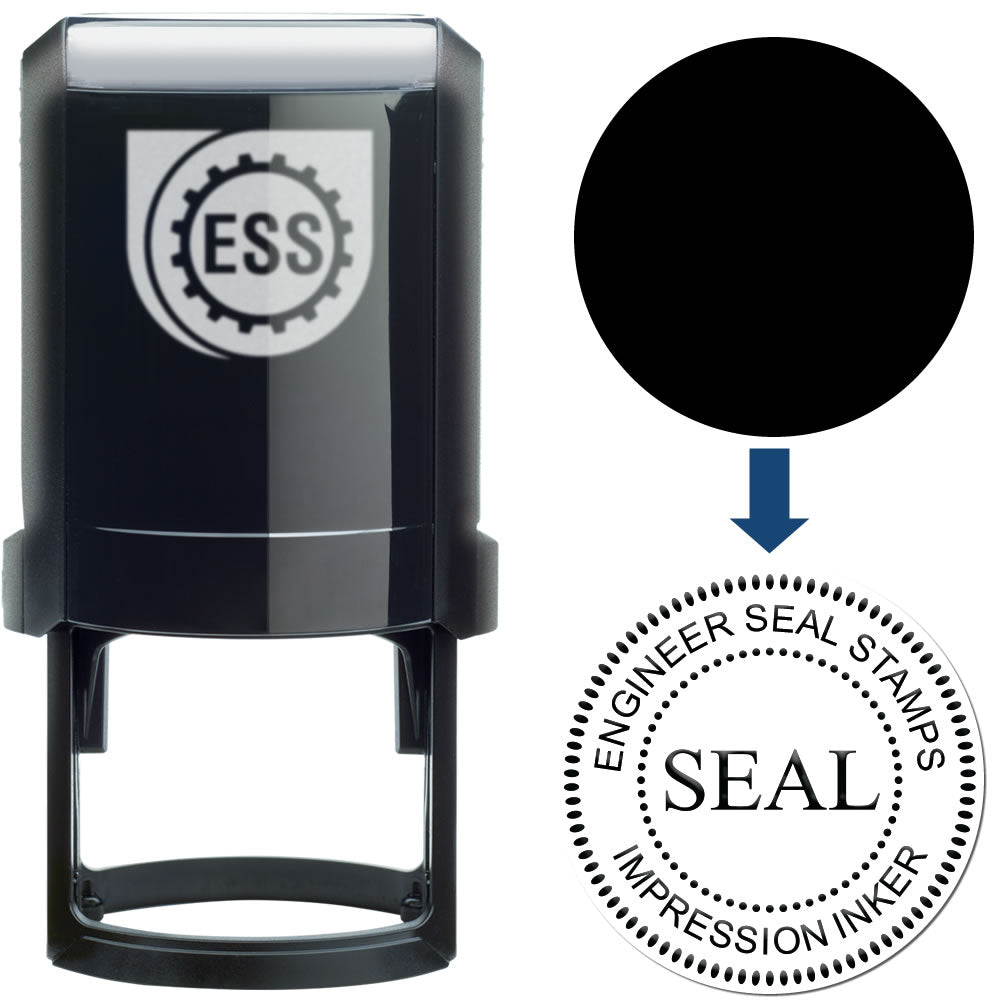
A round seal with your name across the top as your commission shows it, the electing county across the bottom, and State of Tennessee Notary Public or Tennessee Notary Public in the center, inked in any legible color except black or yellow.
Wait for the commission before you order. The name must match the commission, and the bottom line names the county whose legislative body elected you, so both details are settled only when the commission issues.
Tennessee sets no diameter, and the Secretary of State notes that the state does not number notary commissions, so there is no ID line to add. The color rule carries a copier test: the impression has to come out black on a non-color copier. Our Tennessee notary seal guide covers the center wording options and ink choices.








What record must a Tennessee notary keep?
Tennessee law requires a record of each notarial act in a well-bound book. The Attorney General has read that duty to apply whether or not you charge a fee, and has said an electronic record can satisfy it.
The duty sits in T.C.A. § 8-21-1201, amended in 2014. Attorney General Opinion 14-89 concluded that from October 1, 2014, notaries must keep the record regardless of fees, and that electronic records are acceptable when they remain available for public inspection and meet the other conditions of T.C.A. § 10-7-121.
Online notaries have an added storage rule. The Secretary of State says online records must be kept securely for five years, with backups maintained.








How long is a Tennessee commission, and how do you renew it?
Four years, counted from the date the Governor issues the commission. Renewal repeats the original process: a new application and fee at the county clerk, a new election, a new bond and a new oath.
Because every renewal goes back before the county commission, start early and ask your clerk when the next vote falls. Notarizing after your commission expires is a Class C misdemeanor, so there is no grace period to lean on.
What changes must you report to the county clerk?
A surname change, or moving your residence or principal place of business to another Tennessee county, goes to the clerk of the county that elected you rather than to the Secretary of State. The fee is $7.
The clerk passes the change to the Secretary of State and forwards $2 of the fee. Since the bottom of the seal names the county whose legislative body elected you, a move alone does not change that line.






Frequently asked questions
How quickly can I get commissioned in Tennessee?
It follows the county commission's calendar, because no commission issues until you are elected. After the vote and the bond filing, the Secretary of State issues the commission and sends it back to your county clerk for pickup, so your clerk can give you the local timeline.
Can a Tennessee notary notarize outside their county?
Yes. The Secretary of State confirms that a notary's powers extend to every Tennessee county, even though a single county elected you.
Are there extra requirements for notary signing agents in Tennessee?
No. According to the Secretary of State, Tennessee has no requirements or guidelines for signing agents beyond those for a traditional notary.
Does Tennessee give notaries a commission number?
No. The Secretary of State states that Tennessee does not assign numbers to notary commissions.
How do I become an online notary in Tennessee?
Hold a current county commission, choose a technology vendor, then apply online to the Secretary of State with the $75 fee. Your online commission expires on the same day as your traditional one, whenever it was granted.
What can a Tennessee notary charge?
T.C.A. § 8-21-1201 entitles notaries to reasonable fees for their services. For online notarizations, Rule 1360-07-03-.03 caps the charge at $25 per notarization.
When your commission comes back from the clerk, pick a round seal in an approved ink from our Tennessee notary stamps and seals. For how Tennessee compares with other states, read our notary seal requirements by state.