
Vermont commissions applicants who are at least 18, hold U.S. citizenship or permanent legal residence and live or work in Vermont, after they pass a jurisprudence exam, upload a notarized oath to the Office of Professional Regulation and pay $30. No bond is required. Every commission ends January 31 of an odd year, next in 2027. This page covers eligibility, steps, costs, the optional stamp and how renewals work.
Engineer Seal Stamps compliance desk. Checked against the Vermont Secretary of State's Office of Professional Regulation, 26 V.S.A. chapter 103 and the Notaries Public Administrative Rules. Sources read September 2026.
| Requirement | Vermont answer | Source |
|---|---|---|
| Applicant requirements | At least 18, with U.S. citizenship or permanent legal residency, and either a Vermont home or a place of employment or practice in Vermont | 26 V.S.A. § 5341 |
| Exam | A jurisprudence exam, completed inside the online application. Vermont attorneys and judiciary-related employees are exempt | 26 V.S.A. § 5341; Rule 4-3 |
| Course | None before the first commission. Continuing education applies at renewal | Rule 9-1 |
| How to apply | Online through the Office of Professional Regulation's online services system | OPR Application Instructions (February 2026) |
| Application fee | $30 | 26 V.S.A. § 5324 |
| Bond | None. Chapter 103 sets no bond or surety requirement | 26 V.S.A. chapter 103 |
| Oath | Signed, notarized and uploaded before the commission issues | 26 V.S.A. § 5341; OPR Application Instructions |
| Commission term | A fixed two-year cycle ending January 31 of odd-numbered years; the next end date is January 31, 2027 | 26 V.S.A. § 5304; OPR Notary FAQs |
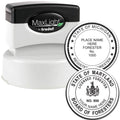
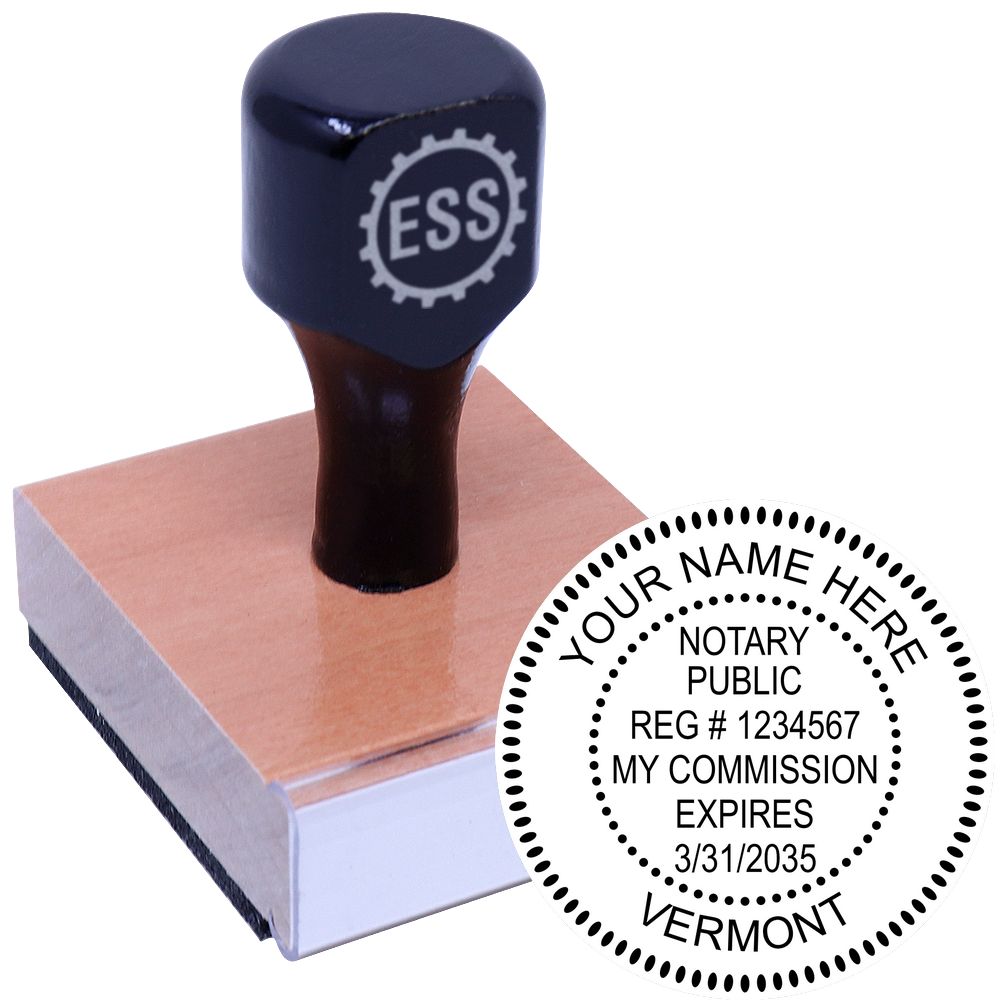
| Stamp | Optional. If used: your name as on your oath, Vermont, Notary Public and your commission number, with no State Seal. See the Vermont notary stamp guide | Rule 5-3 |
| Journal | No journal rule for ordinary acts. Remote acts require an audio-visual recording | 26 V.S.A. § 5379 |
| Renewal | Online, $30, with at least one hour of approved continuing education | 26 V.S.A. § 5343; Rule 9-1 |
| Remote or electronic acts | A special endorsement, $30 | 26 V.S.A. §§ 5341, 5324 |
| Name, address or email change | Update your online file within 30 days | Rule 4-5(b) |
How the Vermont journal rule and remote notarization rule compare with the other 53 jurisdictions: see notary journal requirements by state and remote online notarization by state.
Who can become a notary in Vermont?
You qualify at 18 or older if you are a U.S. citizen or permanent legal resident and either live in Vermont or have a place of employment or practice in the state, as 26 V.S.A. § 5341 sets out.
Because a Vermont workplace is enough, a New Hampshire or New York resident who works in Vermont can hold a Vermont commission. The applicant also passes the exam and executes an oath before the Office issues anything.
Rule 4-3 carves out several public roles. Judiciary-related employees skip the exam, the fee and continuing education. Vermont attorneys skip the exam and continuing education. Town clerks and justices of the peace pay no fee, and law-enforcement-related employees acting within their official duties need no commission at all.
How do you apply through the Office of Professional Regulation?
Everything runs through the Office's online services system: create an account, complete the application and its exam, upload a notarized oath, and pay $30. The February 2026 instructions allow three to five business days for processing.
- Create an account in the Office of Professional Regulation's online services system.
- Start the Notary Public application inside that system.
- Complete the VT Notary Public Jurisprudence Examination found within the application and upload it, unless you are exempt.
- Sign the Oath of Office or Affirmation before a notary, then upload a scan. Sign with the exact name you want on any stamp.
- Pay the $30 fee by debit card, credit card or ACH.
- Allow three to five business days for review.
Timing matters because of the Office's 90-day initial licensing policy. A commission issued within 90 days before the January 31 renewal date runs through the next full two-year period, while one issued earlier must be renewed by that upcoming January 31.
What does a Vermont notary commission cost?
The state charges $30 for the commission, and a remote and electronic special endorsement adds another $30. Vermont requires no bond, so beyond those fees you pay only for approved continuing education at renewal and any stamp you choose.
- Commission: $30, nonrefundable.
- Special endorsement for remote and electronic acts: $30.
- Renewal: $30, plus $30 for the specialty if you hold one.
- Fee exemptions: judiciary-related employees, town clerks and justices of the peace.
What is the Vermont notary exam, and who is exempt?
Vermont requires a basic jurisprudence exam on the statutes, rules and ethics of notarial acts. You complete it within the online application and upload it with your file. Licensed Vermont attorneys and judiciary-related employees are exempt.
There is no required course before the first commission. The Office's administrative rules, effective February 26, 2025, and chapter 103 of Title 26 are the material the exam draws on, and the statutes, rules and resources page links both.
Training enters later, as continuing education at each renewal, which the renewal section below covers.
Does Vermont require a notary bond?
No. Chapter 103 of Title 26 contains no bond or surety requirement, and the Office's application steps ask for none. Your filing consists of the application, the exam where it applies, the notarized oath and the $30 fee.
Rule 4-3 waives even the $30 for judiciary-related employees, town clerks and justices of the peace.
Do you need a stamp in Vermont, and what goes on it?
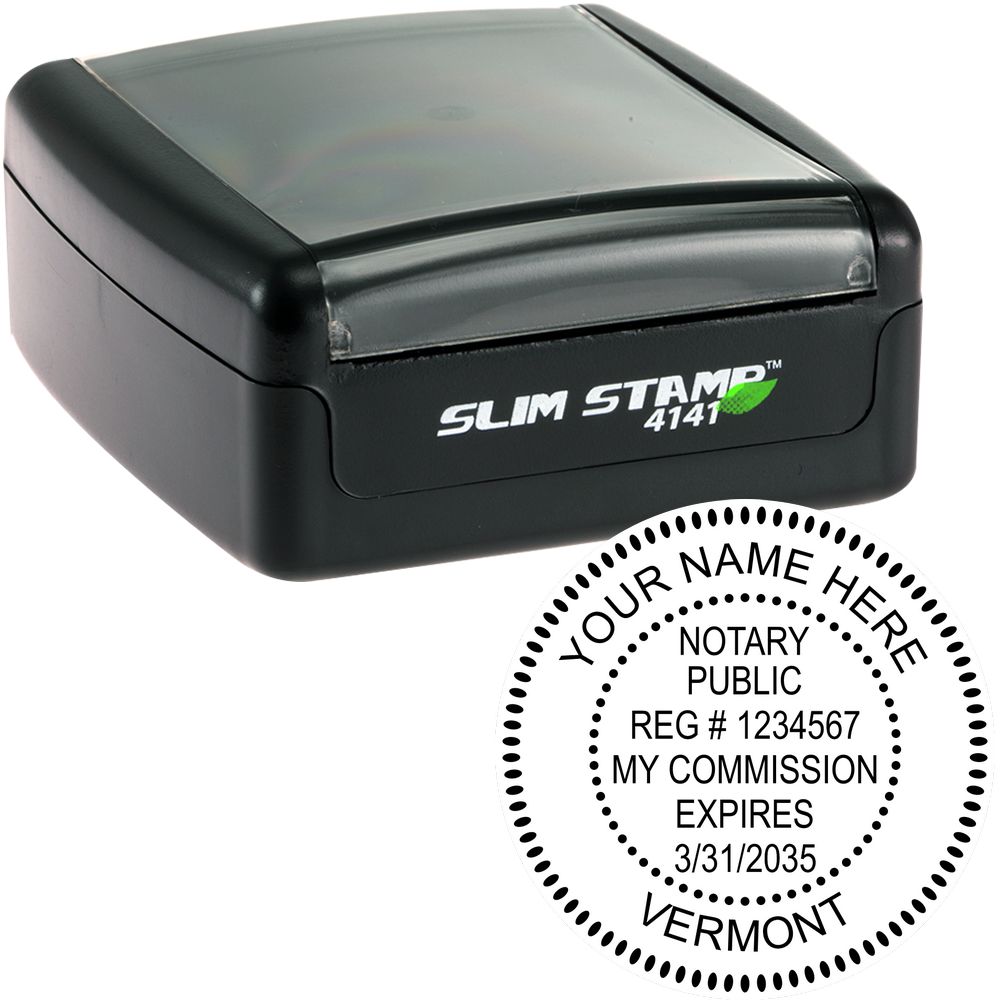
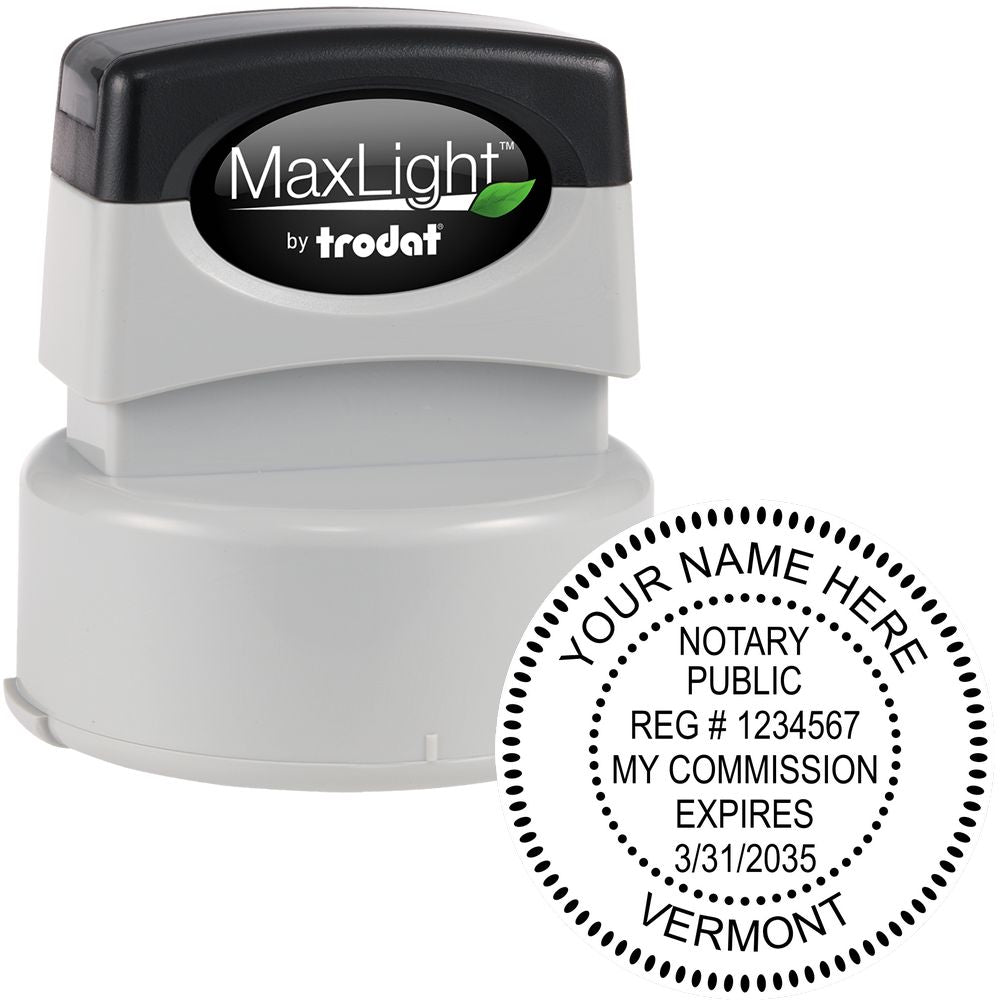
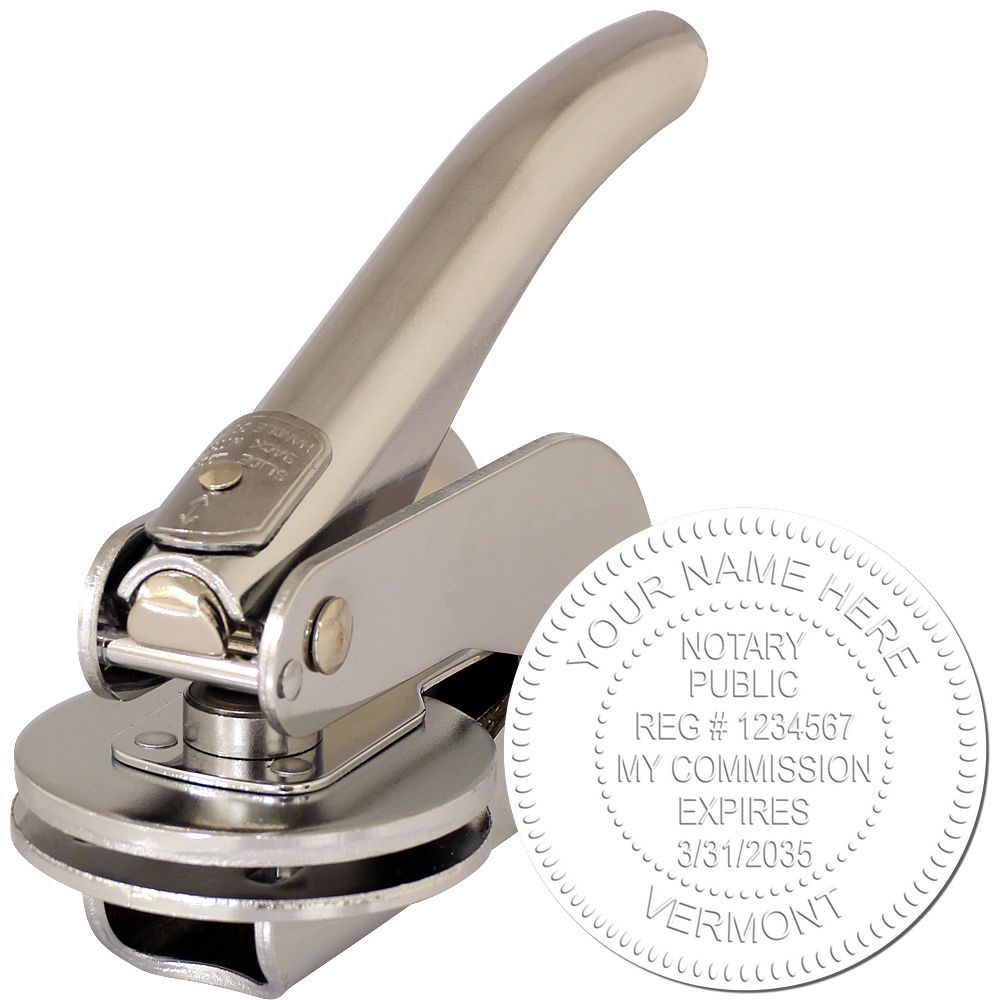
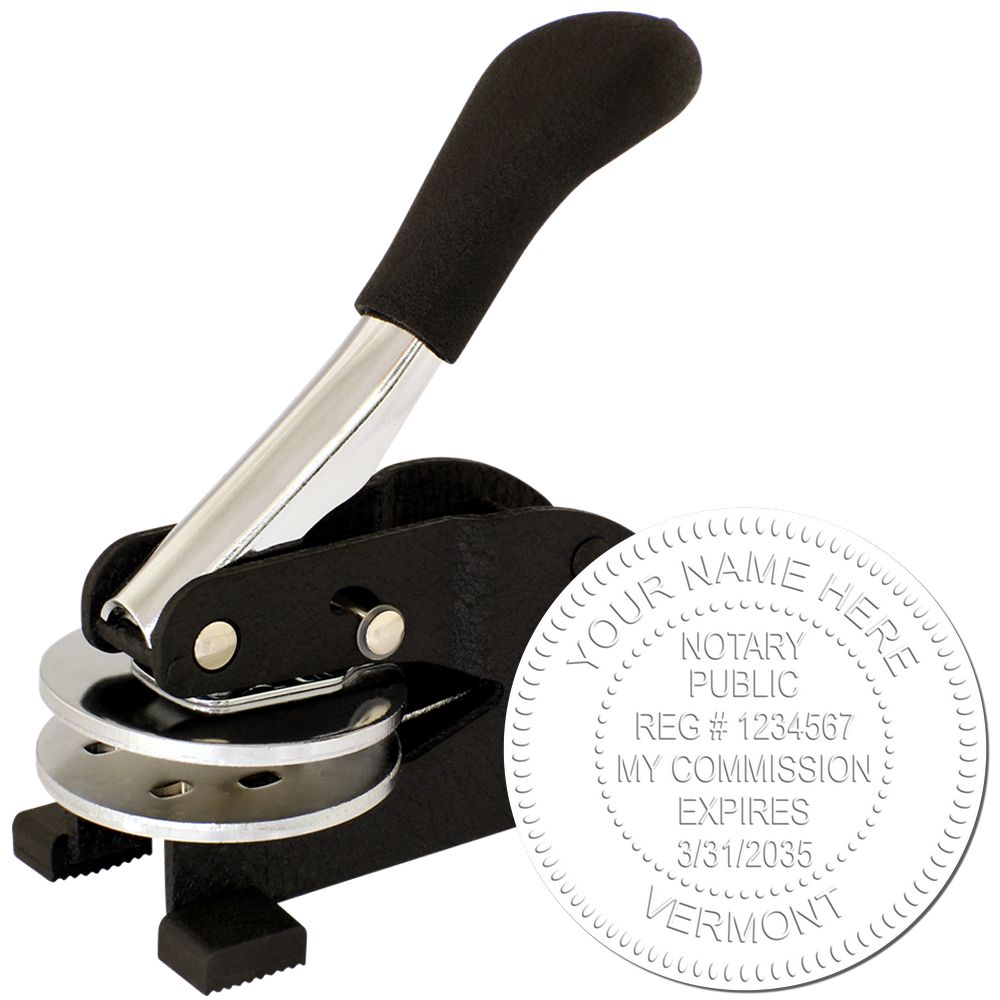
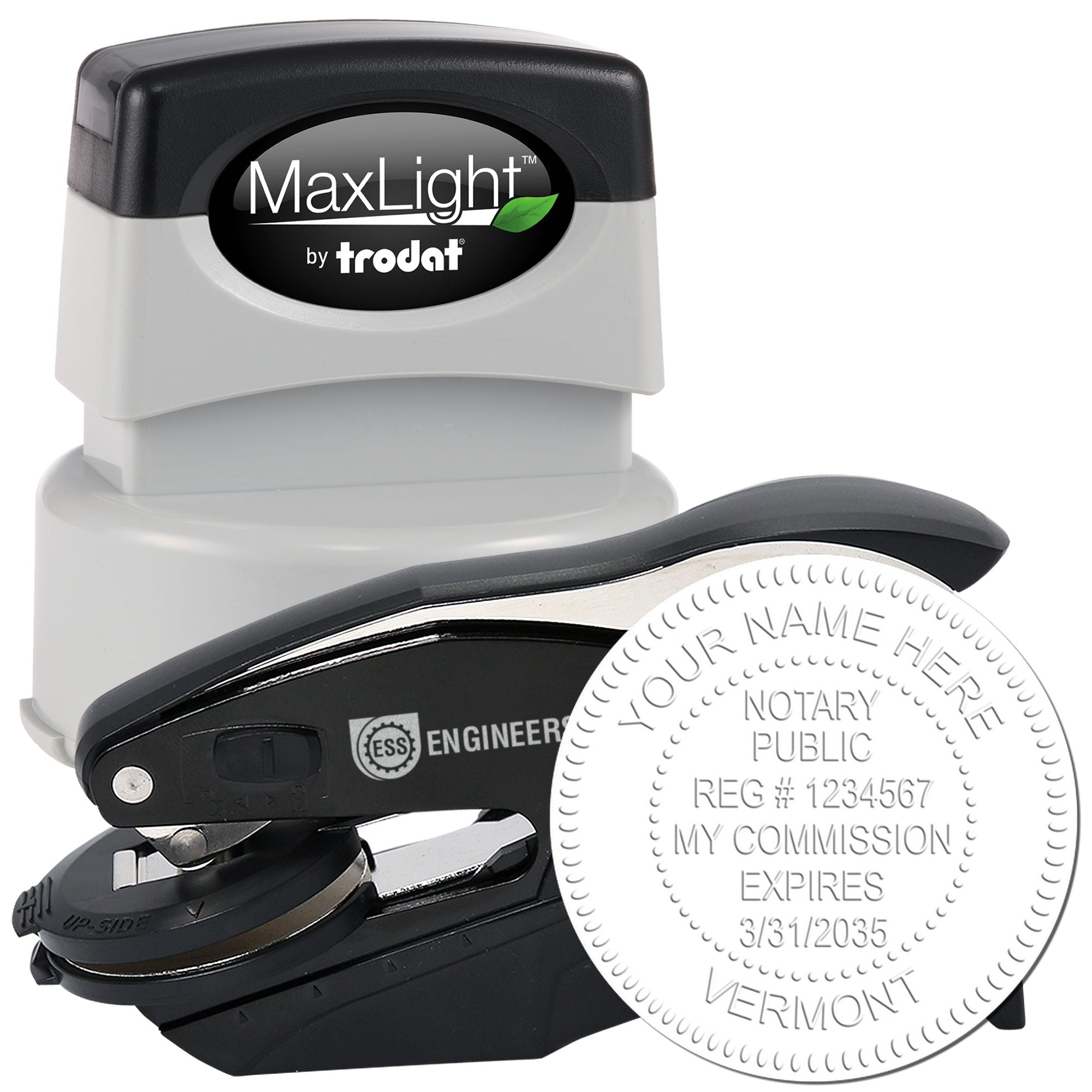
A stamp is optional in Vermont. If you choose one, Rule 5-3 lists four items for the face (your name exactly as signed on your oath, Vermont, Notary Public and your commission number) and forbids the Vermont State Seal.
The rules set no size, shape or ink color, and an embosser can stand in fully for an inked stamp. Order once the commission issues and your commission number appears on your record, because the number is part of the face.
Skip the stamp and Rule 5-3(a) requires those details on each certificate instead: your name, commission number and expiration date, printed or typed. Our Vermont notary stamp guide sets out the four required items.






Does Vermont require a notary journal?
Vermont's statute and rules set no journal requirement for ordinary notarizations. Remote acts are different: 26 V.S.A. § 5379 requires an audio-visual recording of each one, kept by the notary or by a designated repository.
If you keep a paper journal for your own records, nothing in the rules prescribes its format or contents.
When does a Vermont commission expire, and how does renewal work?
All Vermont commissions run on one statewide two-year cycle that ends January 31 of odd-numbered years, so the next expiration is January 31, 2027. Renewal is online, costs $30, and needs at least one hour of approved continuing education.
Section 5343 caps continuing education at two hours per cycle, and Rule 9-1 sets the floor at one hour, with one additional hour for a special endorsement. The February 2026 renewal instructions say to upload proof of those hours with the online renewal.
The instructions open renewal six weeks before the expiration date, and the Office's notary page says the renewal application will open in mid-December. Late renewals face penalties, and notarizing on an expired commission violates the law.





What must you report after a name, address or email change, or a lost stamp?
Update your online file with the Office within 30 days of a new name, address or email. A name change also needs supporting documents and a revised oath, and a lost or stolen stamp must be reported quickly.
Acceptable name change documents include a marriage certificate, a divorce decree or a court order. Since the stamp's name must match your oath, a revised oath means a new stamp face.
For a missing stamp, 26 V.S.A. § 5370 says to notify the Office promptly. Rule 5-3(d) adds an outer limit: no later than 48 hours after you find the stamp lost or stolen.
How do you add remote or electronic notarization in Vermont?
You need a special endorsement from the Office before notarizing an electronic record or a remotely located signer. It costs $30, requires attesting that your technology meets the rules, and adds one hour of continuing education at each renewal.
Under Rule 6-2, you attest to tamper-evident technology for electronic records, and to communication and identity proofing technology for remote signers. The endorsement runs on the same two-year cycle as the commission.
Every remote act is recorded on audio and video under § 5379, and that recording must be retained by you or a repository acting for you.







Frequently asked questions
If I apply this fall, when will my Vermont commission expire?
It depends on the issue date. Under the 90-day policy, a commission issued within 90 days before January 31, 2027 runs through the next full two-year cycle, while an earlier one must be renewed by January 31, 2027.
Can I notarize in another state with a Vermont commission?
No. The Office's FAQ says the other state's notary laws would govern acts performed there.
What goes on a certificate if I do not use a stamp?
Type or print three things on the certificate itself: your name, your commission number and the date your commission ends.
Can I use an embosser instead of an ink stamp?
Yes. Vermont allows an embosser as a complete alternative to an inked stamp, carrying the same four items and no State Seal.
How quickly does the Office process an application?
The Office's application and renewal instructions both allow three to five business days for processing.
Where do I find approved continuing education courses?
The Office lists approved courses and providers on its notary forms and instructions page. Live virtual courses count as live training for renewal.
If you decide to use a stamp or an embosser, compare options in the ESS Vermont stamps and seals collection. To see how Vermont's optional stamp rule compares with other states, read our notary seal requirements for every state.