
To become a notary in Hawaii, be 18 or older, a Hawaii resident and a U.S. citizen, national or qualifying permanent resident, apply online to the Department of the Attorney General with two letters and a $20 fee, pass a closed-book exam, then pay $100 for the commission and file a $1,000 bond. Commissions last four years. The sections below cover the steps, costs, round seal, journal and renewal in Hawaii.
Engineer Seal Stamps compliance desk. Checked against Hawaii Department of the Attorney General notary pages and its Notary Public Manual, Haw. Rev. Stat. chapter 456 and Haw. Admin. R. chapter 5-11. Sources read September 2026.
| Hawaii requirement | What Hawaii requires | Source |
|---|---|---|
| Applicant | 18 or older; Hawaii resident; U.S. citizen, or a U.S. national or permanent resident alien who diligently seeks citizenship | Department of the Attorney General, Notaries Public page |
| How to apply | Online through an eHawaii.gov account, with a justification letter and a character recommendation letter | Haw. Admin. R. § 5-11-21(a); AG application instructions |
| Application fee | $20, nonrefundable; none for government notaries | Haw. Admin. R. § 5-11-46(a)(1); AG application instructions |
| Training or course | None listed; the exam covers named Hawaii statutes | Department of the Attorney General, Notaries Public page |
| Exam | Written and closed book; $10 per sitting; 80% to pass | Haw. Admin. R. §§ 5-11-32(a), 5-11-46(a)(7) |
| Commission fee | $100 under the rule; the statute still prints $40 | Haw. Admin. R. § 5-11-46(a)(5); Haw. Rev. Stat. § 456-9 |
| Bond | $1,000 surety bond, approved by a circuit court judge | Haw. Rev. Stat. § 456-5 |
| Court filing | Commission copy, seal impression and signature specimen, filed with your circuit court clerk | AG Notary Public Manual |
| Commission term | Four years from the commission date | Haw. Rev. Stat. § 456-1(a) |
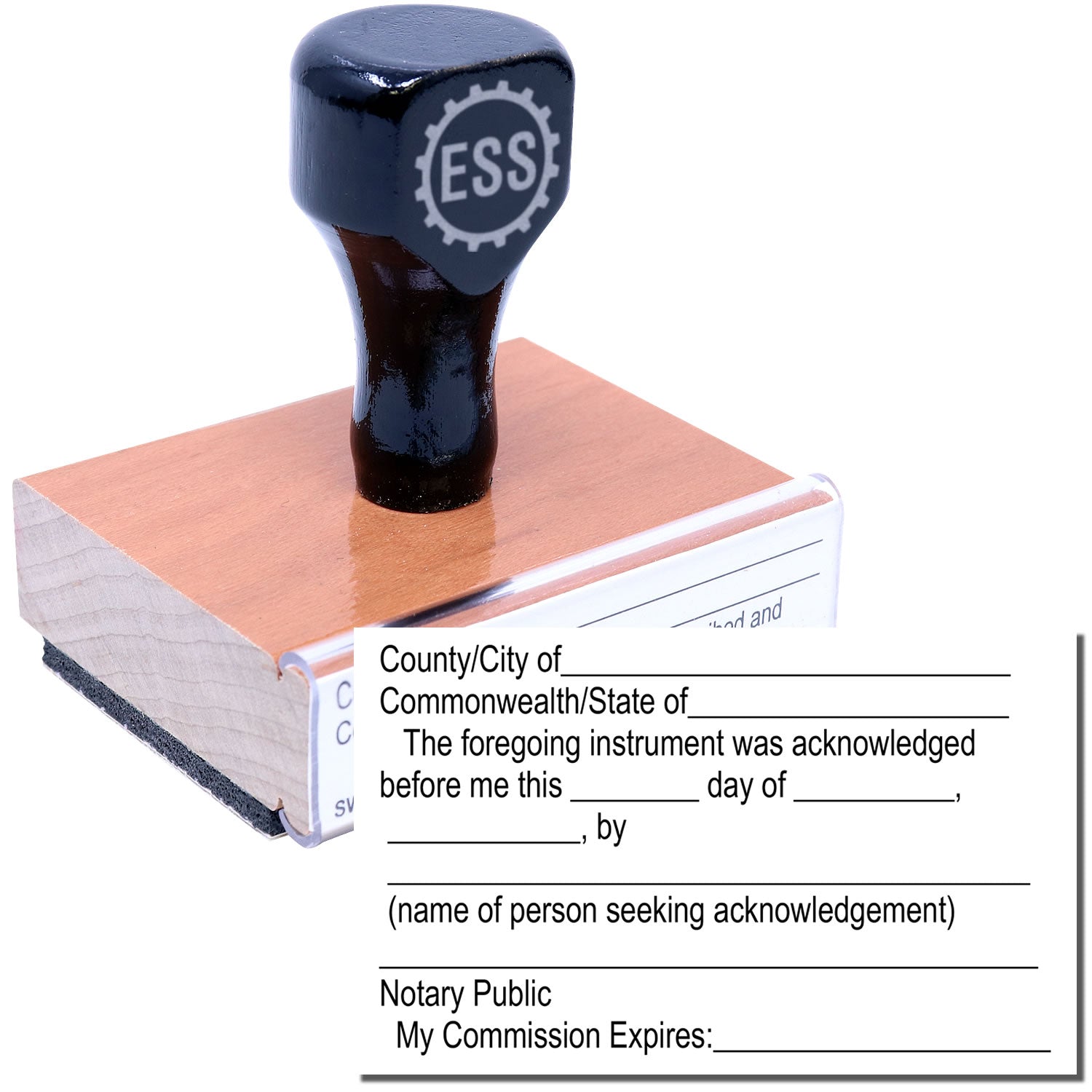
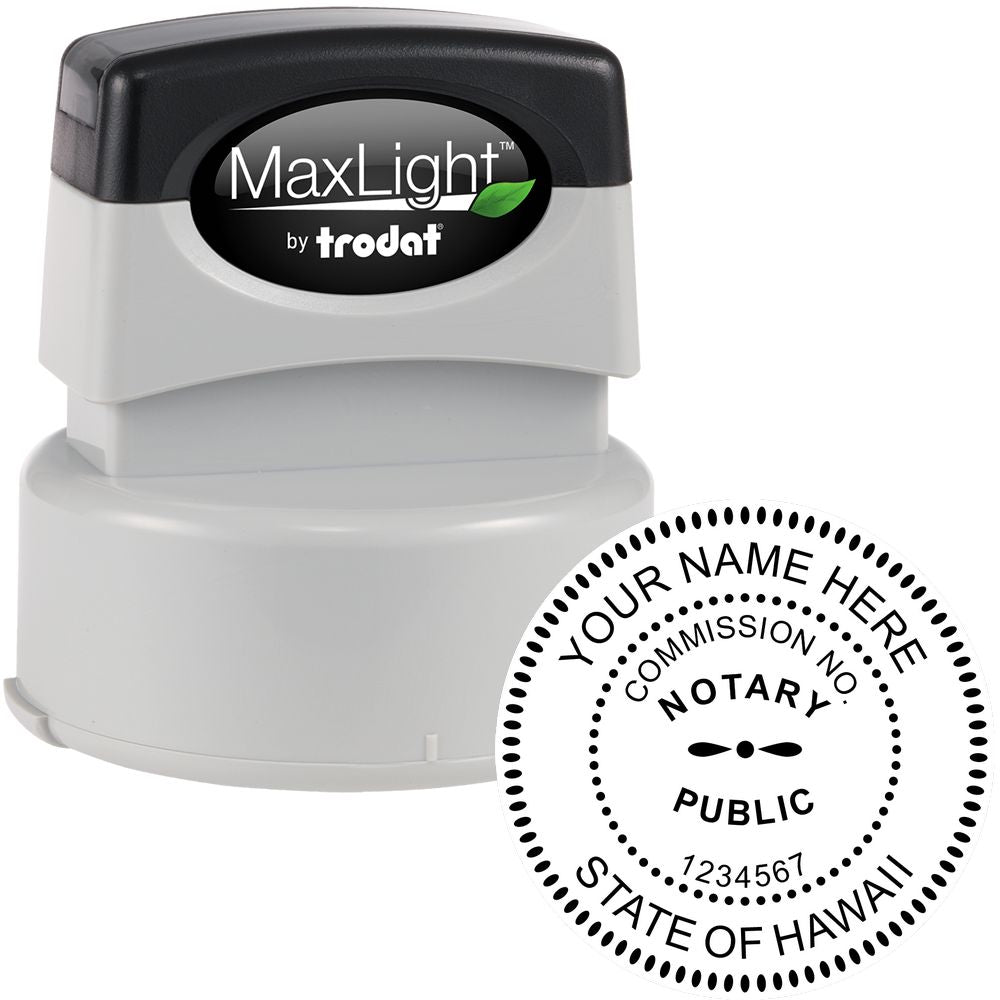
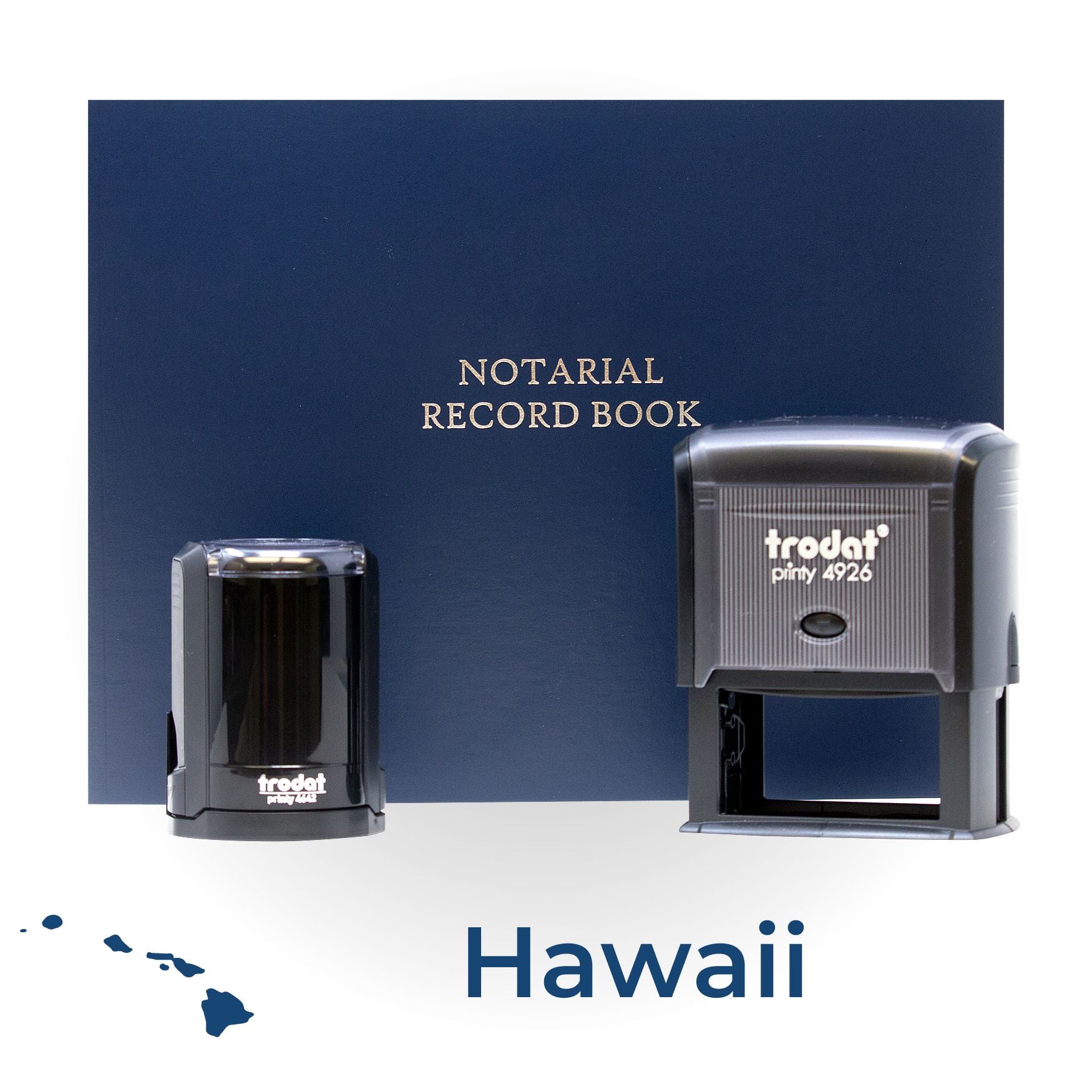
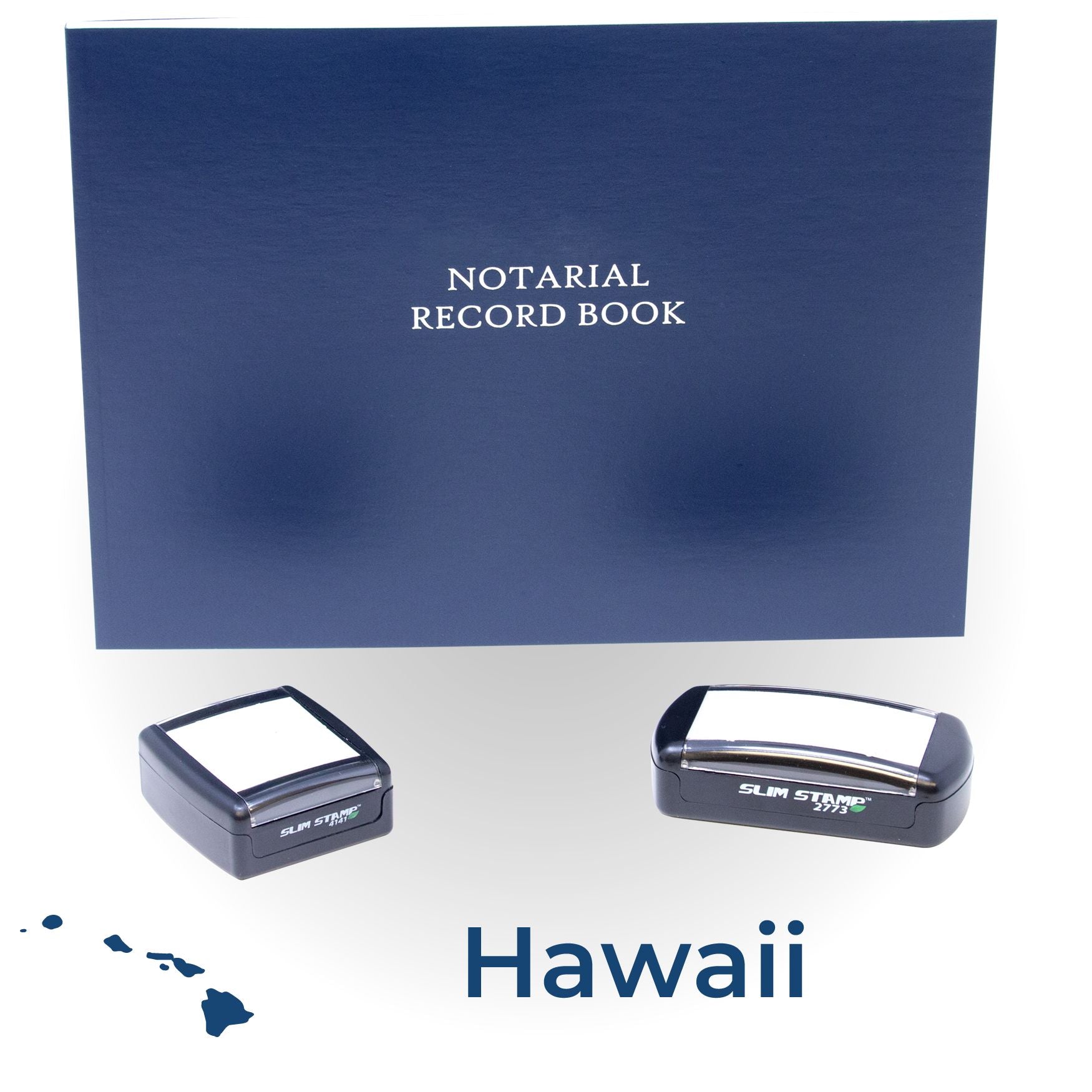
| Seal | Round rubber stamp, 1 to 2 inches, serrated or milled edge, with your name and commission number; no embosser. Hawaii seal rules | Haw. Rev. Stat. § 456-3; Haw. Admin. R. § 5-11-5 |
| Journal | Soft-cover bound book with numbered pages, kept 10 years after its last act | Haw. Admin. R. § 5-11-9 |
| Renewal | Timely when filed within 60 days before expiration; $20 plus $100 | Haw. Admin. R. §§ 5-11-23(a), 5-11-46 |
| Remote online notary | A second commission for active notaries, with its own exam; $20 plus $100 | Haw. Admin. R. §§ 5-11-61, 5-11-64, 5-11-46 |
| Changes | Written notice within 30 days; $10 fee | Haw. Admin. R. §§ 5-11-10, 5-11-46(a)(10) |
How the Hawaii journal rule and remote notarization rule compare with the other 53 jurisdictions: see notary journal requirements by state and remote online notarization by state.
Who can become a notary in Hawaii?
You must be at least 18, a Hawaii resident, and a U.S. citizen, or a U.S. national or permanent resident alien who diligently seeks citizenship once eligible. Every applicant also has to show a reason for the commission in writing.
That reason is the justification letter. It states in detail why you are applying, the estimated number of notarial acts and the types of documents, and confirms that you will serve the general public. Your employer or partner writes it, or you do if self-employed.
A second letter vouches for your integrity and moral character. Under Haw. Admin. R. § 5-11-21(a), it comes from a person living in Hawaii who is neither a relative nor your employer. Government employees seeking a no-fee commission add a justification letter from the department head.
What are the steps to a Hawaii notary commission?
Apply online with both letters and the $20 fee, sit the exam once the Attorney General clears you to schedule it, and pay $100 for the commission. Before notarizing, you execute the $1,000 bond and file your papers with the circuit court clerk.
- Set up an eHawaii.gov account and file the application at notary.ehawaii.gov.
- Include the justification and character letters and pay the $20 application fee.
- Schedule the exam through your notary account after approval; it is held at designated locations in the county where you live.
- Pass with 80% or better and pay the $100 fee for issuance of the original commission.
- Order your seal once the commission gives you a commission number.
- Execute the $1,000 surety bond and have a judge of your circuit court approve it.
- File at the circuit court clerk's office: a copy of the commission, an impression of your seal and a specimen of your official signature.
The application instructions add that you may also file with the other circuit courts, and that each clerk charges a fee for filing.
How much does a Hawaii notary commission cost?
Plan on $130 in Attorney General fees for a first commission: $20 to apply, $10 for the exam and $100 to issue the commission. The bond premium, the circuit court filing fee, the seal and the journal come on top.
- Application: $20, with no fee for government notaries.
- Exam: $10 per sitting. Rescheduling costs $15 when requested more than 48 hours ahead and $20 inside 48 hours.
- Commission: $100 under Haw. Admin. R. § 5-11-46(a)(5). Haw. Rev. Stat. § 456-9 still prints $40 for an original commission, while the rule, the instructions and the manual all list $100.
- Circuit court filing: set by the court.
- Bond, seal and journal: from the vendors you choose.
How does the Hawaii notary exam work?
It is a written, closed-book test of Hawaii notary law, and you need 80 percent to pass. Each sitting costs $10, and the Attorney General gives the exam on Oahu at least once a month and on the neighbor islands periodically.
The Notaries Public page names the law it covers: HRS §§ 456-1 to 456-21, 502-41 to 502-46, 502-48 to 502-84, 603-1, 621-12 and 621-13. No course appears among the requirements, so those sections and the Notary Public Manual are your study materials.
What bond and court filing does Hawaii require?
A $1,000 official surety bond, executed before you take up the duties of the office and approved by a judge of the circuit court where you live. You then file your commission copy, seal impression and signature specimen with that court's clerk.
The bond is deposited with the clerk of your judicial circuit, and the notary or the notary's company pays for it, under Haw. Rev. Stat. § 456-5. The Notary Public Manual says the court filing must happen forthwith after you are commissioned.
Which seal should a new Hawaii notary order?
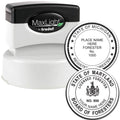
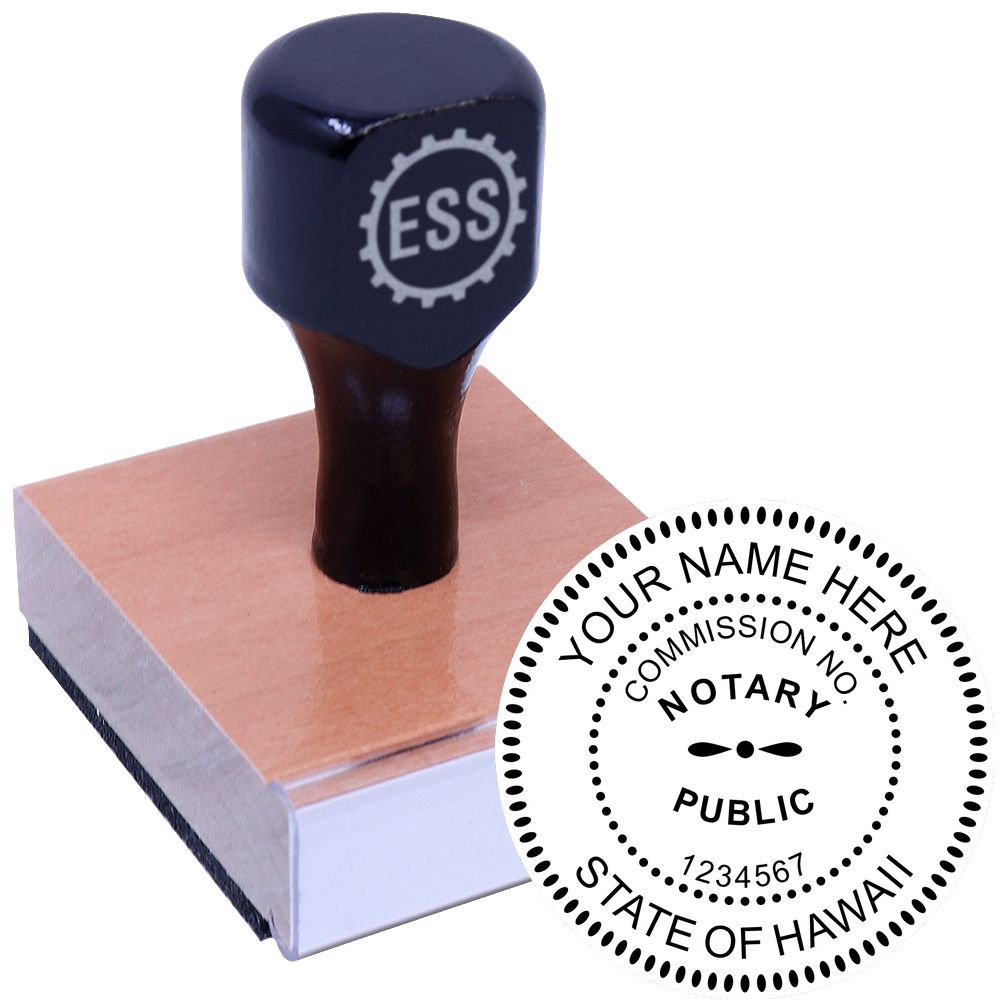
A round rubber stamp seal between 1 and 2 inches across, with a serrated or milled border, showing your name, your commission number, the words notary public and State of Hawaii. Order it after the commission issues, since the number comes with it.
Embossers have not been allowed since the February 2022 rule change, and the rules name no ink color. Our Hawaii notary seal guide covers sizing and the border in more depth.






What journal must a Hawaii notary keep?
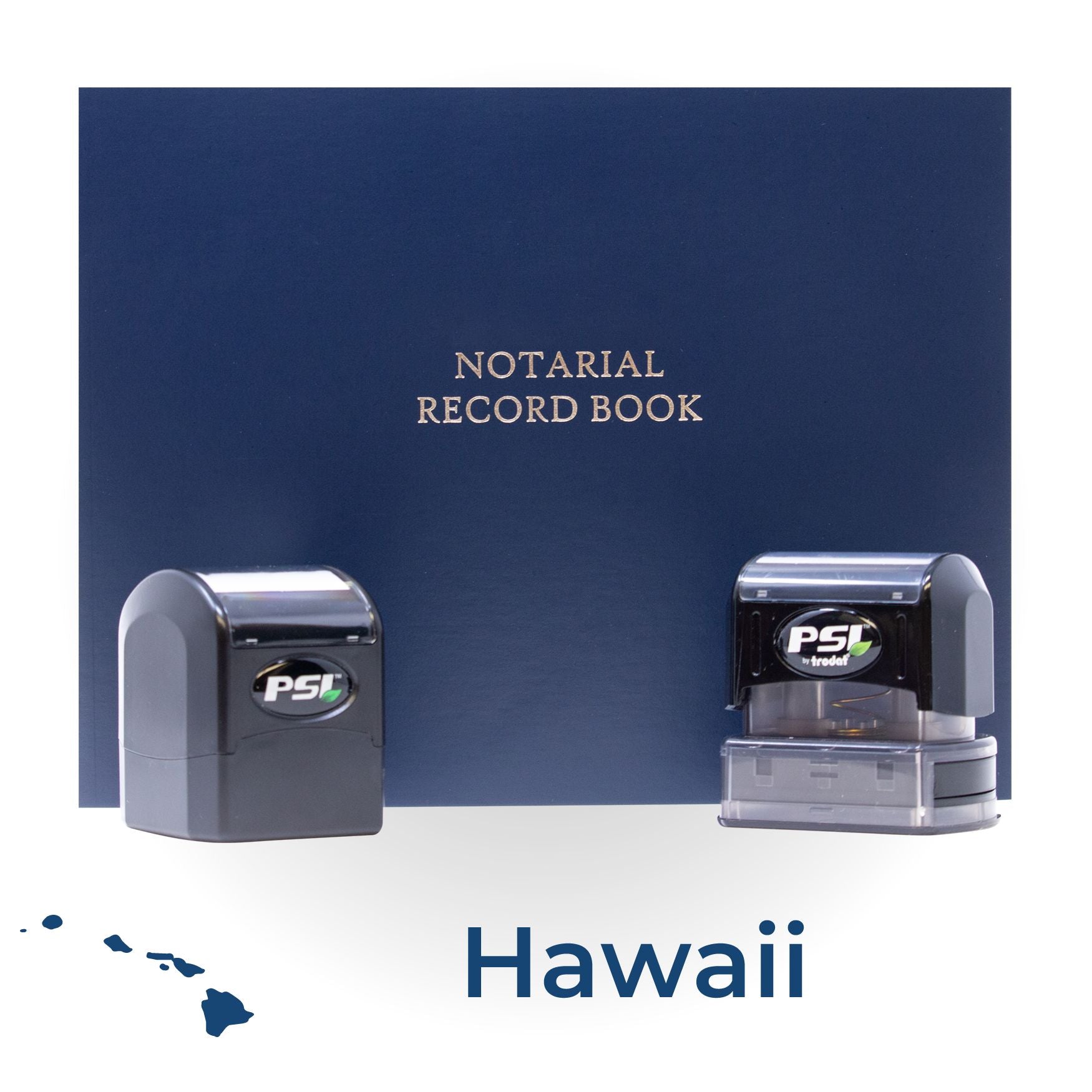
Hawaii requires a record of every notarial act. A paper journal is bound with a soft cover, no larger than 11 by 16.5 inches when open, with consecutively numbered pages, and you keep it 10 years after the last act in it.
Each entry records the type, date and time of the act; the title or type and date of the document; each signer's signature, printed name and address; how you identified the signer; and any fee. The information page lists your name, business address, commission number, expiration date, journal number and the first and last dates covered.
Every set of pages carries your name at the top left and your commission number at the top right. If your commission ends without renewal, you tell the Attorney General where the journal is kept.






What is the Hawaii commission term, and how is it renewed?
Four years from the commission date. A renewal application counts as timely when filed within the 60 calendar days before expiration, and it costs $20 to apply plus $100 for the renewed commission.
Haw. Admin. R. § 5-11-23 asks for the renewal application, the fees and any other requirement provided by law; it does not list a second exam. The Attorney General sends renewal notice to your last address on file, which is one reason the change rules below matter.
Miss the date and the commission is forfeited. Under Haw. Rev. Stat. § 456-1(b), the Attorney General may restore it within one year of forfeiture; after that, the manual treats you as a new applicant.
What changes and losses must you report to the Attorney General?
Send written notice within 30 days of a change in name, employer, home or business address, phone, email or occupation, with the $10 change fee. A lost, misplaced or stolen seal or journal is reported within 10 days.
A name change notice gives the old and new names and the effective date, with a copy of the legal record and your new signature. Late notice brings a $25 fine, or $50 when renewal forms go to an outdated address. For a theft, also inform the police and send the Attorney General a copy of their report; missing the 10-day notice costs $20.
Can a Hawaii notary notarize remotely online?
Yes, with a second commission. Only a notary with an active commission may apply to become a remote online notary public, which requires a separate exam on notarizing remotely located people and $20 plus $100 in fees.
Remote acts use continuous synchronous audiovisual feeds with identity proofing under Haw. Admin. R. §§ 5-11-69 and 5-11-70. The remote notary keeps an electronic journal and the audiovisual recording, and the recording is retained for no less than 10 years.






Frequently asked questions
What is the official website for Hawaii notary applications?
Applications and exam scheduling run through notary.ehawaii.gov, which the Attorney General's instructions direct you to. You sign in with an eHawaii.gov account.
How long does the Attorney General take to act on an application?
The Notaries Public page says the Attorney General acts within six months after a complete application is filed.
What happens if I fail the Hawaii notary exam?
After two failed attempts, Haw. Admin. R. § 5-11-32(f) makes you wait 90 days from the last exam before reapplying.
Do I need a new seal when I renew?
Not for renewal alone. The Hawaii seal shows no expiration date, so it keeps working after a timely renewal. A new name is different, because the seal must show your current name.
Can a Hawaii notary notarize in another state?
No. The manual says a Hawaii commission covers notarial acts in Hawaii only, not in another state or country.
Do government employees pay the application fee?
No. Government notaries pay no application fee, but they submit a justification letter from their department head along with the usual letters.
After your commission number is issued, choose a round Hawaii seal from our Hawaii notary stamps and seals. Requirements elsewhere are collected in our notary seal rules for each state.