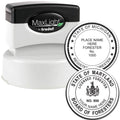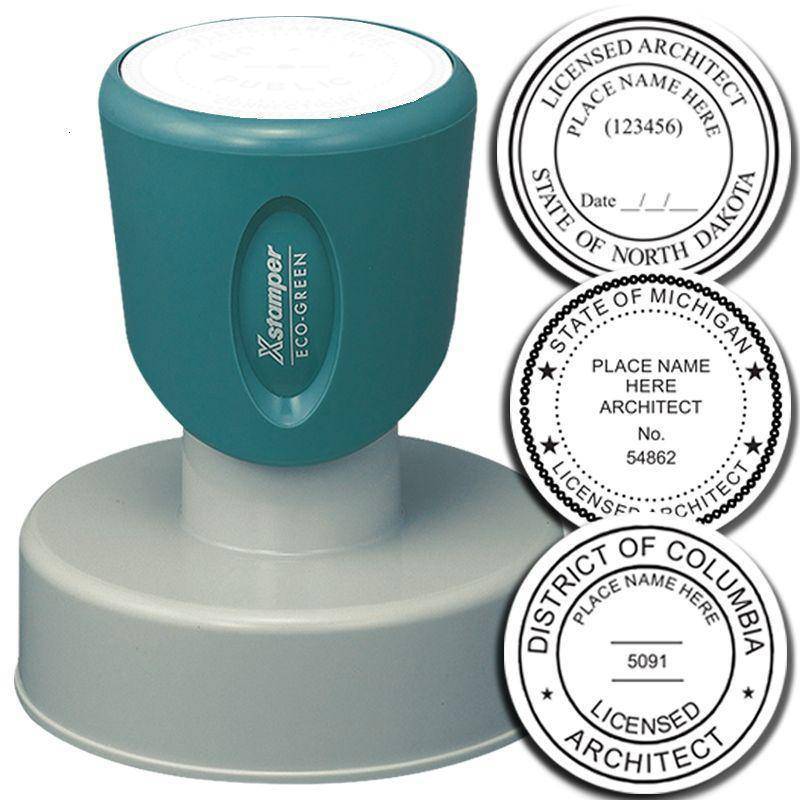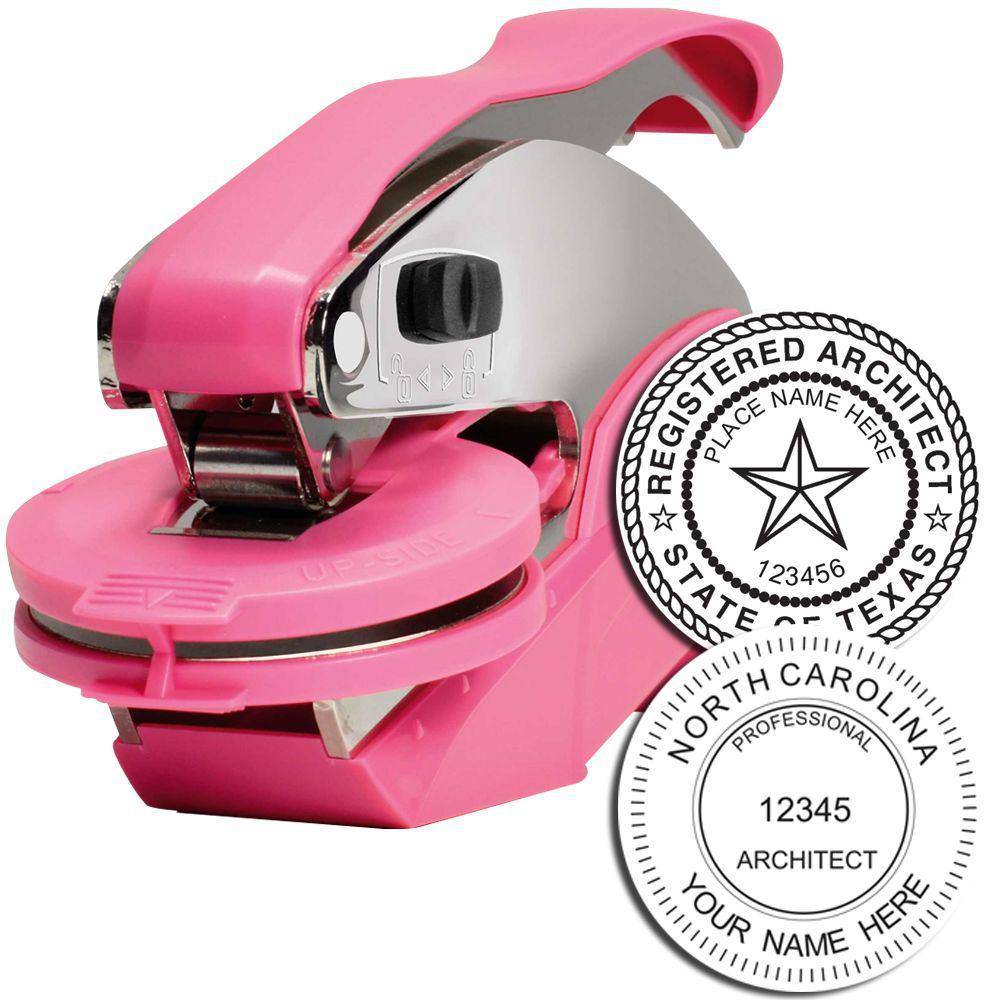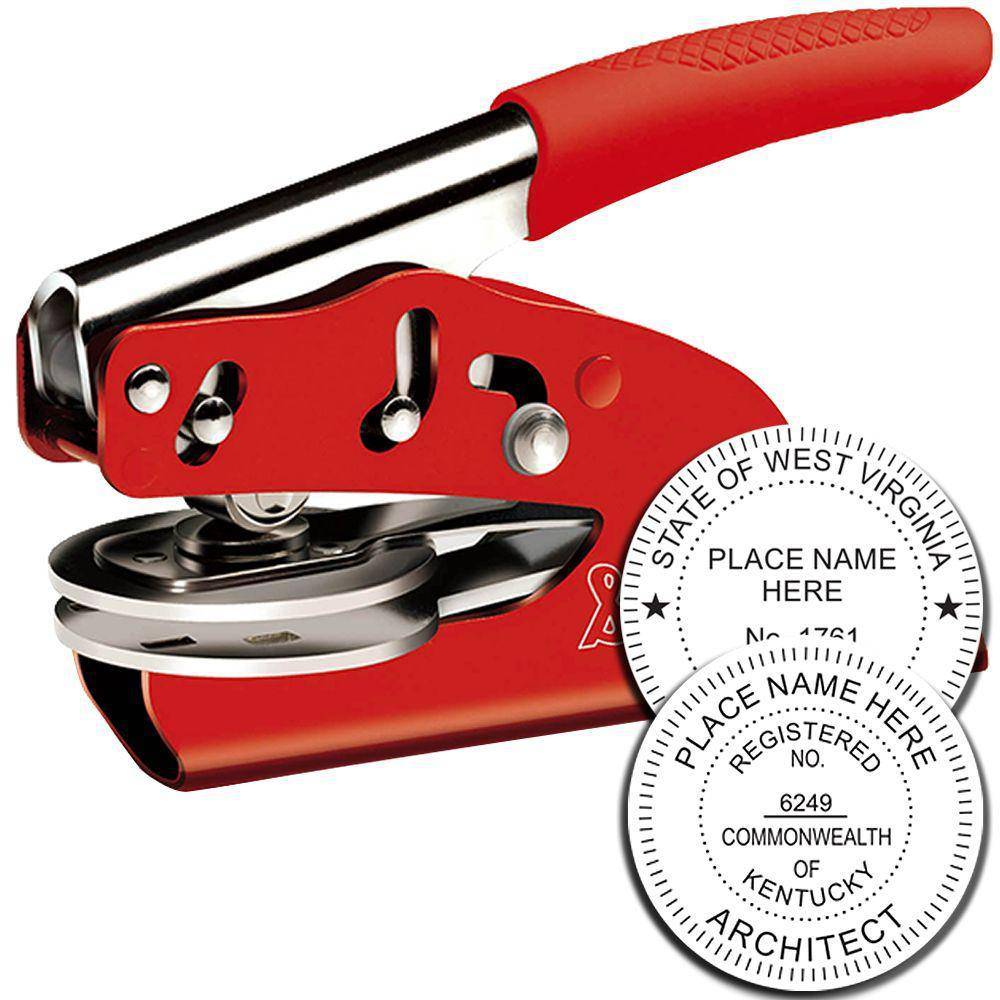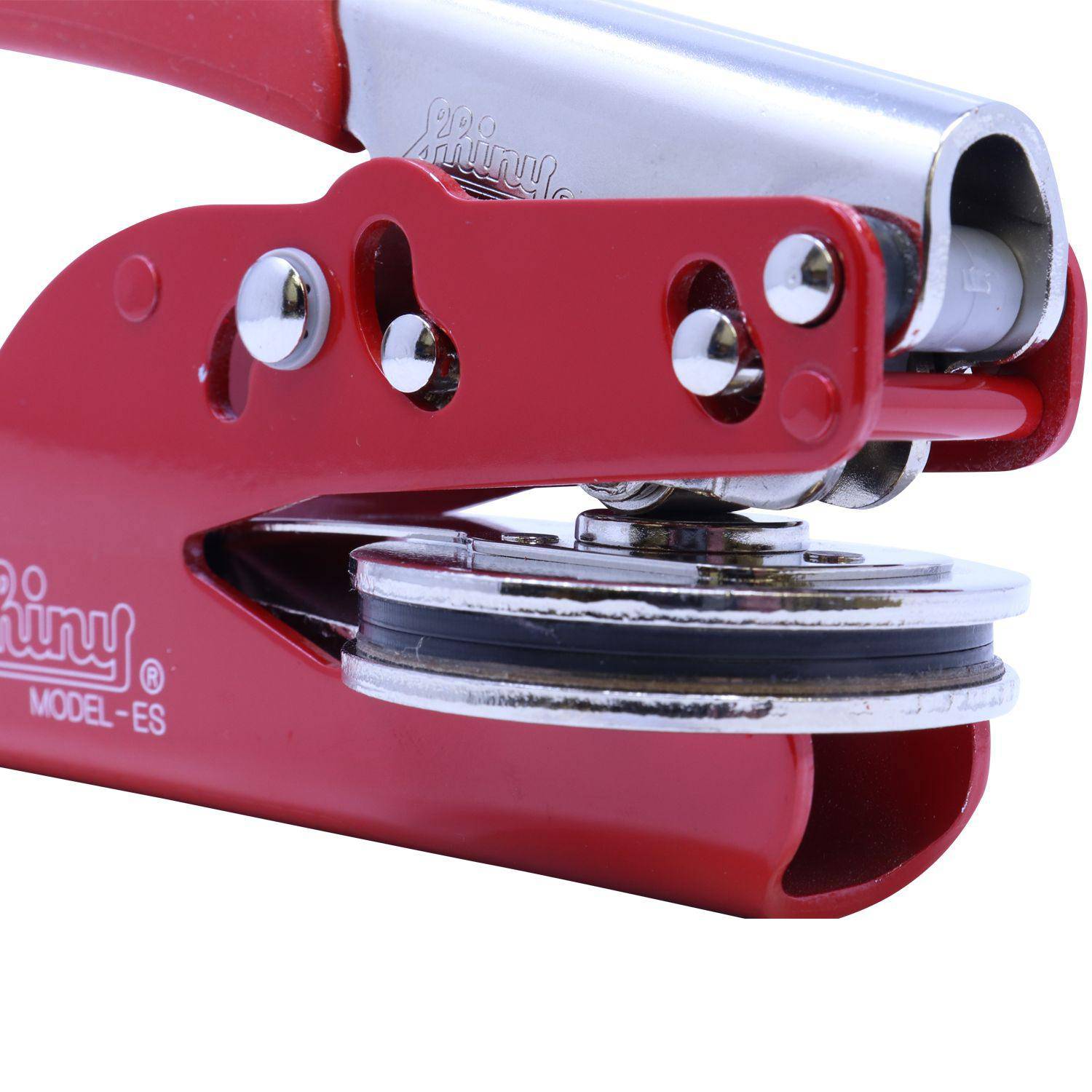
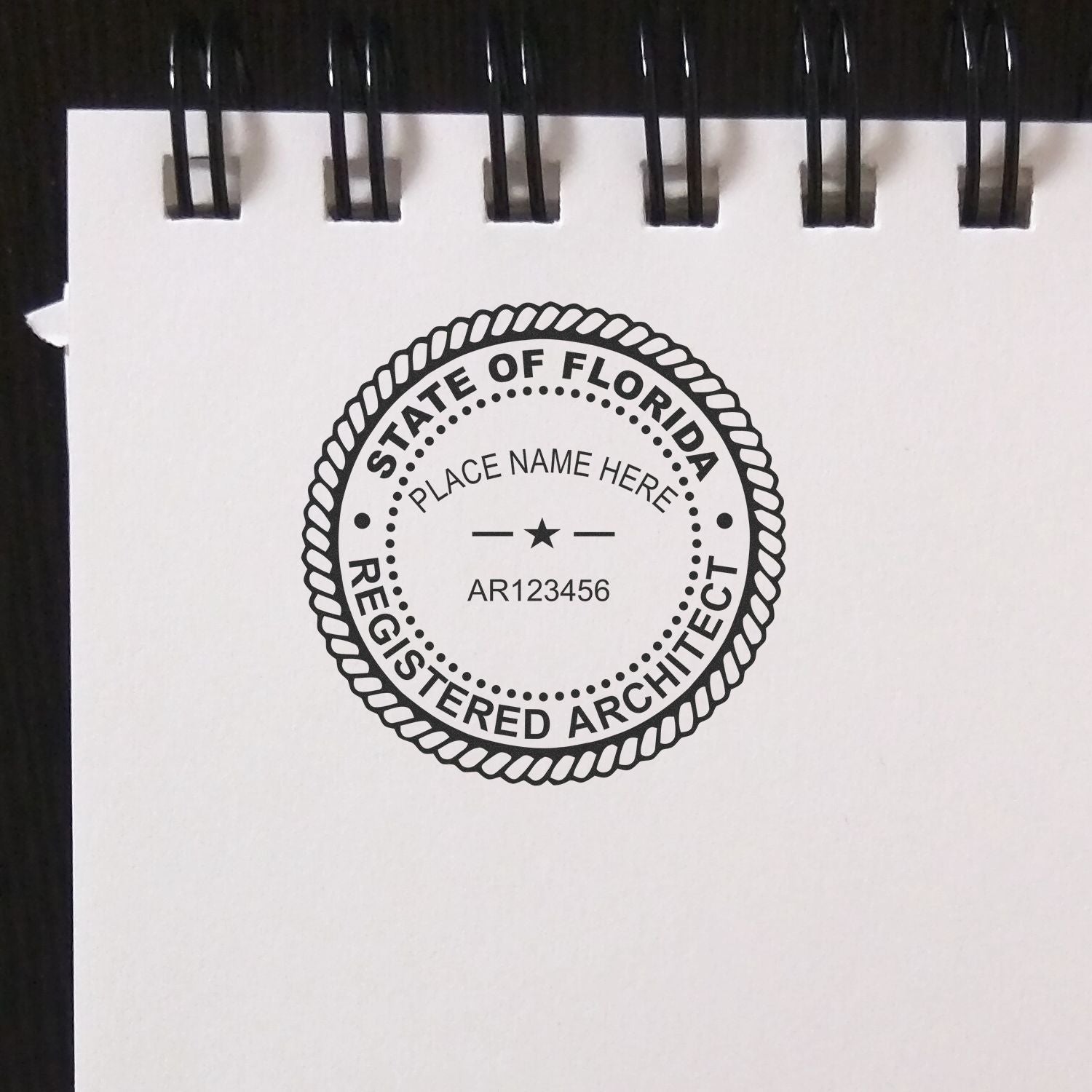
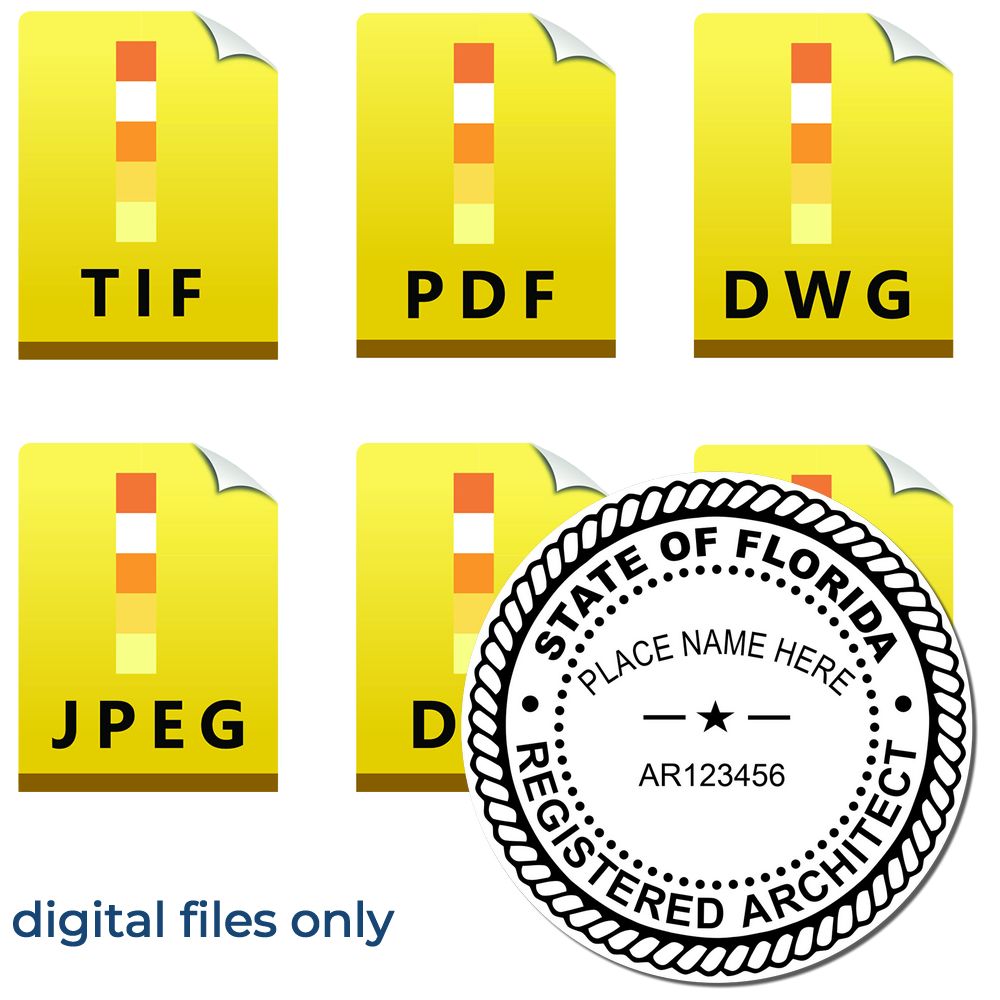
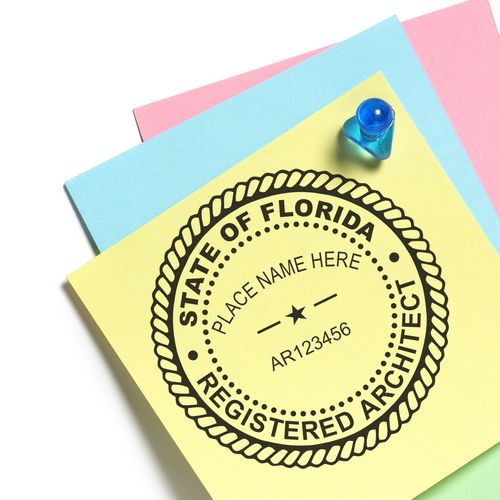
A Florida architect seal is a circle about two inches across, with State of Florida at the top and Registered architect at the bottom between two circular lines, plus one architect's name and registration number. Inked, embossed and computer generated marks all qualify. Final documents filed for public record carry the seal, your signature and the date. This page covers the face, devices, scope, electronic files and lapse.
Engineer Seal Stamps compliance desk. Checked against Fla. Admin. Code r. 61G1-16.002(1). Sources read September 2026.
| Requirement | What the rule says | Source |
|---|---|---|
| Upper legend | State of Florida, set between the two circular lines along the upper edge. | Fla. Admin. Code r. 61G1-16.002(1) |
| Lower legend | Registered architect, between the same lines along the lower edge. | Fla. Admin. Code r. 61G1-16.002(1) |
| Name | One architect per seal. No seal carries two names. | Fla. Admin. Code r. 61G1-16.002(1) |
| Number | That architect's registration number. | Fla. Admin. Code r. 61G1-16.002(1) |
| Outline and diameter | Round, at roughly two inches across. | Fla. Admin. Code r. 61G1-16.002(1) |
| How the mark is made | Inked, embossed or computer generated, with the test applied to the mark left on the document. | Fla. Admin. Code r. 61G1-16.001 |
| Signing | Your own signature and the date accompany the seal on final documents filed for public record. | Fla. Stat. § 481.221(2) |
| Documents covered | Drawings, plans, specifications and reports forming final construction documents or instruments of service, when the set is filed as a public record. | Fla. Stat. § 481.221(2), (4), (6), (8) |
| Electronic files | Allowed, under a rule that ties electronic sealing to a named federal standard. | Fla. Admin. Code r. 61G1-16.005 |
| Registration ends | The seal is handed back or destroyed. | Fla. Stat. § 481.221(11), (12) |
For the same rule in the other 53 jurisdictions, read architect seal requirements by state.
What wording goes on a Florida architect seal?
Four items, all from rule 61G1-16.002(1). State of Florida runs along the top between two circular lines, Registered architect runs along the bottom between the same lines, and the seal also carries one architect's name and that architect's registration number.
The one-name limit matters most in a partnership. A seal cannot be shared between two architects, so each registered architect in the office needs a separate device that carries only their own name and number.
Letter the two legends exactly as the rule gives them. A generic template that swaps in a different phrase, or that reverses the top and bottom lines, does not match. Our overview of Florida architect seal requirements sets these items out in more detail.
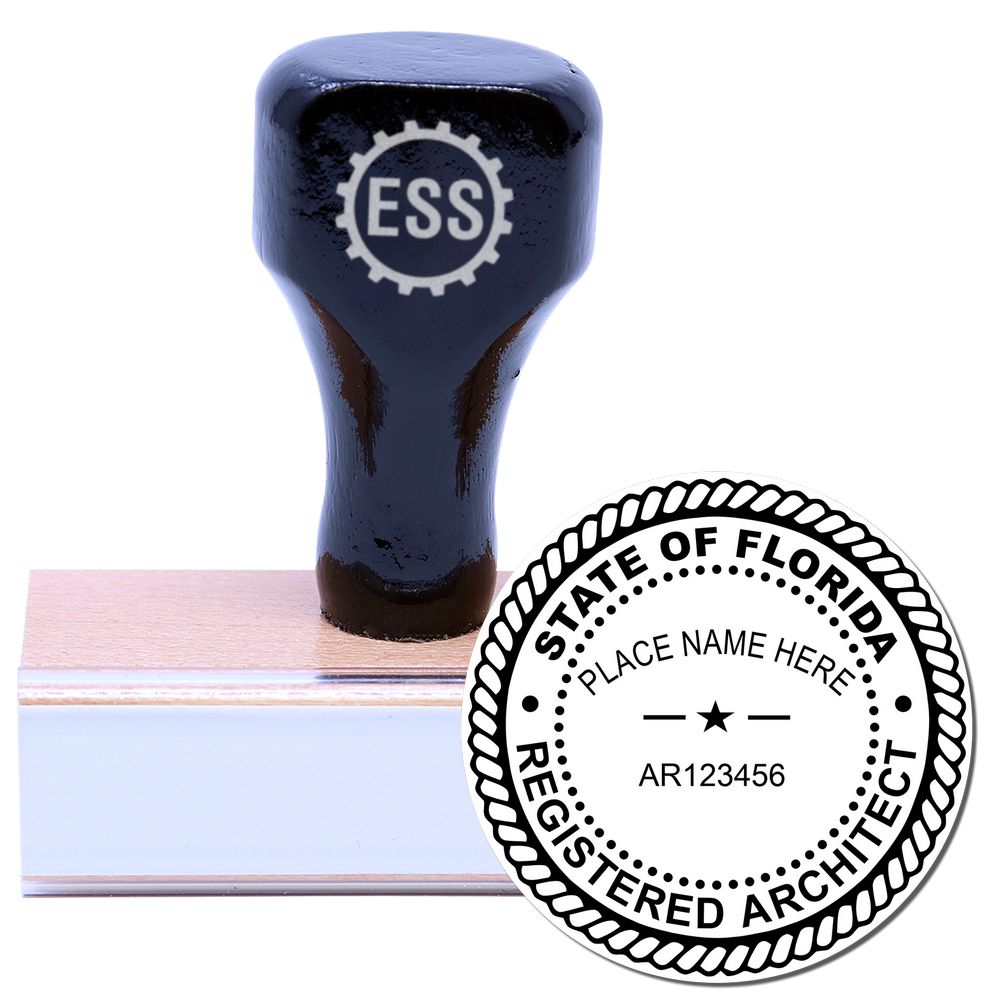
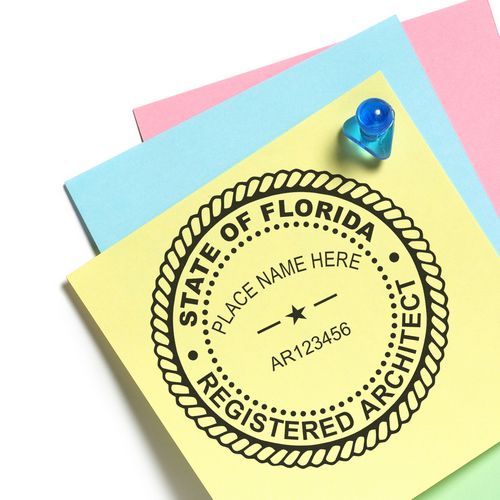
How large is a Florida architect seal, and what shape?
Round, and roughly two inches in diameter. Rule 61G1-16.002(1) states the size as approximately two inches and makes the outline a circle, so a two inch round die is the figure to order.
The rule gives no tolerance figure beyond the word approximately. Treat that word as room for normal manufacturing variation, not as permission to choose a noticeably smaller or larger die. Our guide to choosing a Florida architect seal size covers the size decision.
Which devices meet Florida's impression standard?
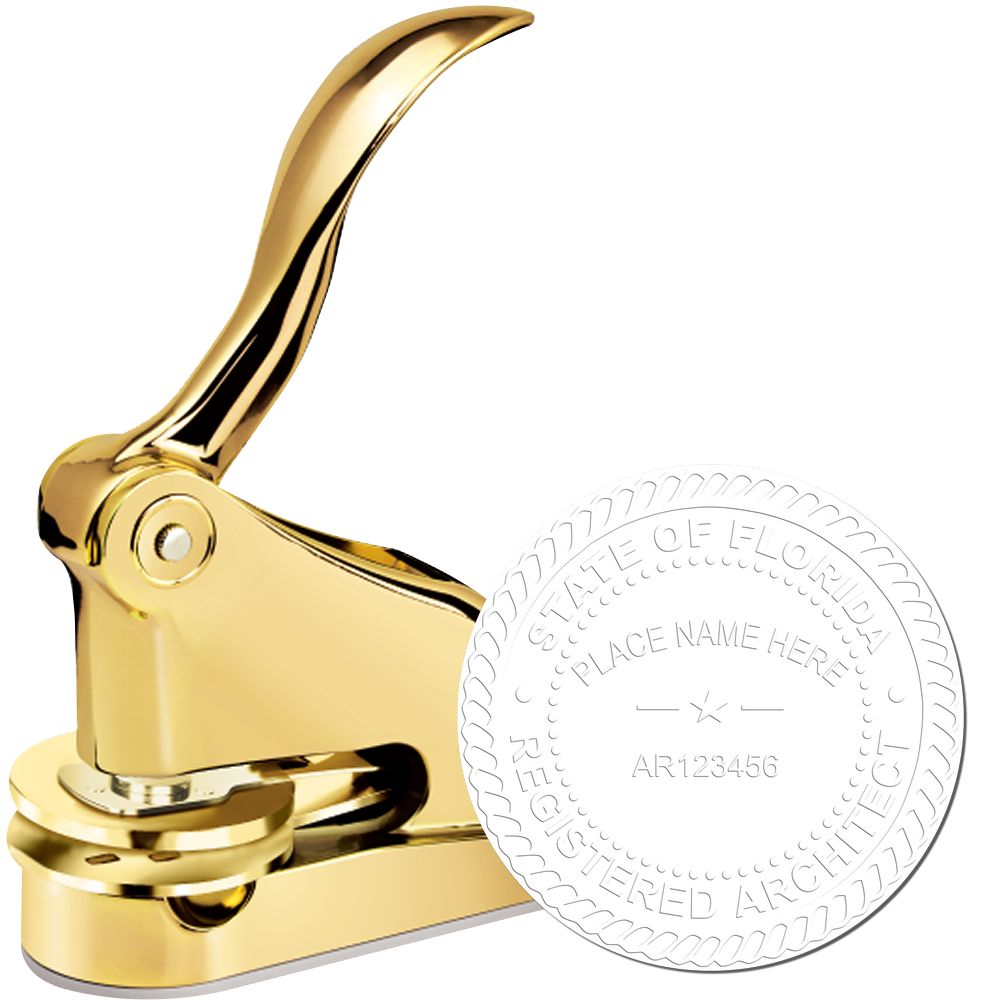
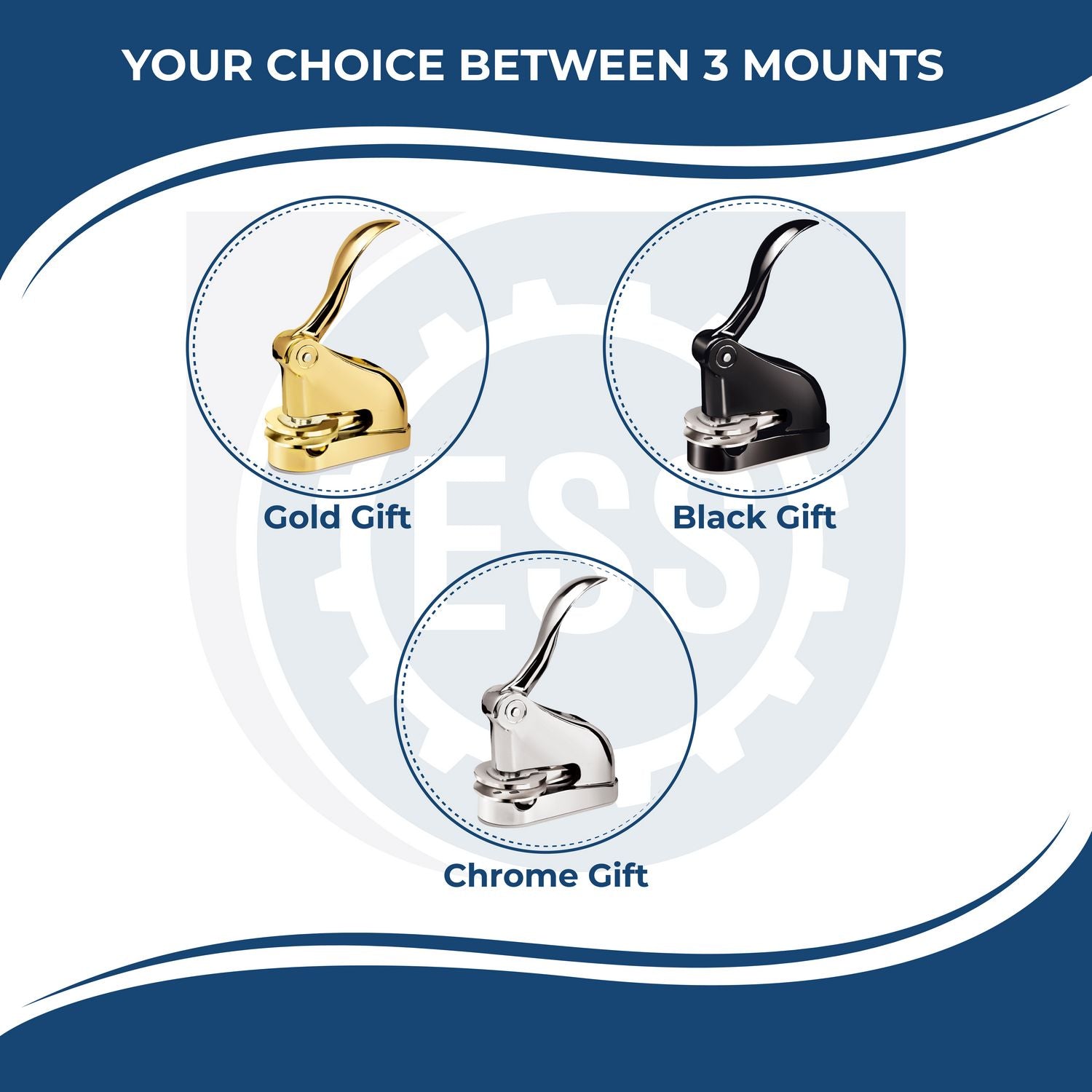
Three kinds: an inked stamp, an embosser, or a computer generated impression. Rule 61G1-16.001 judges each one by the mark it leaves on the document rather than by the tool that made it, so the result on paper or screen is what counts.
That test applies to every method. If an embosser leaves a faint mark on a particular paper, the faint mark is what gets judged, and a computer generated seal is judged by how it appears in the file format you issue. Test your chosen device on the paper and file types you actually use.
Which Florida documents must be sealed?
Documents that are final and are being filed for public record. Florida Statutes section 481.221(2) describes them as construction documents and instruments of service, and names drawings, plans, specifications and reports among them.
Two conditions work together: the document is final, and it is filed for public record. A working set passed around the office is not what this provision describes, while the set lodged for public record is. Treat the filing as the moment to confirm that seal, signature and date are all in place.
Subsections (4), (6) and (8) of the same section are cited with subsection (2) on sealing scope, so read all four when a project raises a question about which sheets are covered.
Do a signature and date go with the seal?
Yes. Section 481.221(2) puts three things together on any final document that goes into the public record: the seal, your personal signature and the date. A sealed sheet that is missing either of the other two is incomplete.
Personal is the operative word for the signature. It is yours as the architect, not a firm's. Leave room for both the signature and the date close to the seal location in your title block so the three appear as a set.
Can a Florida architect seal documents electronically?
Yes. Rule 61G1-16.005 permits electronic sealing and ties the process to a named federal standard rather than leaving the method open, so your signing software has to meet that standard for an electronically sealed file to comply.
Before switching from paper, read rule 61G1-16.005 next to your signing software's documentation and confirm the two line up. Our article on why a Florida architect stamp matters looks at the role the seal plays on your work.
What happens to the seal when a Florida registration ends?
It is handed back or destroyed. Section 481.221(11) and (12) take the seal out of use once the registration lapses, rather than leaving the device with the former registrant to keep or reuse.
If you plan to return to practice, expect to order a fresh seal at that point, built from the registration details that apply then. Our piece on Florida architect certification covers the credential side of the question.
What should you give a seal maker for a Florida order?
Your name, your registration number, confirmation that the seal is round at about two inches, and the two legends exactly as the rule words them. Add the device type you want: inked stamp, embosser, computer generated image, or a mix of these.
- One architect's name only
- The registration number that goes with that name
- State of Florida for the top line and Registered architect for the bottom line
- A two inch round outline with two circular lines
- Device type or types
Our guide to Florida architect seals covers the product options in more depth.
How do you test a new Florida seal before using it?
Make a test impression and measure it. The circle should come in at about two inches, State of Florida should sit at the top and Registered architect at the bottom between the circular lines, and the name and number should match your registration.
Then judge the mark the way the rule does, by what it leaves behind. Photocopy or scan the test sheet, and for a computer generated seal open the output file on a second machine. If any line is faint or broken, fix the device before it goes on a document filed for public record.
Frequently asked questions
Can the seal be square, oval or another shape?
No. Rule 61G1-16.002(1) makes the architect seal circular, with the legends running between two circular lines. Any other outline departs from the rule.
Can my firm name appear on the seal?
The rule's list is the two legends, one architect's name and that architect's registration number. A firm name is not on the list, so keep it in the title block rather than on the seal.
Is a slightly smaller seal acceptable?
The rule says approximately two inches and stops there. A die that is noticeably smaller moves away from the stated figure, so the safe choice is to order two inches and let normal variation do the rest.
Does a scanned image of my stamp count as an electronic seal?
Electronic sealing sits under rule 61G1-16.005, which ties it to a named federal standard. A picture of your stamp placed in a file does not, by itself, show that the standard has been met.
Is an embosser enough on its own?
Embossing is one of the three methods rule 61G1-16.001 allows. Because the rule judges the mark rather than the tool, the question is whether the embossed impression can be read on the document as issued.
When your registration details are ready, pick a two inch round device from our Florida stamps and seals collection.