
To become a notary in Kansas, you must be 18, a U.S. citizen who lives in Kansas or lives in a bordering state and works in Kansas, and able to read and write English; you then buy a stamp and a $12,000 bond, swear the oath before a notary and file Form NO with the Secretary of State. Kansas wants your stamp impression on the application itself. Paper notarizations need no exam. Read on for the steps, the fees, the bond, the journal rule and four-year renewals.
Engineer Seal Stamps compliance desk. Checked against the Kansas Secretary of State notary pages, Form NO and Kansas Notary Handbook, and the Revised Uniform Law on Notarial Acts at K.S.A. 53-5a01 through 53-5a31. Sources read September 2026.
| Requirement | Short answer | Source |
|---|---|---|
| Qualifications | Age 18 or more; U.S. citizenship; Kansas residence, or residence in a bordering state plus a regular place of employment or practice in Kansas; English literacy | K.S.A. 53-5a22 |
| Training or course | None for paper notarizations | K.S.A. 53-5a23 |
| Exam | Only before your first act on an electronic record; free on the Secretary of State's website | K.S.A. 53-5a23; Kansas Notary Handbook |
| How to apply | Form NO carrying your oath, bond, signature and stamp impression | K.S.A. 53-5a22; Form NO |
| Application fee | $25 per the Secretary of State; the statute's text says $10 | Secretary of State notary page; K.S.A. 53-5a22 |
| Bond | $12,000 surety bond for four years, matching the appointment | K.S.A. 53-5a22; Form NO |
| Oath | Sworn before another notary, who completes section B of Form NO | Secretary of State notary page |
| Commission term | Four years, with no automatic renewal | K.S.A. 53-5a22; Kansas Notary Handbook |
| Stamp | Bought before you apply; name exactly as on the application, notary public and State of Kansas. Kansas stamp rules | K.S.A. 53-5a18 |
| Journal | Required for every act since January 1, 2022; kept 10 years | K.S.A. 53-5a20 |
| Renewal | Repeat every step and pay $25, no more than 90 days before expiration | Secretary of State notary page; Form NO |
| Electronic or remote | Free training and exam, then Form NC; remote notarization adds a $20 fee | Kansas Notary Handbook; Secretary of State notary page |
| Name change | New stamp and notice to the Secretary of State before your next act | Kansas Notary Handbook |
Two national tables put this Kansas guide in context: which states require a notary journal and where remote online notarization is allowed.
Who can become a notary in Kansas?
Adults 18 or older who are U.S. citizens, read and write English, and either live in Kansas or live in a bordering state while holding a regular place of employment or practice in Kansas. You also must not be disqualified under K.S.A. 53-5a24.
The border route covers residents of Missouri, Nebraska, Oklahoma and Colorado with a Kansas job or practice. Citizenship comes from K.S.A. 53-5a22 itself; the Secretary of State's summaries list only the age and residency tests, so plan on meeting the statute's citizenship rule as well.
What are the steps to become a Kansas notary?
Kansas runs the usual order backward. You buy the stamp and the bond first, swear the oath in front of another notary, and then send Form NO, stamped with your device's impression, to the Secretary of State with the fee.
- Buy a stamping device, either an ink stamp or an impression seal, with your name exactly as you will write it on the application.
- Buy a $12,000 surety bond written by a Kansas-authorized surety, covering four years to match the appointment.
- Swear the Kansas notary oath before another notary, who completes section B of Form NO.
- Stamp an impression of your device on Form NO and add your official signature.
- Submit the form and pay $25. The Secretary of State's notary page describes uploading it and paying by credit card; the Form NO instructions (Rev. 9/18/25) describe mailing it with the fee.
- Watch the online notary listing. After approval, the Secretary of State posts your status, expiration date and commission number there and mails a certificate showing the same details.
- Begin notarizing only when your status is active online and shows an expiration date.
What does a Kansas notary commission cost?
Budget for the $25 filing fee the Secretary of State charges, the premium on a four-year $12,000 bond, the stamp and a journal. K.S.A. 53-5a22 still prints a $10 application fee, but the office's notary page and Form NO both ask for $25.
- Filing fee: $25 with Form NO, and $25 again at each renewal.
- Bond premium: set by the surety; the Secretary of State publishes no price.
- Stamp: bought before you apply, since its impression goes on the form.
- Journal: required for every notarial act.
- Remote online notarization: a $20 fee when you notify the Secretary of State; the training and test are free.
Does Kansas require a notary exam or course?
Not for a paper commission. K.S.A. 53-5a23 requires an exam only before your first notarial act on an electronic record, and the Secretary of State provides the training and test online at no cost.
That rule reaches both in-person electronic notarization and remote online notarization. The handbook says to finish the training and testing first, then submit Form NC to notify the Secretary of State and pay the fee. For remote work, you also select a remote online notarization provider.
How does the $12,000 Kansas notary bond work?
The bond is $12,000, written by a surety or similar company that holds a license or authorization to operate in Kansas, and it runs four years to line up with your appointment. It is part of the application packet under K.S.A. 53-5a22, not a later filing.
The handbook dates the $12,000 amount to applications submitted on and after January 1, 2022. An older Secretary of State notary page still shows $7,500, but the statute, the current general services notary page and Form NO (Rev. 9/18/25) all say $12,000. Each renewal needs a new bond, because renewing repeats every step.
What stamp should you buy for a Kansas notary application?
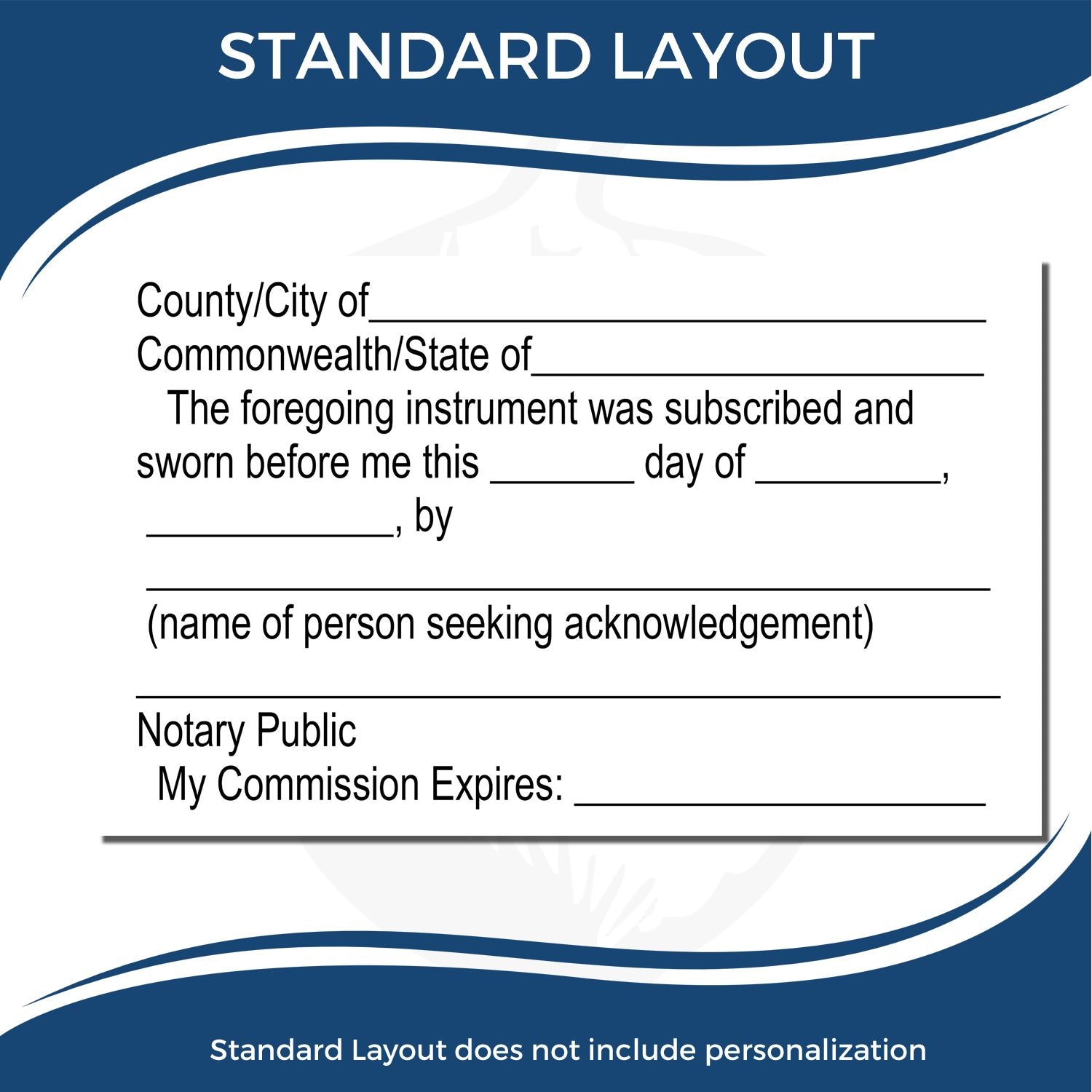
Buy it before you apply. The face must show your name exactly as it appears on your application, plus the words notary public and State of Kansas, and its impression goes on Form NO so the Secretary of State has it on file.
K.S.A. 53-5a18 bars you from using a stamp whose impression has not been filed. The expiration date is not cut into the face; the design leaves an open space where you write it in. No size, shape or ink color is set, and the Secretary of State's first step accepts an ink stamp or an impression seal.
Our Kansas notary stamp guide explains the write-in date and what a name change does to the stamp.


What must a Kansas notary journal contain?
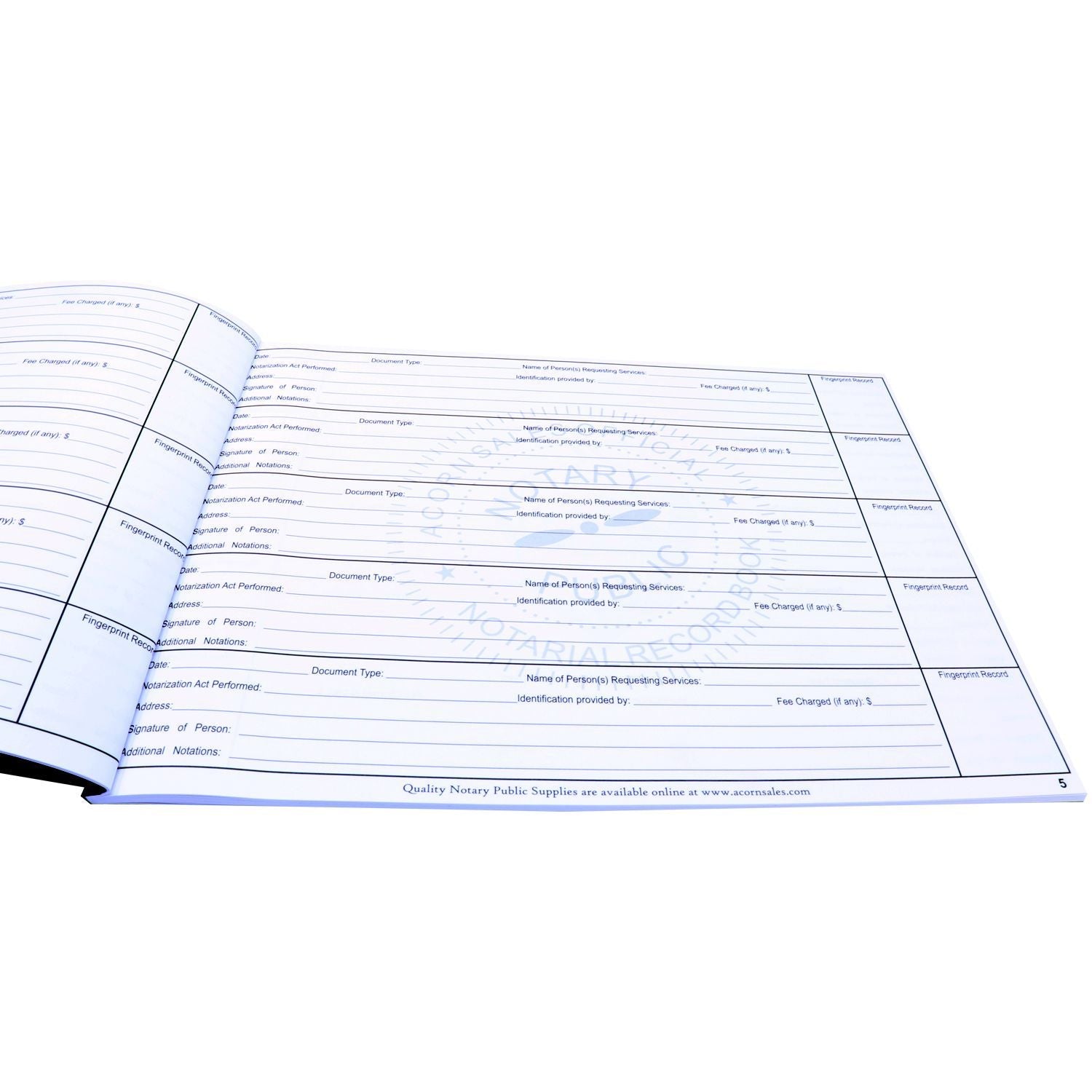
Every notarial act since January 1, 2022 goes in a journal, and K.S.A. 53-5a20 sets its contents. You keep it for 10 years after the last act recorded, whether it is a bound paper register or an electronic journal.
K.S.A. 53-5a20 has you log six things per act: its date and time, the record involved and the kind of notarial act, each person's full name and address, whether you knew the person or which evidence of identity you relied on, and any fee. On paper, the journal has to be a permanent bound book whose pages are numbered, and only one paper journal may be open at a time.
Electronic records can go in one or more electronic journals, backed up and secured against unauthorized use. After you resign, the handbook requires destroying the stamp or making it unusable, while the journal must still be kept for 10 years after its last entry.


How long does a Kansas appointment last, and how do you renew it?
Four years. Nothing renews on its own: you meet the qualifications again and file a new application, repeating each step and paying $25, and Form NO asks you not to submit it more than 90 days before your current appointment expires.
That means a new bond and a new sworn oath every four years. Your expiration date appears in the Secretary of State's online Notary Search and on your certificate, and our guide to notary seal expiration dates helps you track it across terms.
What if your name changes or your stamp is lost?
A legal name change requires a new stamp and notice to the Secretary of State before your next notarial act. Kansas sets no day count, so stop notarizing until the notice, with a specimen of the new stamp and of your new signature, is delivered.
The handbook also asks you to report a change of address to the Secretary of State. For a lost or stolen stamp, you or your representative must promptly notify the Secretary of State on learning it is missing.


Frequently asked questions
Where do I get the Kansas notary public appointment form?
Form NO is posted on the Secretary of State's notary page. It is used for new appointments and renewals, and it carries your sworn oath and an impression of your stamp.
Can a Kansas notary work in any county?
Yes. The handbook states that a Kansas notary may perform a notarial act in any county in the state, whichever county you live or work in.
Can I live in Missouri and be a Kansas notary?
Yes, if you have a regular place of employment or practice in Kansas and meet the other qualifications. The same bordering-state rule applies to Nebraska, Oklahoma and Colorado residents.
Why is the expiration date blank on my Kansas stamp?
Kansas stamps carry an open space for the date rather than a fixed one. You write in the expiration date shown in the online listing and on your certificate.
When can I notarize my first document?
Only after the Secretary of State's online listing shows your appointment as active with an expiration date, according to the office's notary page.
Because Kansas needs your stamp impression before it will process Form NO, choose your device first from our Kansas notary stamps and seals, with your name exactly as it will read on the form. For other states' stamp wording, see our national guide to notary seal requirements.