
To become a notary in Montana, you must be at least 18, a citizen or permanent legal resident of the United States, literate in English and either a Montana resident or someone with an accepted tie such as a Montana job, then complete 4 hours of approved education, pass the state exam, buy a $25,000 surety bond and apply online for $25. Commissions last four years, and every renewal repeats the exam and bond. This page covers the steps, stamp, journal and Montana's renewal window.
Engineer Seal Stamps compliance desk. Checked against the Montana Secretary of State's notary program pages and Montana Notary Public Handbook, Mont. Code Ann. Title 1, Chapter 5, Part 6, and ARM Title 44, Chapter 15. Sources read September 2026.
| Step or rule | Montana answer | Source |
|---|---|---|
| Who can apply | Adults at least 18, citizens or permanent legal residents of the United States, literate in English, living in Montana or holding an accepted work, license or military family tie | Mont. Code Ann. § 1-5-619 |
| Education | At least 4 hours of approved notary education in the 12 months before applying | Mont. Code Ann. § 1-5-620 |
| Exam | Required of new and renewing applicants; 80% passes; three tries, then a three-month wait | Mont. Code Ann. § 1-5-620; Secretary of State application page |
| How to apply | Online only through the Secretary of State's portal; paper applications are returned | Secretary of State application page |
| Application fee | $25, nonrefundable | ARM 44.15.102 |
| Bond | $25,000 surety bond on the state's form, covering the four-year term | Mont. Code Ann. § 1-5-619 |
| Oath | Statement and Oath of Office on the bond form, signed before another notary | Secretary of State application page |
| Term | Four years | Mont. Code Ann. § 1-5-619 |
| Stamp | Rectangle of about 1 by 2.5 inches in blue or black ink, with your name, title, town and expiration date. Montana stamp rules | Mont. Code Ann. § 1-5-616(2)(a) |
| Journal | Required for every notarial act, kept 10 years | Mont. Code Ann. § 1-5-618 |
| Renewal | Exam, education and a new bond, filed from 30 days before to 30 days after expiration | Mont. Code Ann. §§ 1-5-619, 1-5-620 |
| Remote notarization | Secretary of State authorization after an approved course and exam | Mont. Code Ann. § 1-5-615; Secretary of State technology page |
| Changes | Name, physical address or mailing address within 30 days | ARM 44.15.106 |
For journal and remote notarization rules beyond Montana, compare the 54-jurisdiction journal table with the 54-jurisdiction remote notarization table.
Who can become a notary in Montana?
Mont. Code Ann. § 1-5-619 requires you to be at least 18, a citizen or permanent legal resident of the United States, literate in English, and a Montana resident unless one of the ties the law accepts in place of residency applies to you.
The Secretary of State lists those ties as:
- being the spouse or legal dependent of military personnel assigned to active duty in Montana;
- keeping a place of business in Montana registered under Title 35;
- being regularly employed at an office, business or facility in Montana by a registered and licensed employer;
- holding a current professional license to practice in Montana.
What are the steps to get a Montana notary commission?
Montana sets a fixed order: education, exam, bond, then application. Everything is filed online through the Secretary of State's portal, and paper applications come back unprocessed. Approval arrives by email, and you download the commission certificate from the portal.
- Complete at least 4 hours of approved education within the 12 months before you apply. The Secretary of State's Notary Academy lists the courses it has approved.
- Pass the Montana Notary Exam no more than six months before you submit the application.
- Buy a $25,000 surety bond on the Secretary of State's standardized form, which also carries the Statement and Oath of Office.
- Sign the bond twice: once as principal, and a second time in front of another notary.
- Apply online through the Secretary of State's business portal and pay the $25 fee by credit card, debit card or eCheck.
- Download your Commission Certificate after the approval email arrives.
- Order your stamp and journal from a stationery or office supply source.
The Secretary of State's application page covers new and renewal filings in one place.
What education and exam does Montana require?
Mont. Code Ann. § 1-5-620 requires 4 hours of approved notary education and a pass on the state exam before a commission issues. Renewing notaries take the exam again too, and the Secretary of State treats a grade of 80% as passing.
The education must cover the laws, rules, procedures and ethics of notarial acts, and only courses the Secretary of State has approved count. For the exam, you get three attempts; after a third failure you wait three months before trying again. A pass must be no more than six months old when you apply.
Renewal education can be 4 hours in the 12 months before applying, or at least 2 hours of continuing education in each of the 3 years before renewal.
How does the $25,000 Montana notary bond work?
You need a $25,000 surety bond, or its functional equivalent, covering acts across the full four-year term, written on the form the Secretary of State prescribes. That form doubles as your Statement and Oath of Office, so the bond and oath are signed together.
The Handbook requires the bond with every new or renewed commission. Section 1-5-619 also calls for the application to be submitted within 30 days before or after the bond's effective date or the expiration of the previous commission.
What does it cost to become a notary in Montana?
The Secretary of State charges a $25 application fee, nonrefundable, under ARM 44.15.102. Around it sit the bond premium, the price of an approved education course, the stamp and the journal, all set by the companies you buy from.
- Application: $25, paid online.
- Bond: $25,000 of coverage; the Secretary of State's application page says the premium is usually about $50 to $70.
- Education: priced by each approved provider.
- Stamp and journal: both required, with a new stamp at the start of every term.
What stamp should you order after Montana approves your commission?
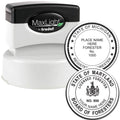
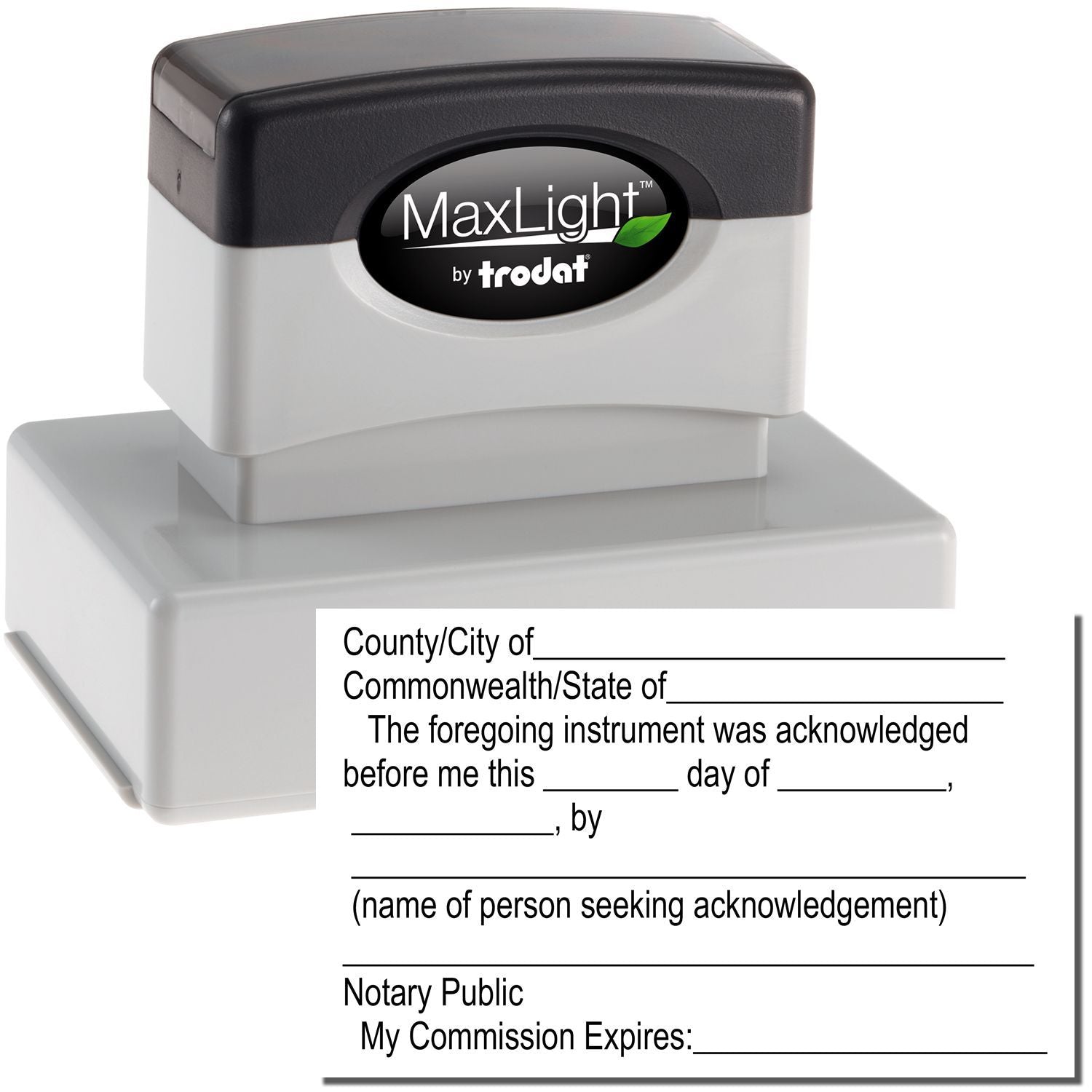
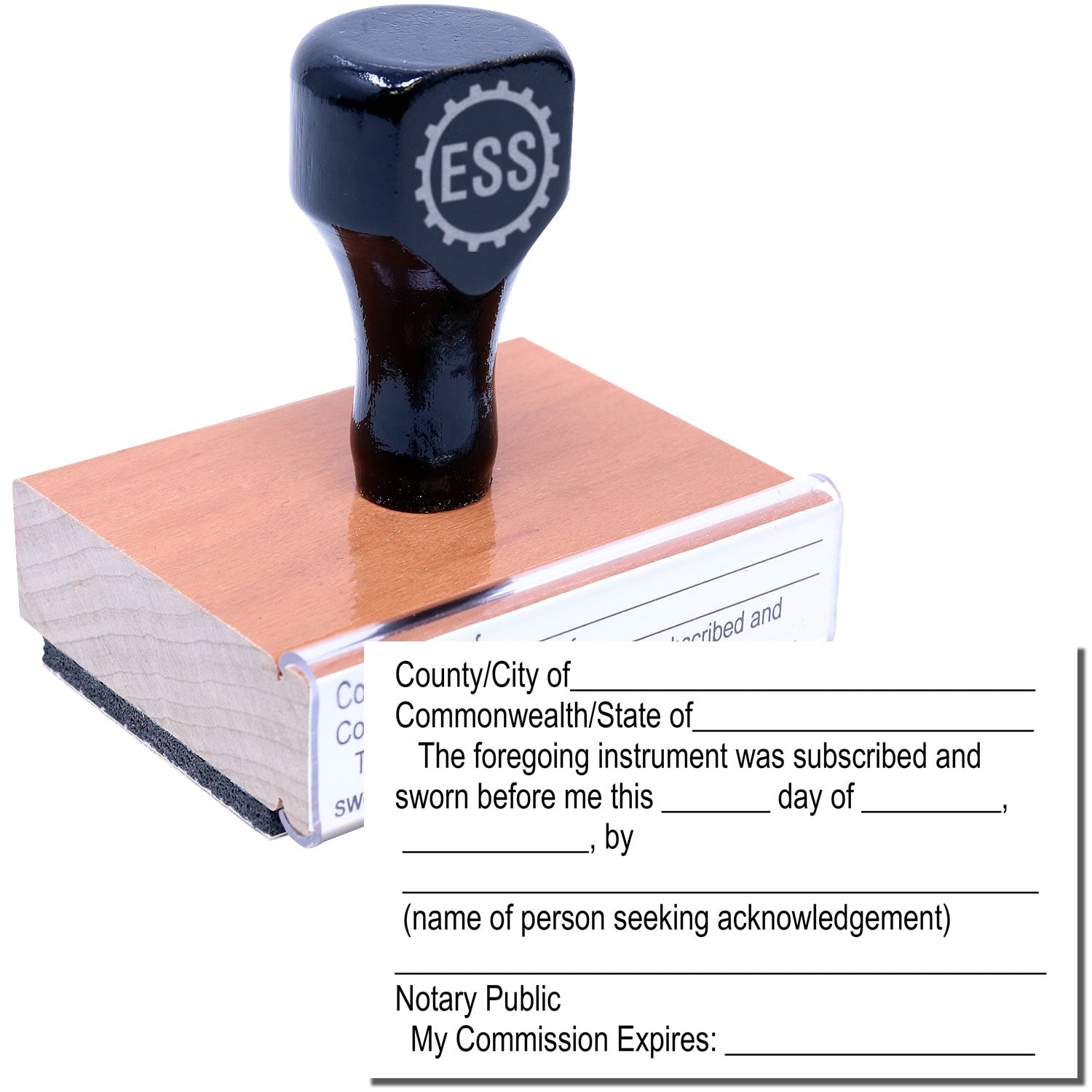
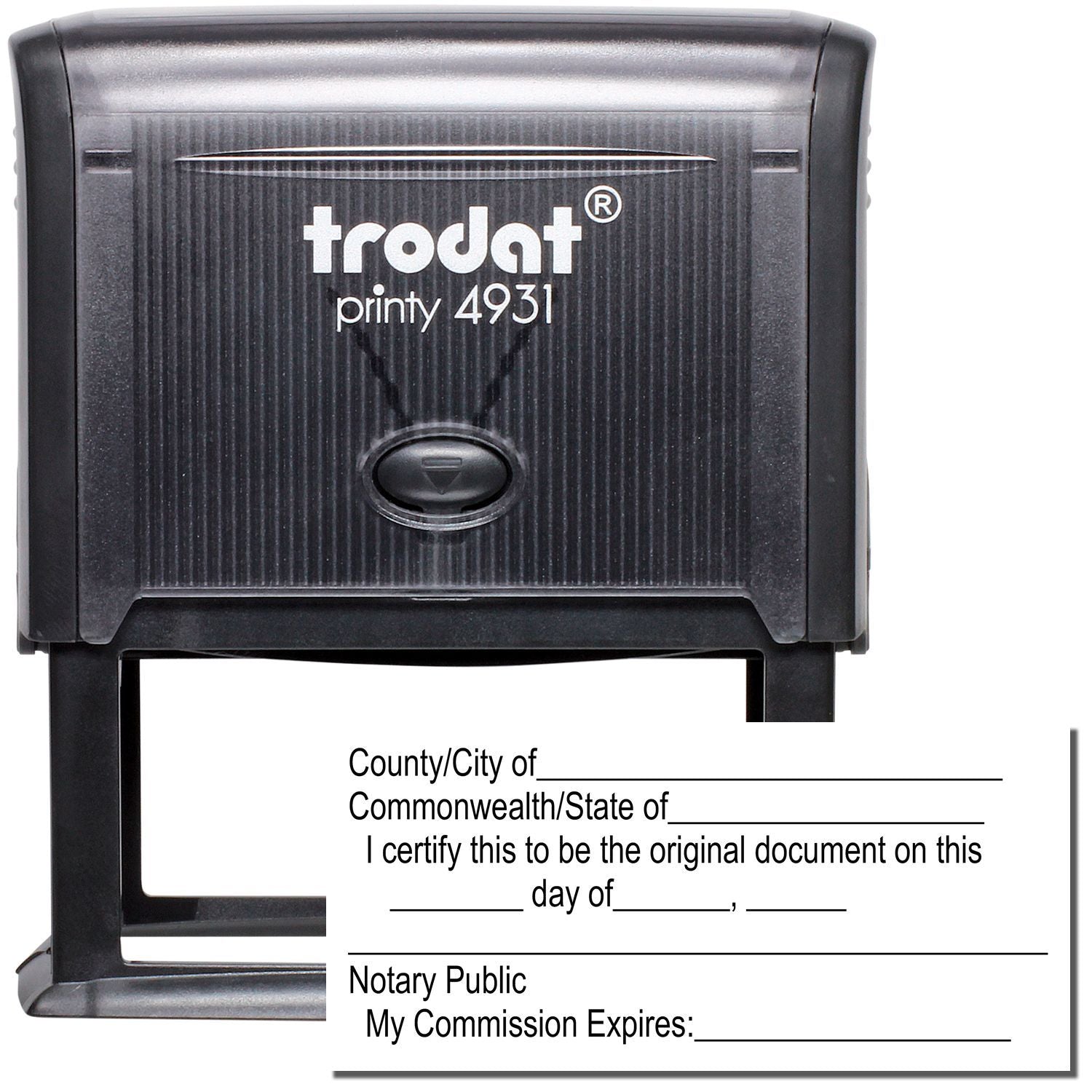
Order once the approval email arrives. The Montana stamp is a rectangle of roughly 1 by 2.5 inches in blue or black ink, showing your name, "Notary Public for the State of Montana", "Residing at" with your town, and the expiration date.
Mont. Code Ann. § 1-5-616(2)(a) sets the wording and the border, and the expiration date runs month, day and a four-digit year. The Handbook calls for a new stamp at the start of each term of office and whenever the information in the impression changes. The Montana notary stamp requirements page walks through each line.




What must a Montana notary journal record?
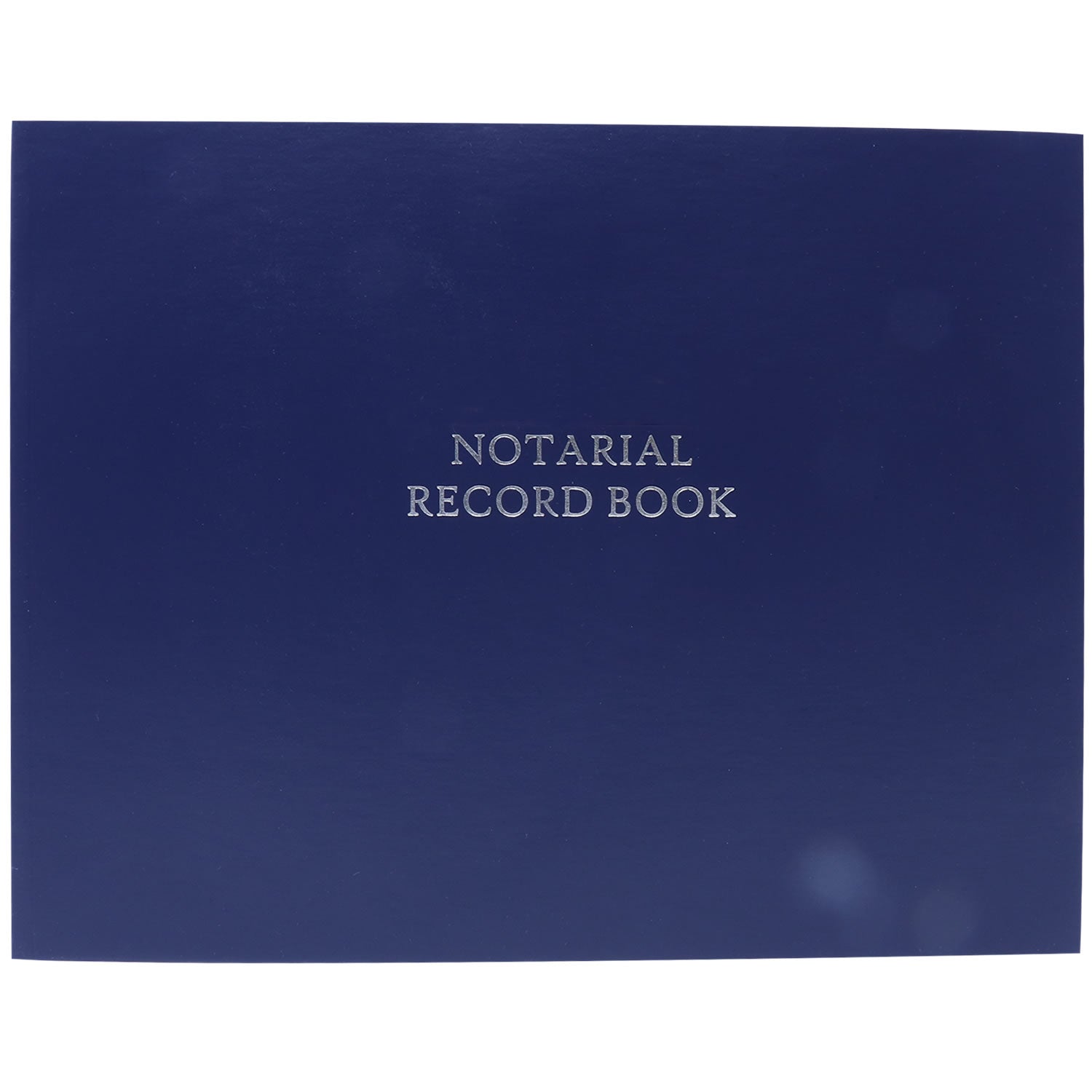
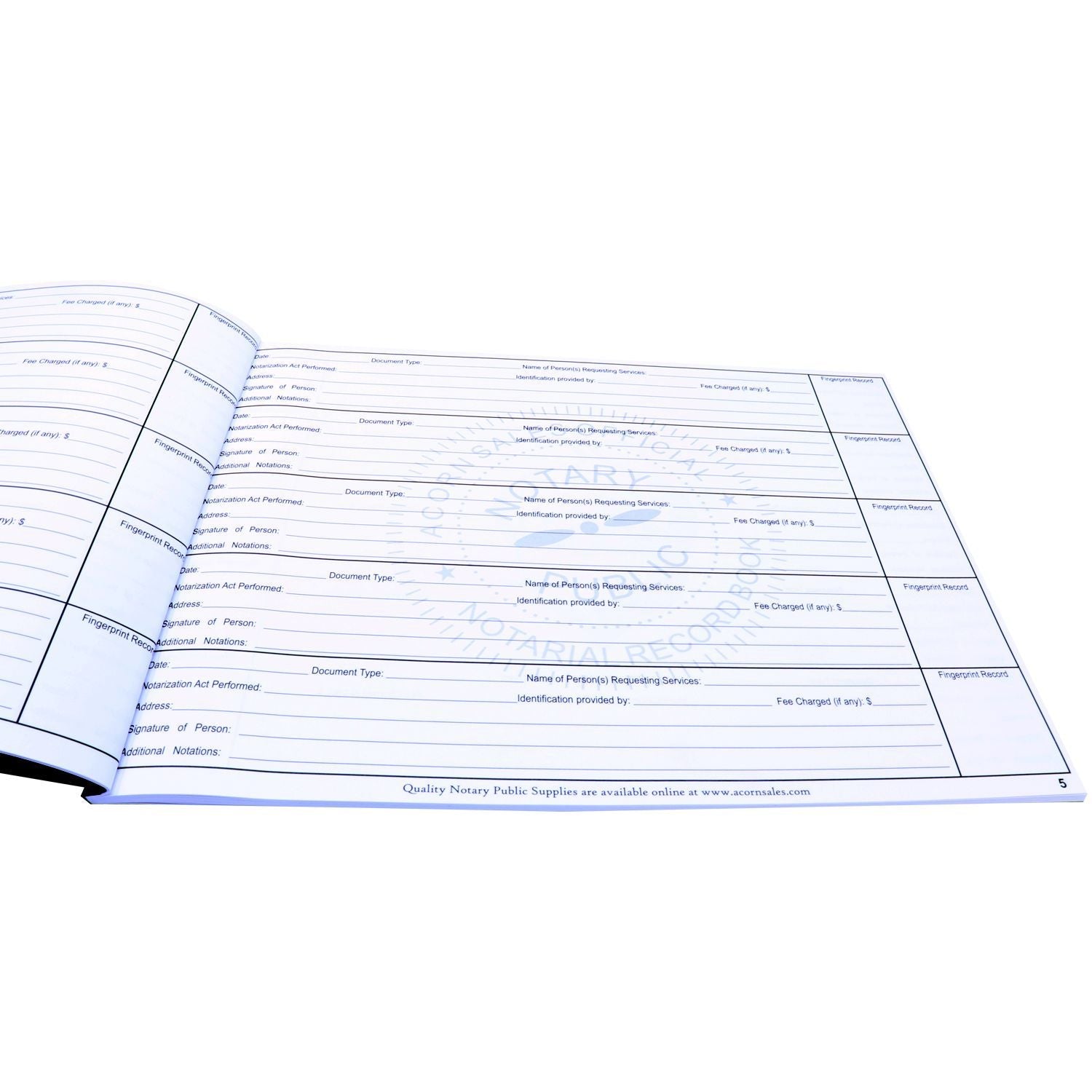
Every notarial act goes in the journal. Mont. Code Ann. § 1-5-618 requires one or more journals, kept on paper as a permanent bound register or in a tamper-evident electronic format, and retained for 10 years after the last act recorded.
Entries cover the date and time, a description of the record, each principal's name and address, the signer's signature, how you identified the signer, any technology used and the fee charged. Never write a Social Security number, passport number, driver's license number or birth date into the journal.
The journal stays under your sole control. Section 1-5-618 bars letting another notary use it, and you may not hand it to an employer when the job ends unless the Secretary of State approves.


How does renewal work for a Montana notary?
Renewal is a full new application: education, the exam, a new $25,000 bond and the $25 fee. The online system accepts it only from 30 days before your expiration date through the 30-day grace period after it.
File too early or too late and the portal will not take the renewal, so time the exam to stay inside its six-month window. Order a new stamp once the renewal is approved, because the expiration date on it changes with each term. For more on dated stamps, see our notary seal expiration guide.
What changes must a Montana notary report?
Report a new name, physical address or mailing address to the Secretary of State within 30 calendar days, under ARM 44.15.106. You make the change by filing an amendment on the Secretary of State's website.
When your name or city of residence changes, the Secretary of State issues an Amended Certificate of Commission, and you then order a new stamp with the updated details. Moving to another Montana town changes the "Residing at" line, so a move within the state still means a new stamp.
Can Montana notaries notarize remotely?
Yes, with authorization from the Secretary of State. Montana law provides for remote online notarization, remote notarization of paper records and in-person electronic notarization, and each requires added training and an exam before you start.
To qualify, choose one or more approved systems, complete an approved course (the Notary Academy lists 2-hour remote online notarization courses under § 1-5-615(3)(c)), pass an exam on it, and file the Notary Public Information Update form with proof. You must record each remote session and keep sole possession of the recording or send it to an approved repository. The technology-based notarization page has the details.


Frequently asked questions
Can I use an embosser instead of the ink stamp in Montana?
No. The Secretary of State treats an embosser as an add-on to the inked stamp, never a replacement, so every notarization still needs the blue or black rectangular impression.
What if my stamp or journal is lost or stolen?
Notify the Secretary of State promptly. The Secretary of State's help center points to Mont. Code Ann. §§ 1-5-617(3) and 1-5-618(7), and neither page nor statute gives a deadline in days.
What is the most a Montana notary may charge?
Up to $10 per notarization, according to the Secretary of State, citing Mont. Code Ann. § 1-5-626 and ARM 44.15.109. Travel or electronic notarization charges are allowed when the signer agrees to them in advance.
Can I stamp a document that has no notarial certificate?
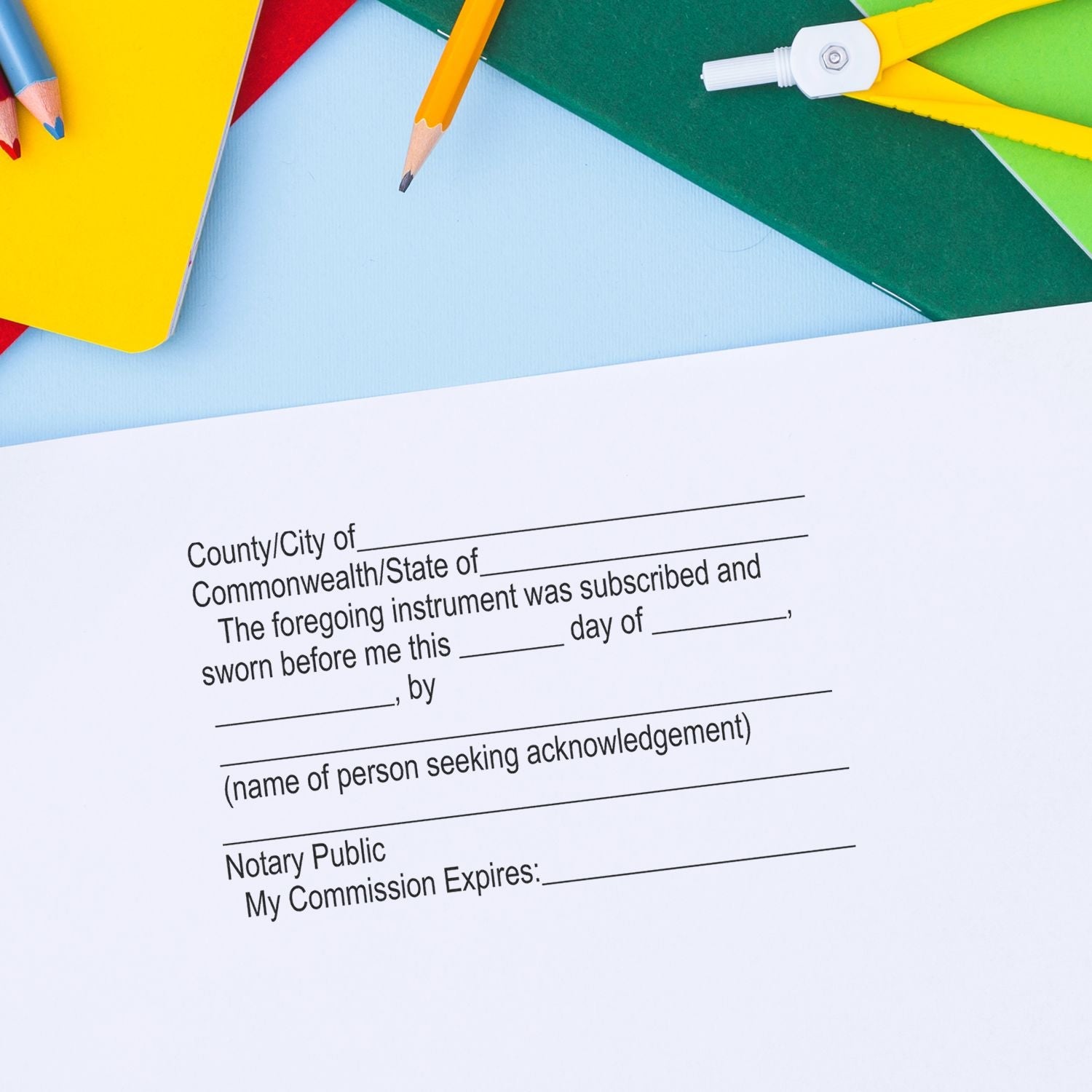
No. Montana law bars a notary from putting an official signature or stamp on any record that does not contain the notary's completed notarial certificate.
Can a Montana notary officiate at a wedding?
Yes. The Secretary of State's summary of the updated notary law notes that Montana notaries are now authorized to solemnize marriages.
After the approval email arrives, choose a rectangular model from our Montana notary stamps and seals collection. For a side-by-side look at Montana's ink and residence rules against other states, see our notary seal requirements across the states guide.