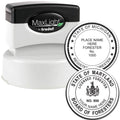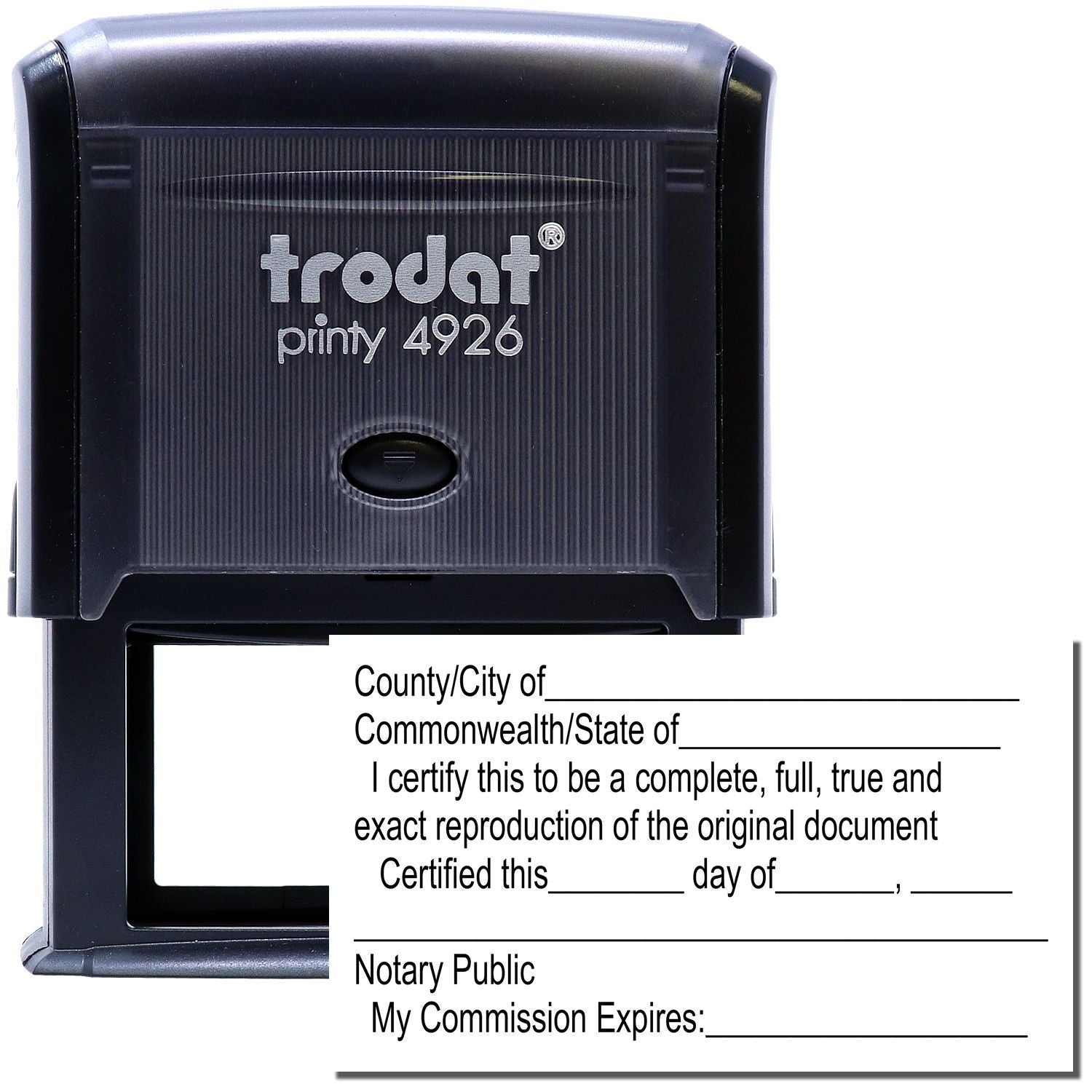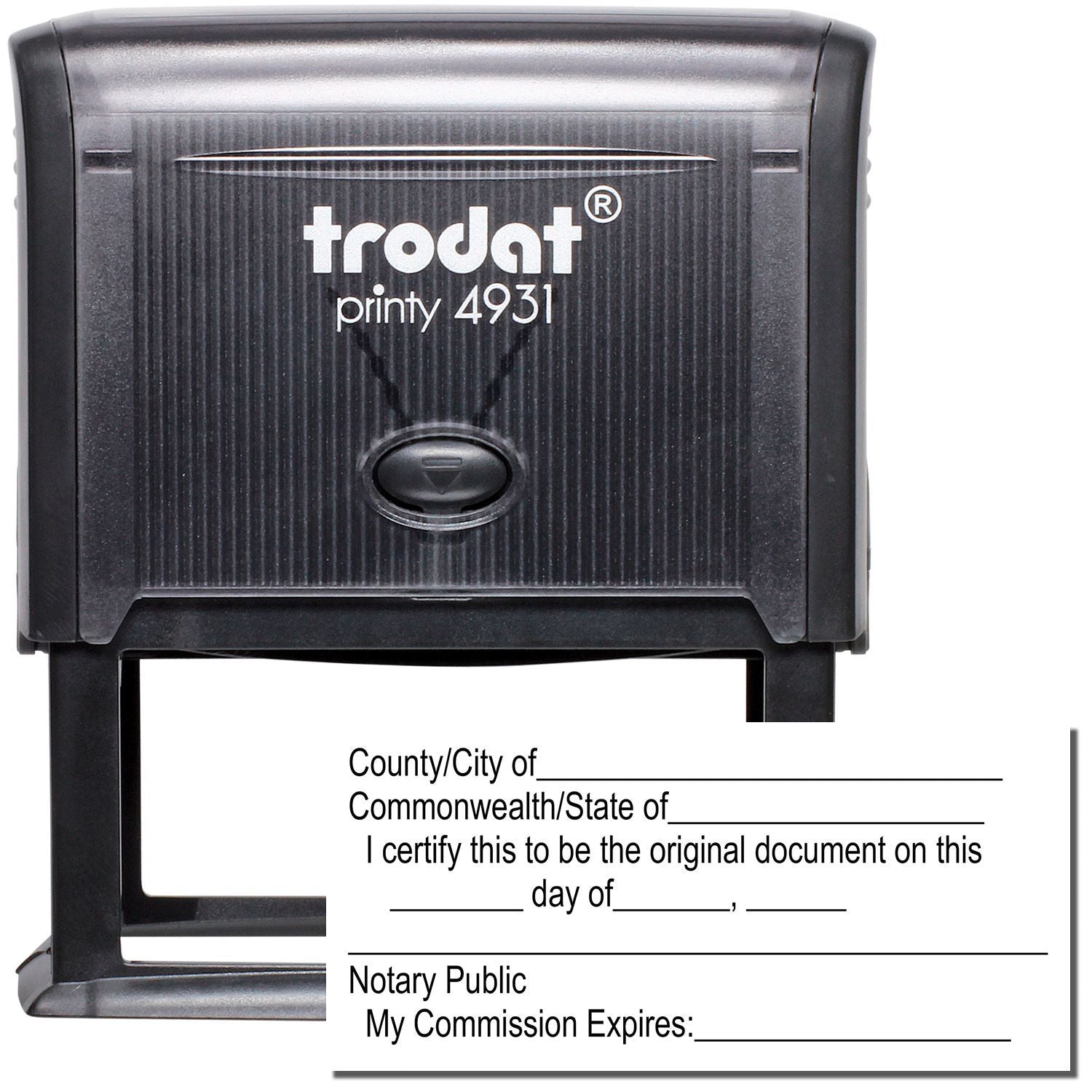

Iowa commissions any adult 18 or older who holds U.S. citizenship or permanent legal residence, lives in Iowa or has a place of employment or practice there, and reads and writes English, once they file the Secretary of State's application with a $30 fee. Iowa requires no exam and no bond. Iowa residents receive three-year commissions, and bordering-state residents who work in Iowa receive one year. Here are the filing steps, costs, stamp order and what to do when a term ends.
Engineer Seal Stamps compliance desk. Checked against the Iowa Secretary of State notary pages and its handbook for Iowa notaries public, Iowa Code chapter 9B and Iowa Administrative Code 721, chapter 43. Sources read September 2026.
| Requirement | Iowa answer | Source |
|---|---|---|
| Who can apply | Adults 18 and up with U.S. citizenship or permanent legal residence; Iowa residence, or a place of employment or practice in Iowa; reads and writes English | Iowa Code § 9B.21(2) |
| Disqualification | Grounds include a felony, a crime of fraud, dishonesty or deceit, and a deceitful misstatement in the application | Iowa Code § 9B.23 |
| Training or course | Not required for a standard commission; the handbook recommends a notary education course | Secretary of State notary handbook |
| Exam | None; chapter 9B lists no exam among the qualifications | Iowa Code § 9B.21 |
| How to apply | Fast Track Filing online, or the paper Application for Notary Commission | Secretary of State, Notary Forms and Fees |
| Application fee | $30 | Iowa Code § 9B.21(1) |
| Bond | Not required | Secretary of State notary handbook |
| Oath | The affirmation section of the application counts as the executed oath of office | 721 IAC 43.5(1); Iowa Code § 9B.21(3) |
| Commission term | Three years for Iowa residents; one year for bordering-state residents working in Iowa | Iowa Code § 9B.21(6) |
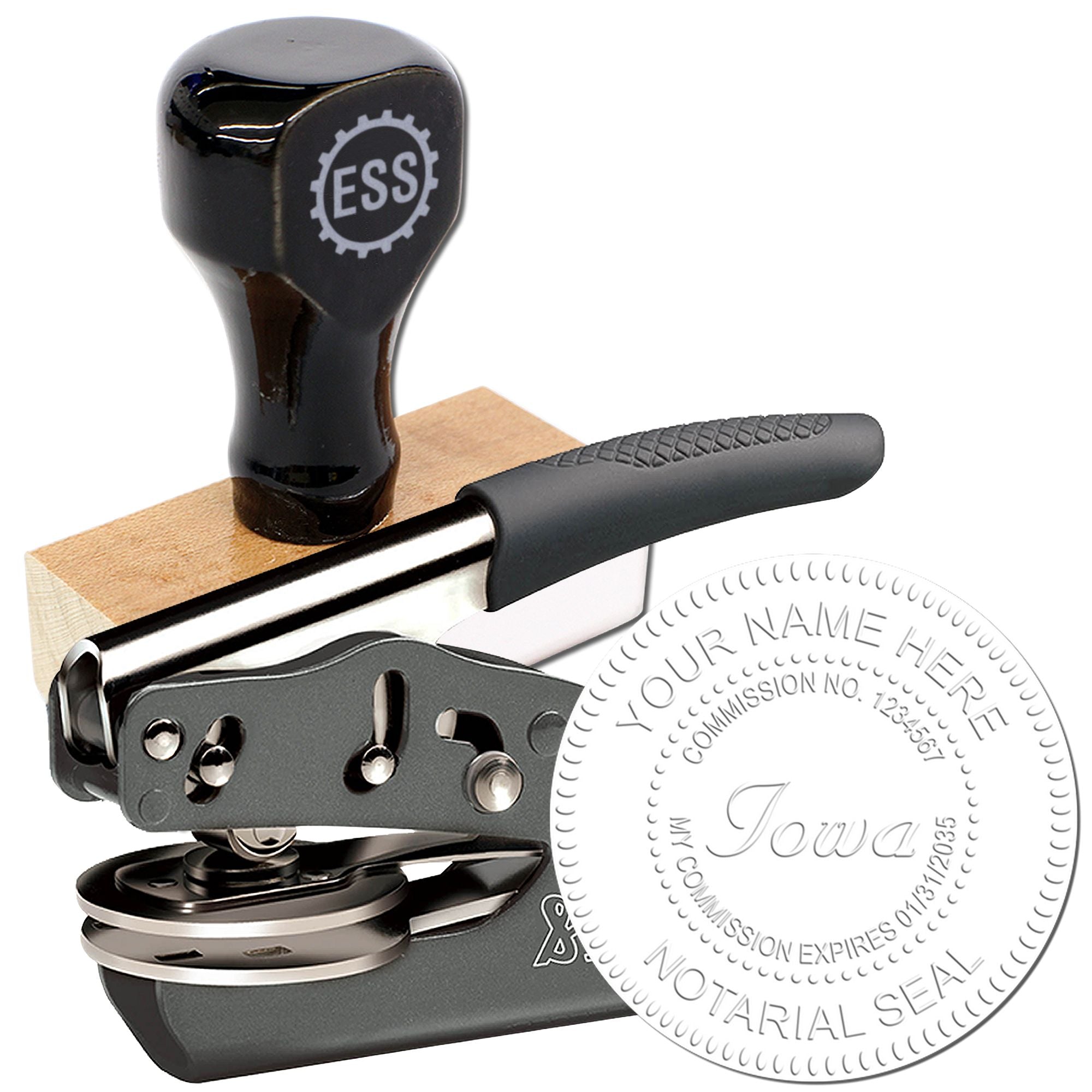
| Stamp | Your name, "Notarial Seal", "Iowa", the commission number and an expiration line. See our Iowa notary stamp guide | Iowa Code § 9B.17(1)(a) |
| Journal | Not required; strongly recommended, with entries kept ten years | Secretary of State notary handbook |
| Renewal | Expiration notice two months ahead; $30 renewal filing before the date passes | Iowa Code § 9B.21A; Notary Forms and Fees |
| Remote notarization | Separate no-fee approval after an approved course taken within six months; recordings kept at least ten years | Iowa Code § 9B.14A; 721 IAC 43.5(3) |
How the Iowa journal rule and remote notarization rule compare with the other 53 jurisdictions: see notary journal requirements by state and remote online notarization by state.
Who can become a notary public in Iowa?
Any adult of 18 or more with U.S. citizenship or permanent legal residence who reads and writes English, and who either lives in Iowa or has a place of employment or practice in Iowa, can apply, unless a ground in § 9B.23 disqualifies them.
The residence rule has two tracks. An Iowa resident is commissioned for three years. Under § 9B.21(5), a resident of a bordering state can be appointed only if their place of work or business is inside Iowa, and that commission runs one year and ends if the Iowa job ends.
Section 9B.23 lets the Secretary of State deny, refuse to renew, revoke or suspend a commission for reasons such as a felony conviction, a conviction for a crime involving fraud, dishonesty or deceit, a deceitful statement or omission in the application, or action taken against a notary commission in another state. General Assembly members and some state agency employees can be appointed without paying the fee.
How do you apply for an Iowa notary commission?
Apply through the Secretary of State's Fast Track Filing system or on the paper form. The filing collects your home and employer details, confirms your qualifications, and closes with an affirmation that serves as your oath of office.
- Log in to Fast Track Filing and choose Notary, then Original Notary Commissions.
- Enter your name, home contact information and employer details, including the workplace address.
- Complete the remaining sections: preferred contact method, qualifications, electronic records, remote notarizations and the Bilingual Notary Registry.
- Sign electronically by typing your full legal name after the affirmation statement.
- Pay the $30 fee at checkout, then select Submit to File.
- Watch for the email saying the office has completed its review, and hold off on notarizing until the commission is issued.
The affirmation commits you to support the U.S. and Iowa constitutions and to discharge the duties faithfully and impartially. It also confirms you have read Iowa Code chapter 9B and the chapter 43 rules, and that you may not notarize any document until you receive your commission. The Notary Forms and Fees page links both the online and paper routes.
Does Iowa require notary training or an exam?
No. A standard Iowa commission needs neither a course nor an exam. The Secretary of State's handbook still recommends a notary education course, and anyone who wants to notarize remotely faces mandatory training.
Because nothing tests you before commissioning, reading chapter 9B and the office's handbook is the practical preparation, and the application affirmation states that you have read the statute and the rules.
Remote work is the exception. Rule 721 IAC 43.5(3) requires a notary who plans to notarize for remotely located individuals to finish a course approved by the Secretary of State within six months before starting, and an update course before reappointment to keep that approval.
What does it cost to become a notary in Iowa?
The Secretary of State charges $30 for a new commission and $30 for a renewal. Name and address changes, remote notarization approval and complaint filings carry no fee. Beyond those filings, your costs are the supplies you choose.
- New commission: $30, due at submission.
- Renewal: $30.
- Change of name or address: no fee.
- Remote notarization approval: no filing fee.
- Stamp and journal: bought from suppliers once your commission number is assigned.
An appointee under § 9B.21(4), such as a General Assembly member, pays no application fee.
Does Iowa require a notary bond?
No. The Secretary of State's handbook answers the question directly: Iowa does not require a bond. The application asks for none, and the affirmation on the application serves as the oath, so no separate oath filing exists.
The low entry cost does not lighten the duties. Section 9B.23 still lets the Secretary of State act against a notary who fails to discharge a required duty, breaks a rule, or uses false or misleading advertising about notary powers.
What must an Iowa notary stamp show, and when can you order it?
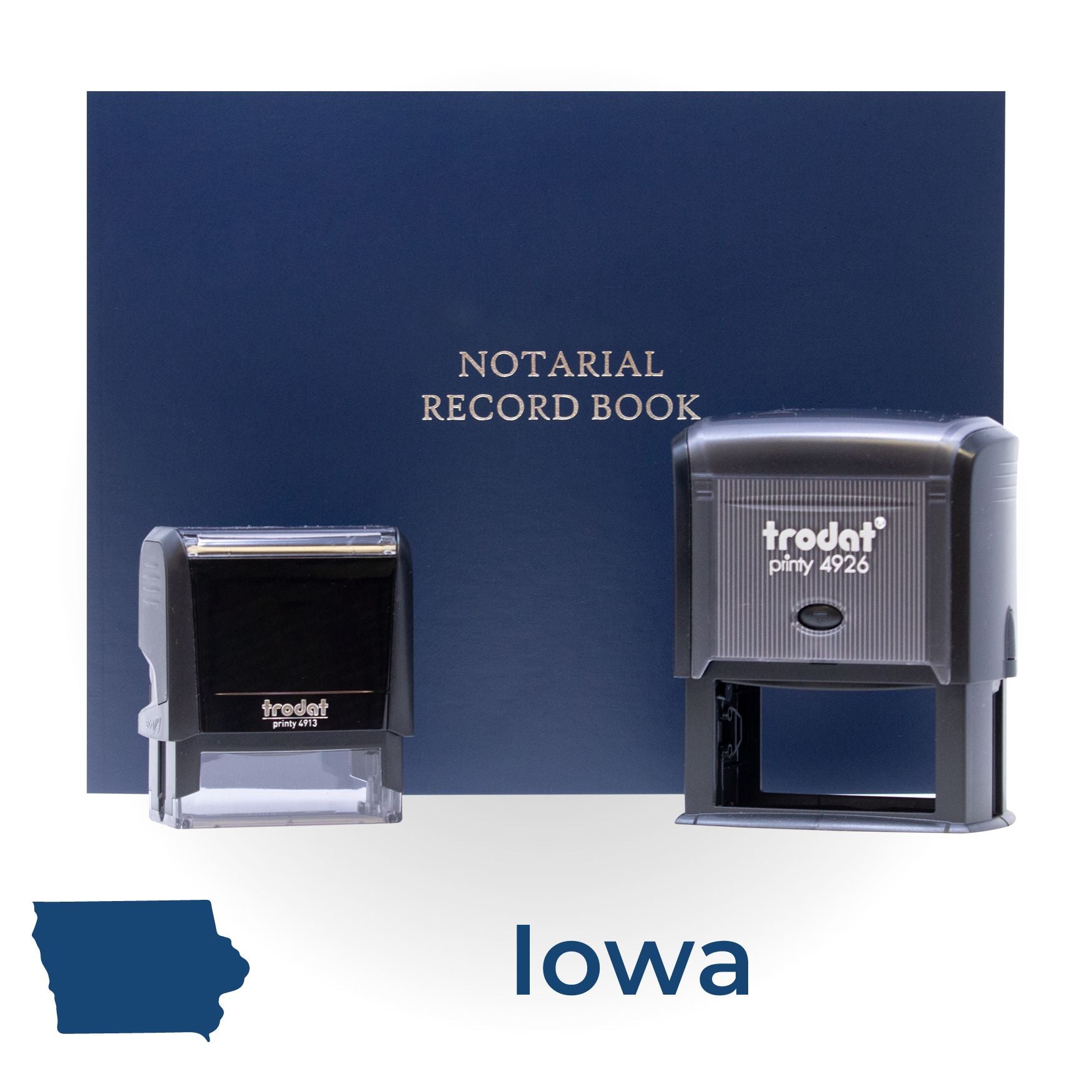
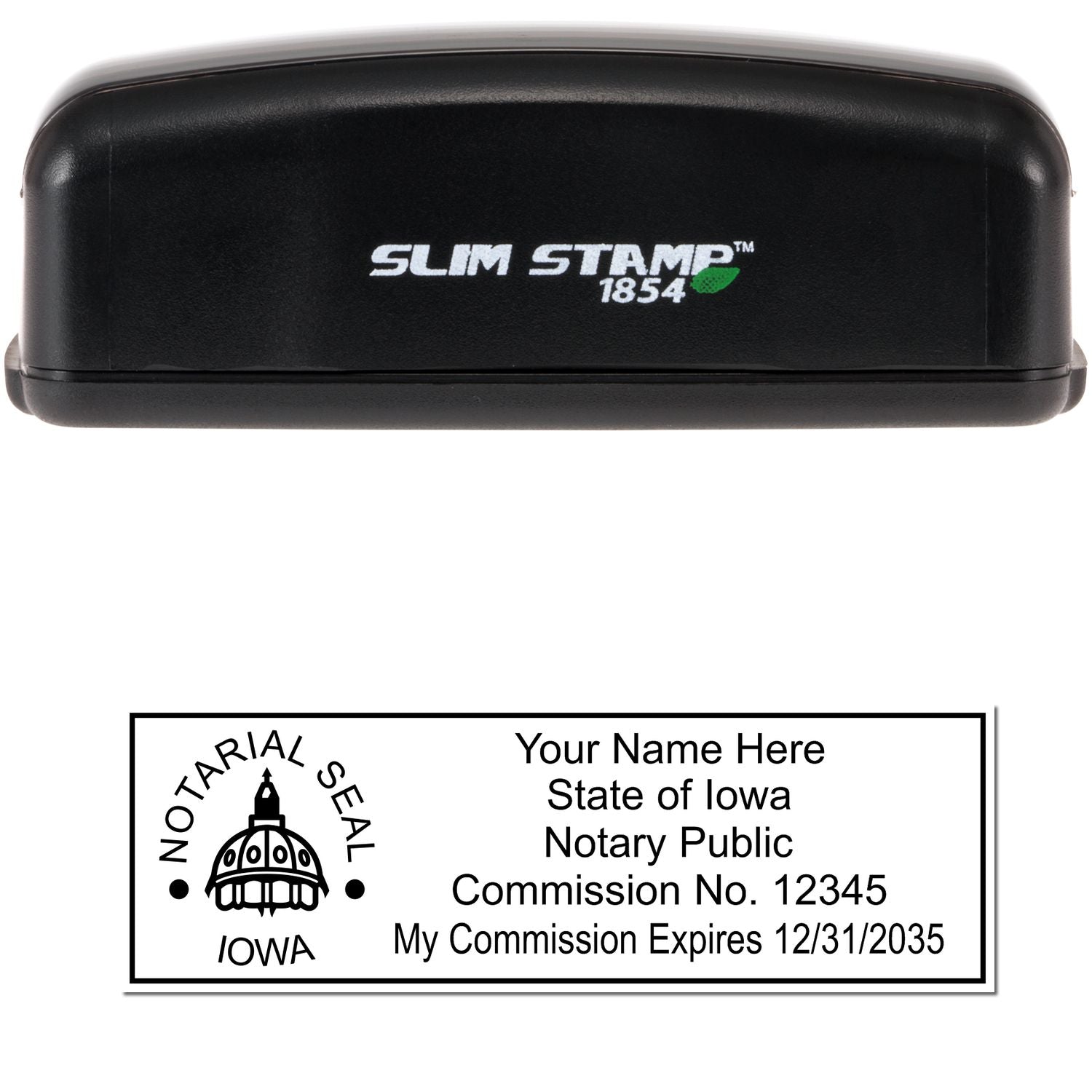
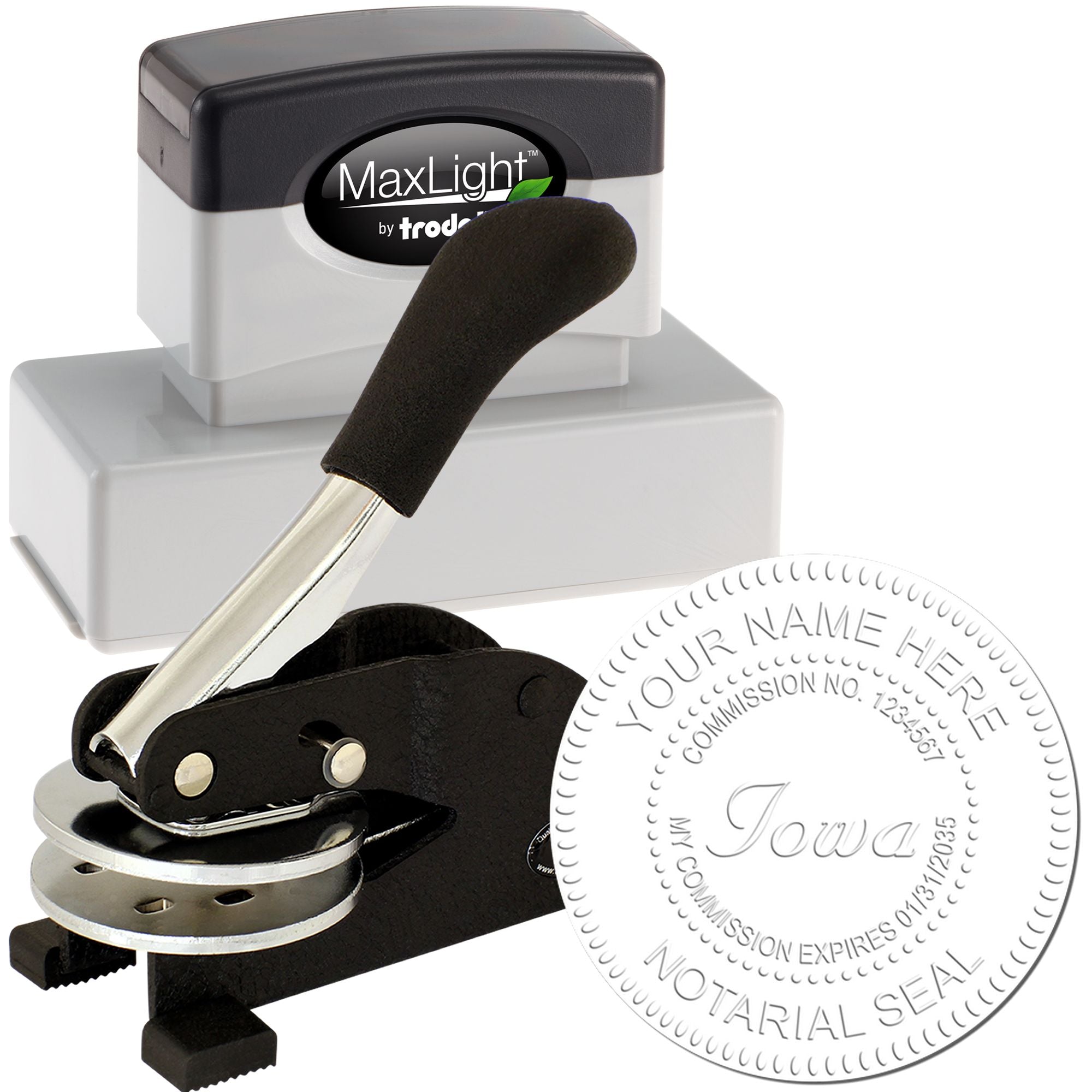
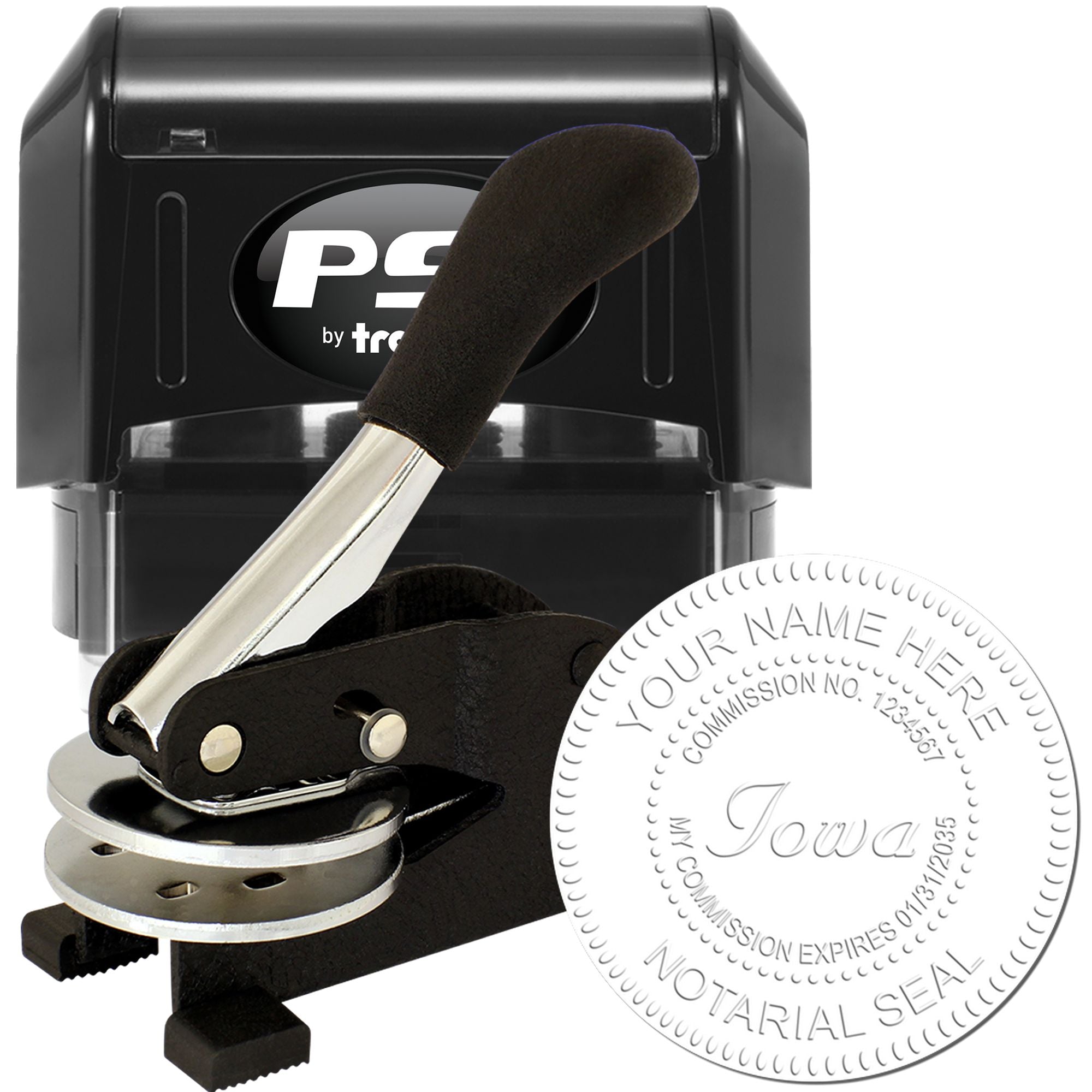
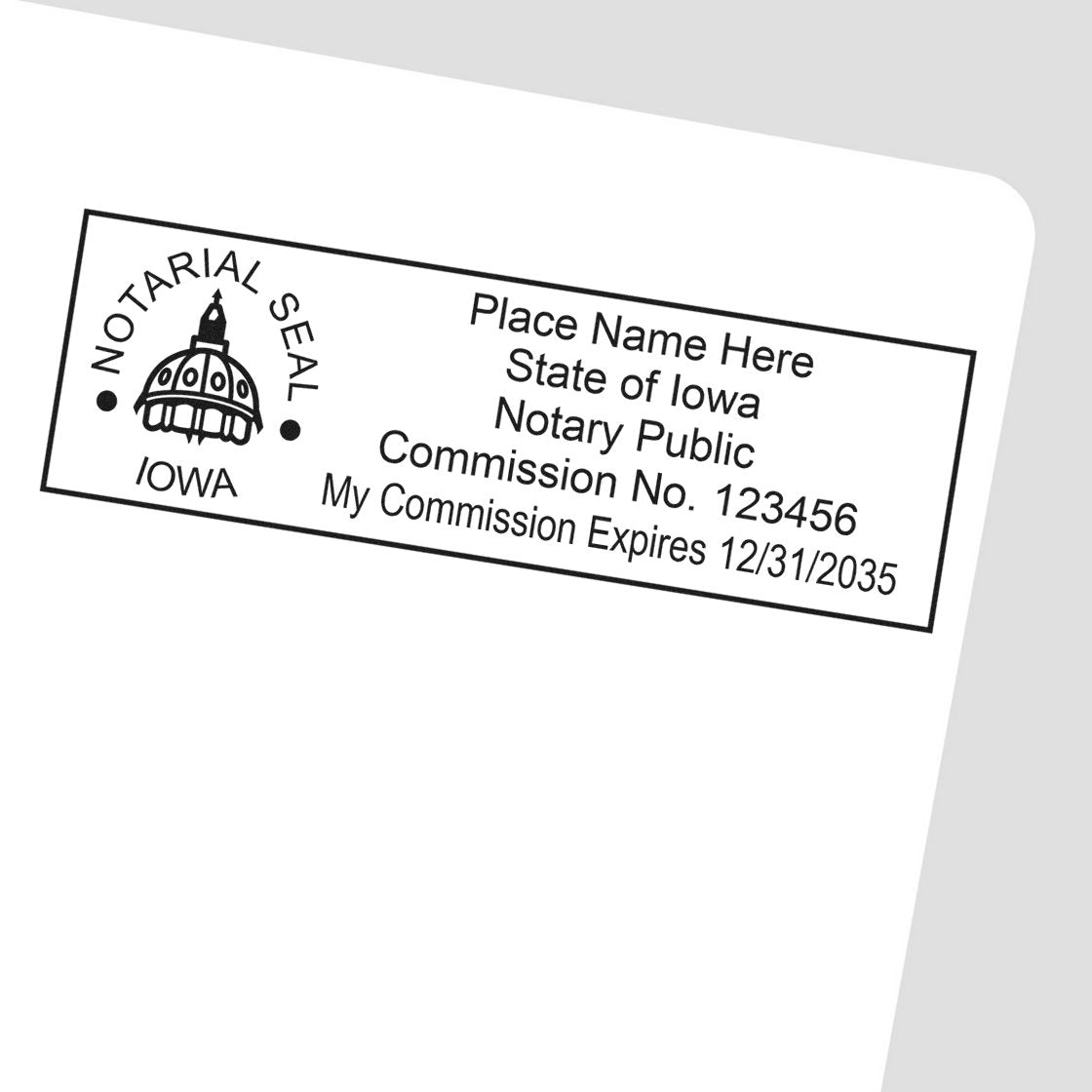
Order the stamp after the Secretary of State issues your commission, because the face needs the commission number the office assigns. Section 9B.17 lists your name, "Notarial Seal", "Iowa", "Commission Number" with that number, and "My Commission Expires" with a date or blank line.
If you pick a stamp with a blank expiration line, § 9B.17(1)(b) makes you print your expiration date on that line on every record you notarize. The impression must also be capable of being copied with the record. Iowa sets no size, shape or ink color, and the stamp may be embossed as well as inked; our Iowa notary stamp requirements guide covers each element.
Security is yours alone. Section 9B.18 makes you responsible for the stamping device and bars letting anyone else use it, and a lost or stolen stamp must be reported to the Secretary of State promptly.




How long does an Iowa commission last, and how do you renew it?
Iowa residents hold three-year commissions and bordering-state residents hold one-year commissions. Two months before expiration, the Secretary of State sends a notice with a reappointment application; file the $30 renewal before the expiration date.
The forms page says renewal notices go out by email 60 days ahead, and Fast Track Filing handles the Application for Renewal of Notary Commission. Miss the date and the handbook has you file a fresh application with the $30 fee.
A renewal moves your expiration date, so a stamp with a printed date no longer matches your term. Order a replacement with the new date, or use a blank-line stamp and write the date each time. Our notary seal expiration guide explains how to read that date on an impression.



Should an Iowa notary keep a journal?
Iowa law does not require a journal, but the Secretary of State's handbook strongly recommends one and advises keeping entries for ten years. Remote acts are documented another way: the audio-visual recording must be kept at least ten years.
A bound journal kept for that decade lets you answer later questions about an act from your own records instead of memory. Choose one with room for each signer and each document.
What do you file after a name, address or employer change?
File the Request for Change of Name/Address online or on paper; there is no fee. The handbook says to tell the office immediately if you start using a new name, and to report a new home address or a new employer and work address.
The handbook lets you keep your former name through the end of the term, or switch once the office is informed. If you switch, the stamp has to show the new name, so a new stamp is part of the change. A bordering-state notary who leaves the Iowa job loses the commission.
How does an Iowa notary get approval for remote notarization?
A commissioned notary files a separate no-fee application after completing a Secretary of State approved course within the prior six months. Section 9B.14A requires notifying the office and naming the technologies you plan to use before the first remote act.
The approval lasts only as long as the commission. Under 721 IAC 43.5(2), the office sends a reapproval notice two months before it lapses, and a continuing remote notary completes an update course within six months before the reappointment deadline. Each audio-visual recording is kept for at least ten years.

Frequently asked questions
Can I live in Nebraska or Illinois and hold an Iowa commission?
Yes, if your place of work or business is in Iowa. Section 9B.21(5) allows it for residents of bordering states, but the term is one year rather than three.
Can I notarize while my Iowa application is pending?
No. The affirmation you sign states that you may not notarize any document until the Secretary of State has issued your commission.
Can my employer use my Iowa notary stamp?
No. Section 9B.18 makes the notary responsible for the device's security and forbids letting another individual use it to perform a notarial act.
What if my Iowa commission expires before I renew?
You then file a new Application for Notary Commission with the $30 fee rather than a renewal. Filing before the expiration date avoids a gap.
How much can an Iowa notary charge?
The handbook says an Iowa notary may charge a reasonable fee for notarial services.
Can an Iowa notary use an embosser?
Yes. Iowa's notary law allows the official stamp to be embossed on a record as well as affixed to it, so an embosser carrying the required elements works as the stamp.
After your commission number arrives, choose a stamp or embosser in the ESS Iowa stamps and seals collection. For a side-by-side look at seal rules elsewhere, read our state-by-state notary seal requirements.