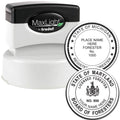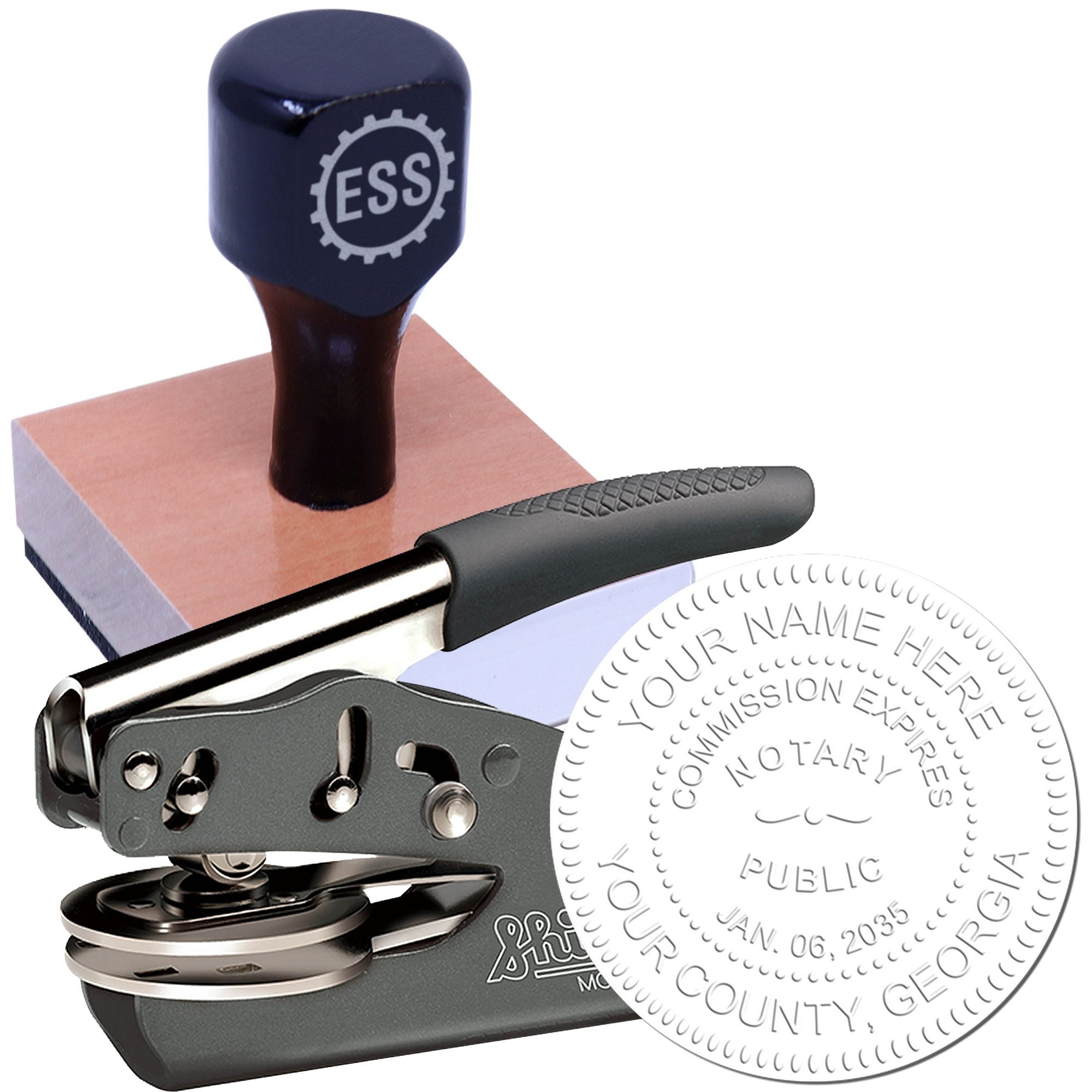

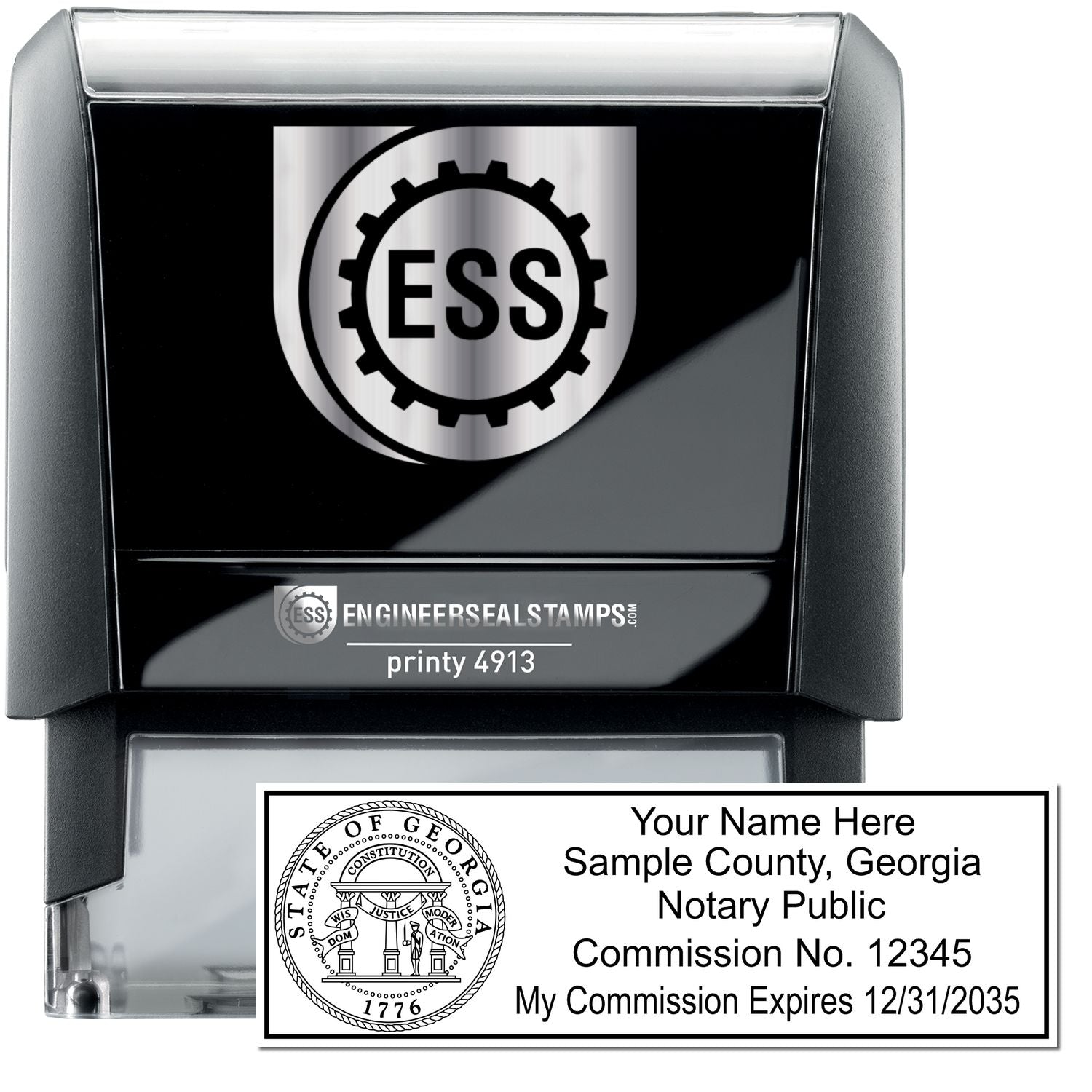
Georgia requires a notary seal carrying four items: the county where you were commissioned, your name as the commission certificate shows it, the words Notary Public, and either Georgia or GA. Size, shape and ink color are not specified. An embossed mark and an inked stamp are both accepted, and a handwritten scrawl is not. This page covers the wording, the county line and reporting duties.
Engineer Seal Stamps compliance desk. Checked against O.C.G.A. § 45-17-6(a)(1), the clerk of superior court of your county and the Georgia Superior Court Clerks' Cooperative Authority, which administers the statewide record. Sources read September 2026.
| Requirement | What the rule says | Source |
|---|---|---|
| Seal required | Yes. A Georgia notary uses a seal. | O.C.G.A. § 45-17-6(a)(1) |
| Your name | Exactly as the commission certificate shows it. | O.C.G.A. § 45-17-6(a)(1) |
| Title | The words Notary Public. | O.C.G.A. § 45-17-6(a)(1) |
| State | Either Georgia in full or the two letter form GA. | O.C.G.A. § 45-17-6(a)(1) |
| County | The county that commissioned you. | O.C.G.A. § 45-17-6(a)(1) |
| Format | Embossing is authorized but not necessary, and an inked stamp is sufficient on its own. | O.C.G.A. § 45-17-6 |
| Handwritten marks | A scrawl does not count as a seal. | O.C.G.A. § 45-17-6 |
| Size and shape | Not specified. | Not addressed in the cited rules |
| Ink color and reproducibility | No color is set for the seal, and no reproducibility standard is set either. | Not addressed in the cited rules |
| Lost or stolen seal | Written notice to the appointing clerk of superior court within 10 days, copied to the statewide authority. | Georgia Superior Court Clerks' Cooperative Authority |
To compare Georgia with every other jurisdiction, see our table of notary seal requirements by state.
Does Georgia require a notary to hold a seal?
Yes. A seal is part of the office in Georgia rather than an optional convenience, and the statute sets out what has to appear on it. The device you choose is open; the four items on the face are not.
That split is the whole of the compliance question. A correct seal in an unusual format is fine, while a handsome device missing the county line is not. A closer look at the Georgia notary public stamp covers the same statute.
What does the statute put on the face?
Four items, each drawn from your commission rather than from your preference. Together they identify who you are, what office you hold and where you were commissioned.
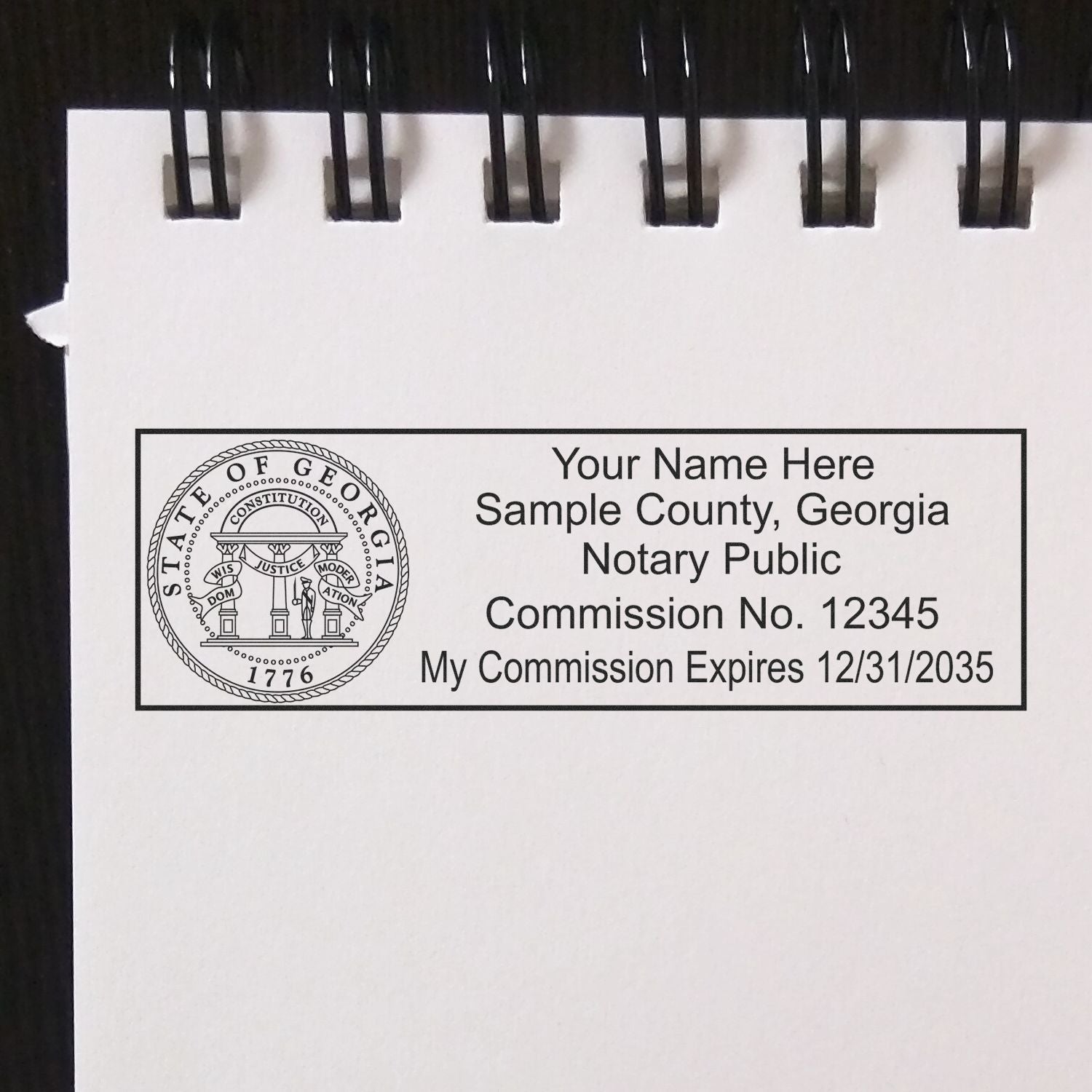
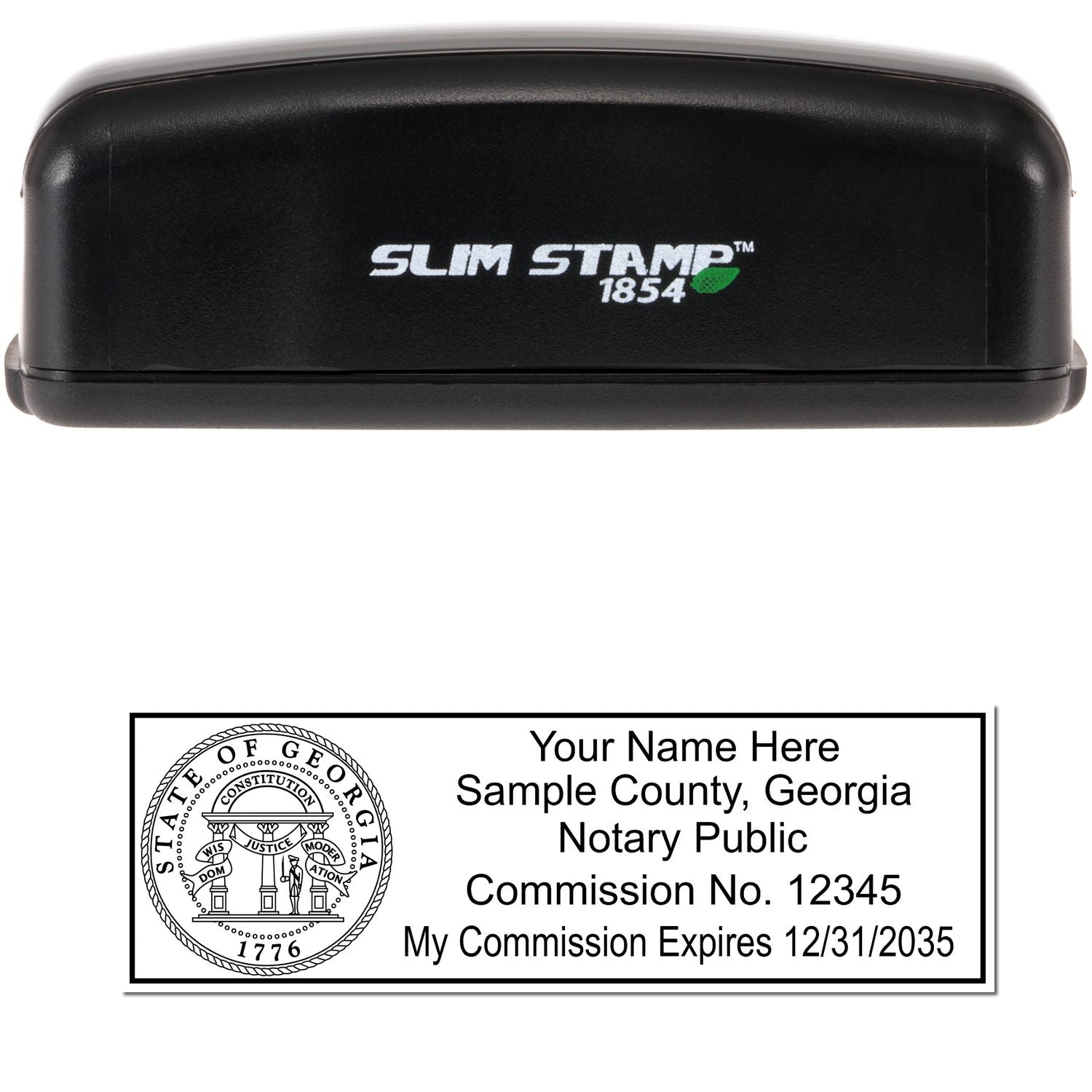
- The county where you were commissioned
- Your name, exactly as the commission certificate shows it
- The words Notary Public
- Georgia in full, or the abbreviation GA
Nothing else is required, which means an expiration date, a commission number or a border is a design choice rather than a legal one. Work from the certificate itself, since the name line has to match it. The wider set of Georgia notary requirements puts the seal in context.



Which county goes on the seal?
The county where you were commissioned. That is the county whose clerk of superior court appointed you, and it stays on the face for the life of that commission whatever happens to where you live or work.
The distinction catches notaries who move. A change of home county does not rewrite the seal by itself, and the correct step is to report the change rather than to reorder on your own reading of it.
Does Georgia set a size or shape?
No. Size and shape are not specified. Nothing in the cited statute fixes a diameter, a rectangle, a line height or an outline, which leaves the device sized to hold four lines legibly in the space a certificate allows.
The practical constraint is legibility on a copy rather than a rule. A die cut small enough to tuck beside a signature usually loses the county line first, and that is the line an examiner reads.
Is any ink color required?
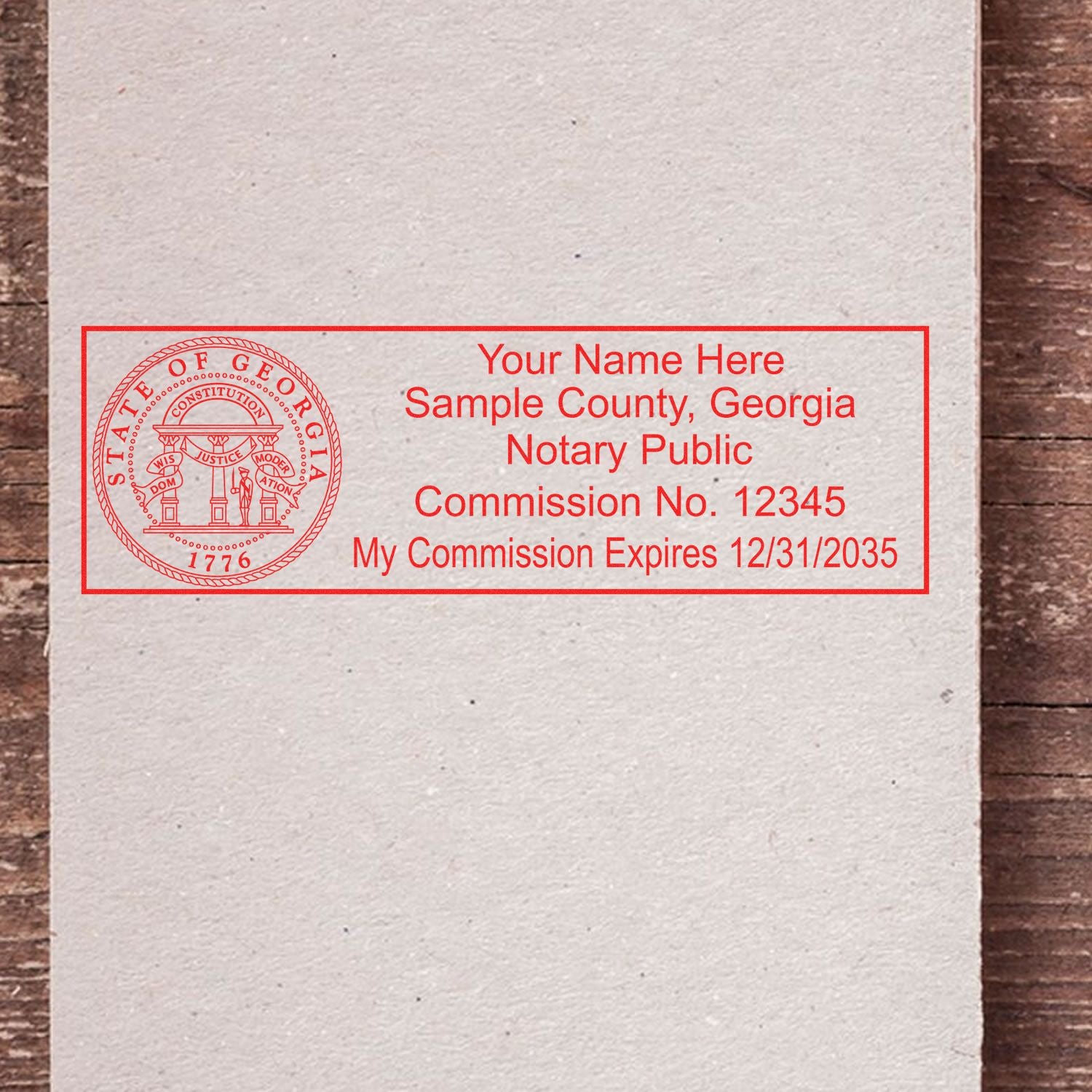
No. No color is set for the seal at all, and Georgia adds no standard for how well the impression has to reproduce. Both silences are unusual enough to be worth naming, since many states fix at least one of them.
So a colored pad is not a defect under the cited statute. Even so, an impression that survives scanning and copying protects the document better than one that does not, and that is a practical argument rather than a legal requirement.
Embosser or inked stamp: what does Georgia accept?
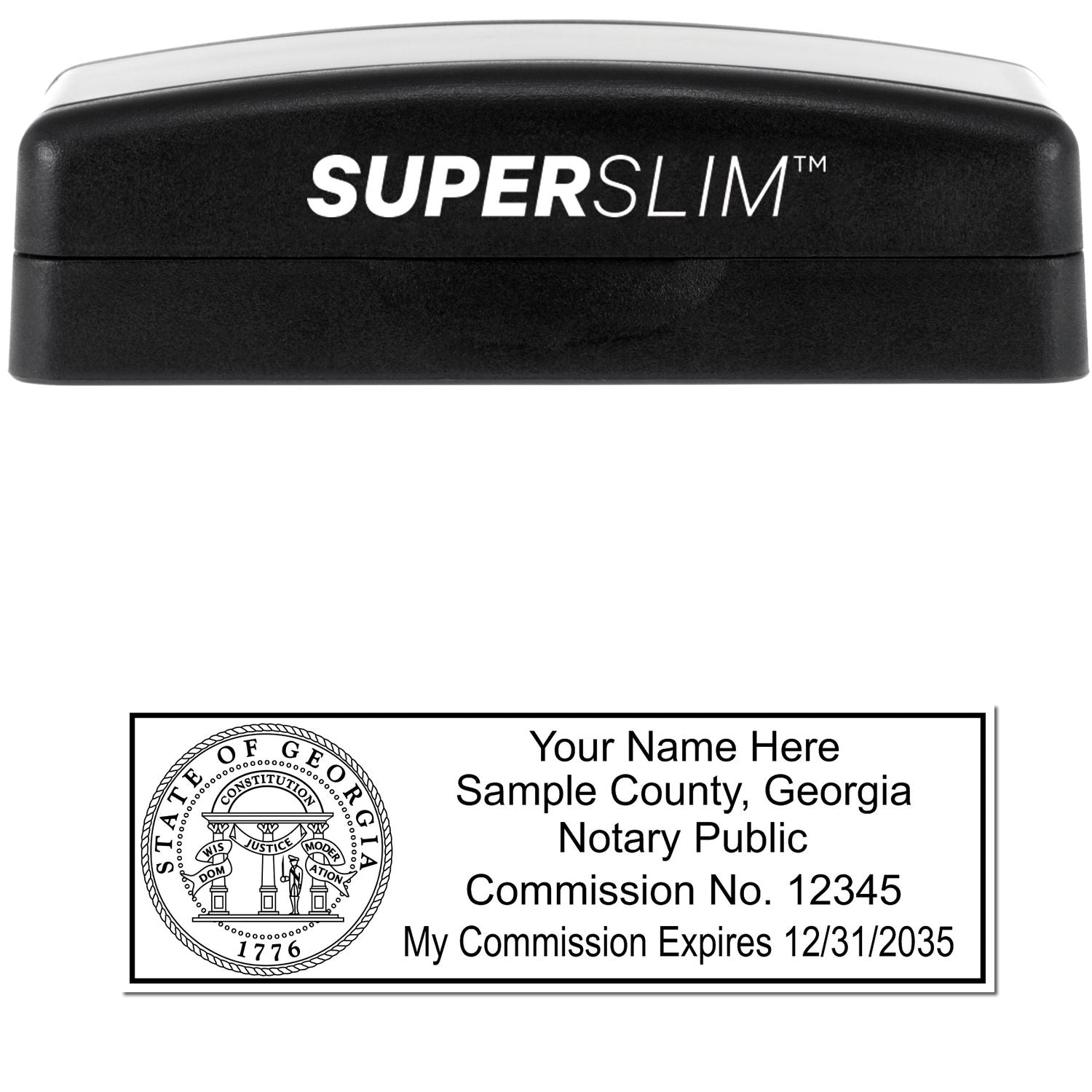
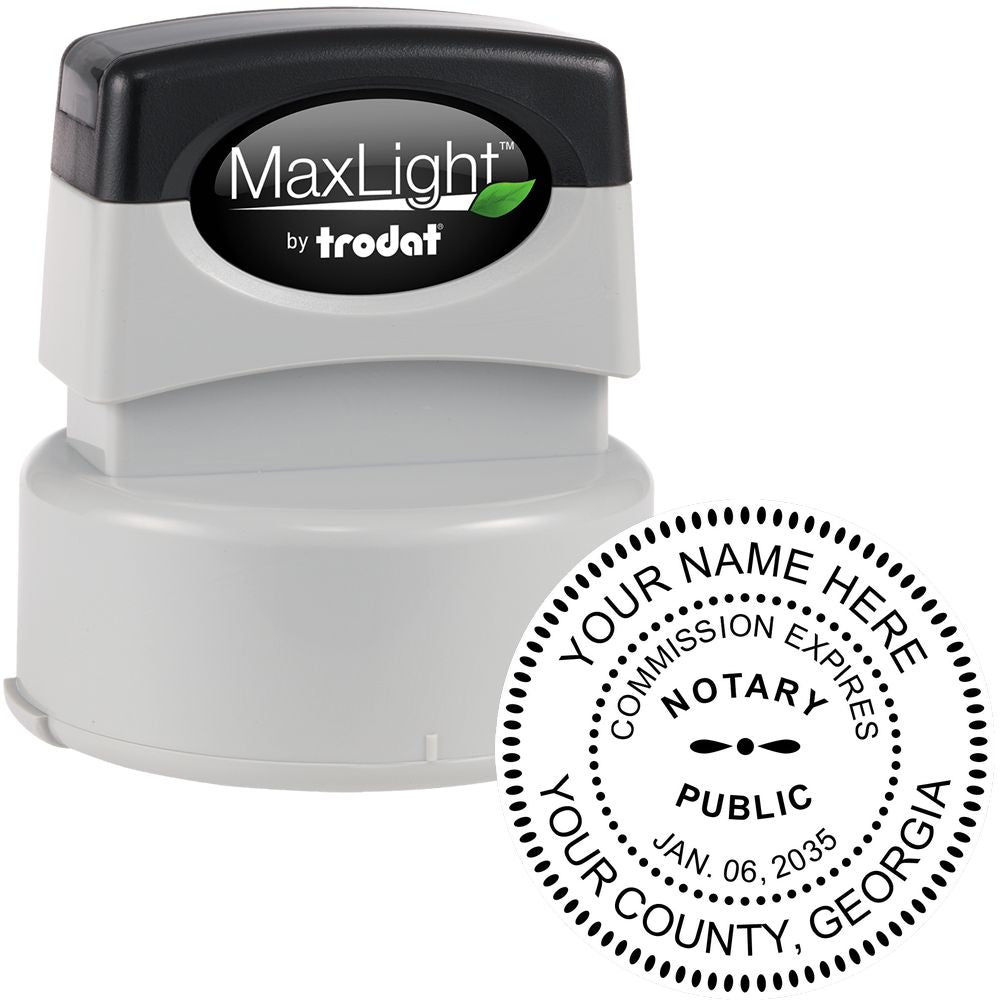
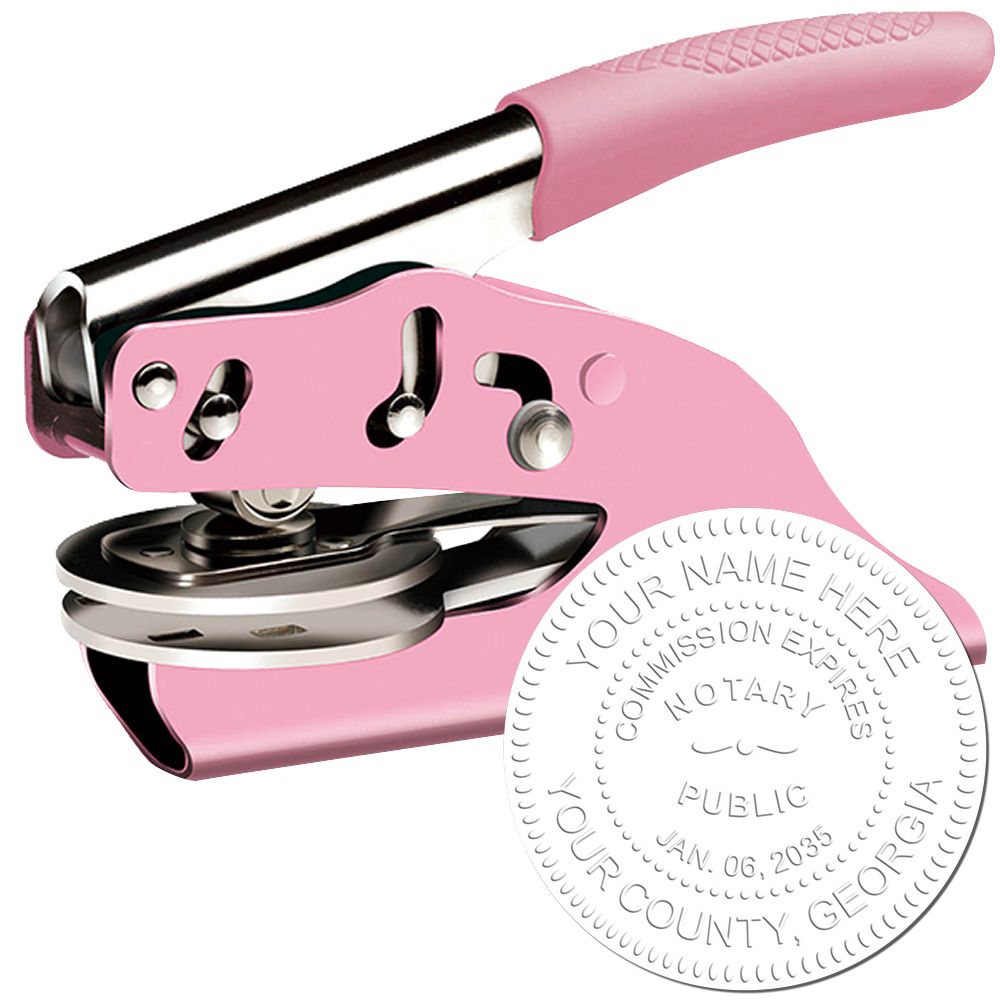
Either. The statute treats embossing as "authorized but not necessary", and it adds that "a rubber or other type stamp shall be sufficient." Neither format outranks the other under the cited text.
Practically, an inked impression photocopies and scans while an embossed one often does not, which is why many Georgia notaries who own a press also carry an inked device. That is a workflow decision the statute leaves to you.






Why is a handwritten mark not enough?
Because the statute rules it out in terms: "A scrawl shall not be a sufficient notary seal." Writing the four items by hand beside your signature does not produce a seal for Georgia purposes.
The rule is aimed at consistency. A seal repeats the same four lines the same way on every certificate, which is what makes a later comparison possible, and a hand drawn mark cannot do that.
Does a renewal call for a new seal?
No statutory requirement for a new seal follows a renewal. Because the required face carries no expiration date and no commission number, nothing on it goes stale when a term turns over.
What does force a new seal is a change in the four items themselves. A name change is the common one, and the reorder should follow the notice you send rather than precede it. Common Georgia notary stamp law mistakes covers the rest.
What happens if your seal is lost or stolen?
Send written notice to the clerk of superior court who appointed you within 10 days of the loss or theft, with a copy to the Georgia Superior Court Clerks' Cooperative Authority. Both go out, not one.
Ten days is short, so treat the notice as the first task rather than the last. Date the letter from when you noticed the loss and keep proof of what you sent to each office.
Which changes do you report, and to whom?
A change of name or address goes in writing to the clerk of superior court who appointed you, and a copy goes to the statewide authority. Both have to be received inside 30 days, received rather than postmarked.
Build a few days of margin into that, because the deadline turns on arrival. If the change is to your name, order the replacement seal at the same time so the face and the record line up. The Georgia notary public handbook and the application process cover the surrounding steps.
What should you check on the impression?
Press it on paper and read the four lines. Your name should match the commission certificate character for character, the title should read Notary Public, the state should be Georgia or GA, and the county should be the one that commissioned you.
Then copy the page and look again. A seal that only reads on the original is a seal that will be questioned. A checklist of Georgia notary stamp requirements is useful before you approve a proof.






Frequently asked questions
Does the name on the seal have to match the certificate exactly?
Yes. The statute ties the name line to the way it appears on the commission certificate, so a shortened first name or a dropped middle initial is a departure from the required face.
Is GA acceptable in place of Georgia?
Yes. The statute names both the full state name and the two letter abbreviation, so either one satisfies that item.
Does the seal need a commission expiration date?
Not under the cited statute. The four required items are the name, the title, the state and the county. An expiration date is something you may add rather than something asked of you.
Do I need both an embosser and an inked stamp?
No. Either format satisfies the statute on its own. Owning both is a convenience for documents that will be copied, not a requirement.
Is there a standard for how well the seal has to copy?
No reproducibility standard is set for the Georgia seal. Legibility on a copy is worth designing for anyway, since a recipient reading a scan is the common case.
Who gets the notice when a seal is stolen?
The clerk of superior court who appointed you, in writing, within 10 days, with a copy to the Georgia Superior Court Clerks' Cooperative Authority.
Bring your commission certificate to the order so the name and county lines match the record exactly, then choose a device from the Georgia stamps and seals collection.