
To become an Oregon notary public, you must be at least 18, live in Oregon or work or practice there, read and write English, finish the free Notary Basics course, pass the Secretary of State's exam, and return a notarized oath with the $40 fee. Oregon asks for no bond. A commission lasts four years, and each new commission comes with a new number and needs a new stamp. Below: the steps in order, costs, the stamp order, journal duties and how Oregon handles reapplying.
Engineer Seal Stamps compliance desk. Checked against the Oregon Secretary of State, Corporation Division notary pages and Oregon Notary Public Guide, and ORS chapter 194. Sources read September 2026.
| Requirement | Oregon answer | Source |
|---|---|---|
| Who can apply | At least 18; living in Oregon, or working or practicing there; reads and writes English | ORS 194.315(2) |
| Record check | No felony or crime of fraud, dishonesty or deceit, and no revoked commission, in the prior ten years; every application gets a background check | ORS 194.315(2); Secretary of State, Qualifications for a Commission |
| Training | A notary course completed within the last six months; the state's Notary Basics course is free | ORS 194.325(2); Secretary of State, Notary Training |
| Exam | The Secretary of State's open-book exam, taken after training | ORS 194.325(1); Oregon Notary Public Guide |
| How to apply | Online through the notary portal, entering your education training number | Secretary of State, Commission Application/Reapplication |
| Fee | $40 processing fee for each application, sent with the oath | Secretary of State, Commission Application/Reapplication |
| Bond | Not required, and neither is errors and omissions insurance | Secretary of State, Notary Practice FAQs |
| Oath | Signed in front of a commissioned notary; the signature must match your ID | Secretary of State, Commission Application/Reapplication |
| Commission term | Four years | ORS 194.315(4) |
| Stamp or seal | Made only after the vendor sees your Certificate of Authorization. Face rules: Oregon stamp rules | OAR 160-100-0100(1); Secretary of State, Guidance for Notary Stamp Vendors |
| Journal | Required for every act, paper or electronic, kept at least ten years after the last entry | ORS 194.300(1) |
| Reapplication | Not automatic: training, exam and $40 again, then a new commission number and a new stamp | Secretary of State, Commission Re-application |
| Electronic and remote | In-person electronic and remote online notarization, after you are commissioned and the office acknowledges your notice | Oregon Notary Public Guide |
Record keeping and remote acts differ widely by state. The Oregon rules sit beside every other jurisdiction in notary journal requirements by state and remote online notarization and the electronic seal.
Who qualifies for an Oregon notary commission?
ORS 194.315(2) sets the minimums: age 18 or older, a residence or a place of employment or practice in Oregon, and the ability to read and write English. You also need recent training, a passing exam result and a clean ten-year record.
That ten-year look-back has two parts. No conviction for a felony or any crime of fraud, dishonesty or deceit, and no revoked notary commission, in the decade before your application. The qualifications page lists further bars, such as a conviction for impersonating a notary or for the unlawful practice of law.
Every application goes through a background check. Because an Oregon workplace or practice qualifies you, someone who lives in a neighboring state but works for an Oregon business can apply.
What are the steps to become a notary in Oregon?
Oregon runs the process online in a fixed order. Training comes first, then the exam and application in the Secretary of State's notary portal, a background check, a notarized oath sent with the fee, and finally your certificates by email.
- Take the Notary Basics course, self-paced through Workday Learning, by webinar, or in person in Salem.
- Open the notary portal, select your education provider, and enter your education training number.
- Pass the exam, which is open book and built on the Oregon Notary Public Guide.
- Clear the background check. The office then emails a PDF of the Notary Public Application and Oath of Office.
- Sign the oath before a commissioned notary. Your signature has to match the one on your photo identification.
- Send the oath with the $40 fee. Payment travels with the oath; it cannot be sent on its own.
- Check your inbox for PDF copies of your Commission Certificate and your Certificate of Authorization.
Your commission name is built from your first name, any middle names and your surname, and the reapplication page tells you to use your current legal name as your ID proves it. That name prints on the stamp exactly as the certificate spells it.
What training and exam does Oregon require?
You must finish a notary training course within the six months before you apply and pass the Secretary of State's exam. The office gives its Notary Basics course at no charge, and certified education providers offer paid courses as another route.
ORS 194.325 places the course before the exam and requires it to cover the laws, rules, procedures and ethics of notarial acts. The notary training page offers three formats: self-paced online through Workday Learning, instructor-led webinars, and in-person sessions in Salem.
The Oregon Notary Public Guide describes an open-book exam of yes or no, true or false and multiple-choice questions drawn from the guide itself. Training is not a one-time step either: the office requires it every time you apply for a commission.
How much does an Oregon notary commission cost?
The state charges a $40 processing fee per application, paid together with your oath. The Secretary of State's training costs nothing. What remains is your official stamp and a journal, plus course fees if you pick a certified provider over the free class.
The same $40 applies each time you reapply. There is no bond premium in the budget, since Oregon does not require one, and the form for reporting a missing stamp, certificate or journal carries no filing fee.
Is an Oregon notary public required to be bonded?
No. The Secretary of State's practice FAQ says bonds and errors and omissions insurance are not currently required, and the Oregon Notary Public Guide states that Oregon does not require notaries to be bonded or to carry liability insurance.
The FAQ still recommends that you consider insurance for your own protection. Whether to buy it is your call, and nothing about it appears among the application steps.
How long is an Oregon commission, and how do you reapply?
Each commission lasts four years under ORS 194.315(4), and it does not renew by itself. To keep notarizing, you retake the training, pass the exam again, and submit a new notarized oath with another $40 fee.
Oregon treats every commission as its own entity. The reapplication page explains that an accepted application brings a new commission number and a new expiration date, so last term's stamp no longer matches your record.
That is why a new official stamp follows each new commission, valid from the day the new commission takes effect. Under ORS 194.295, you disable the old device once the old commission expires, by destroying, defacing, damaging, erasing or securing it against use. Our guide to notary seal expiration dates helps you confirm which term a stamp belongs to.
What stamp do you order after your Oregon commission issues?
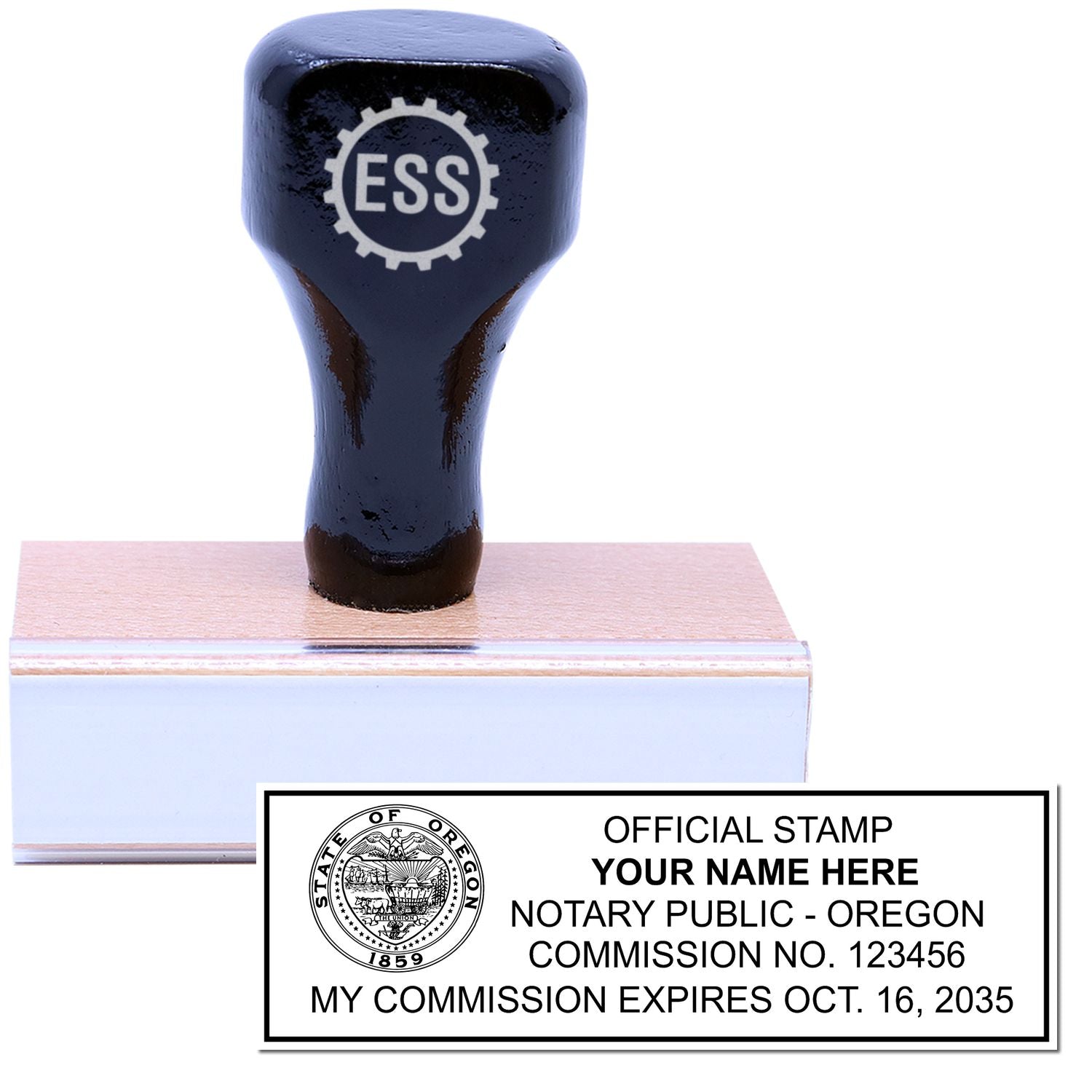
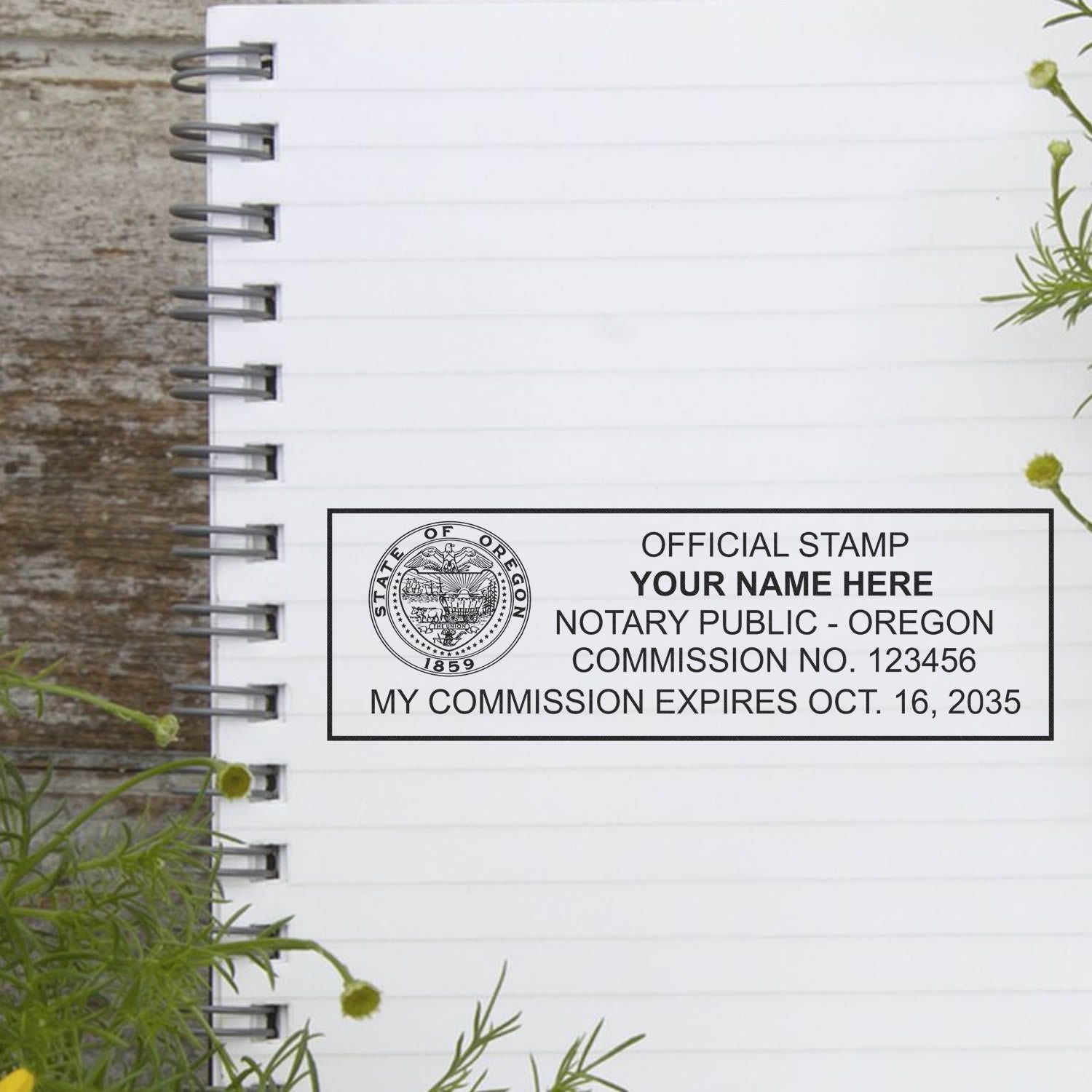
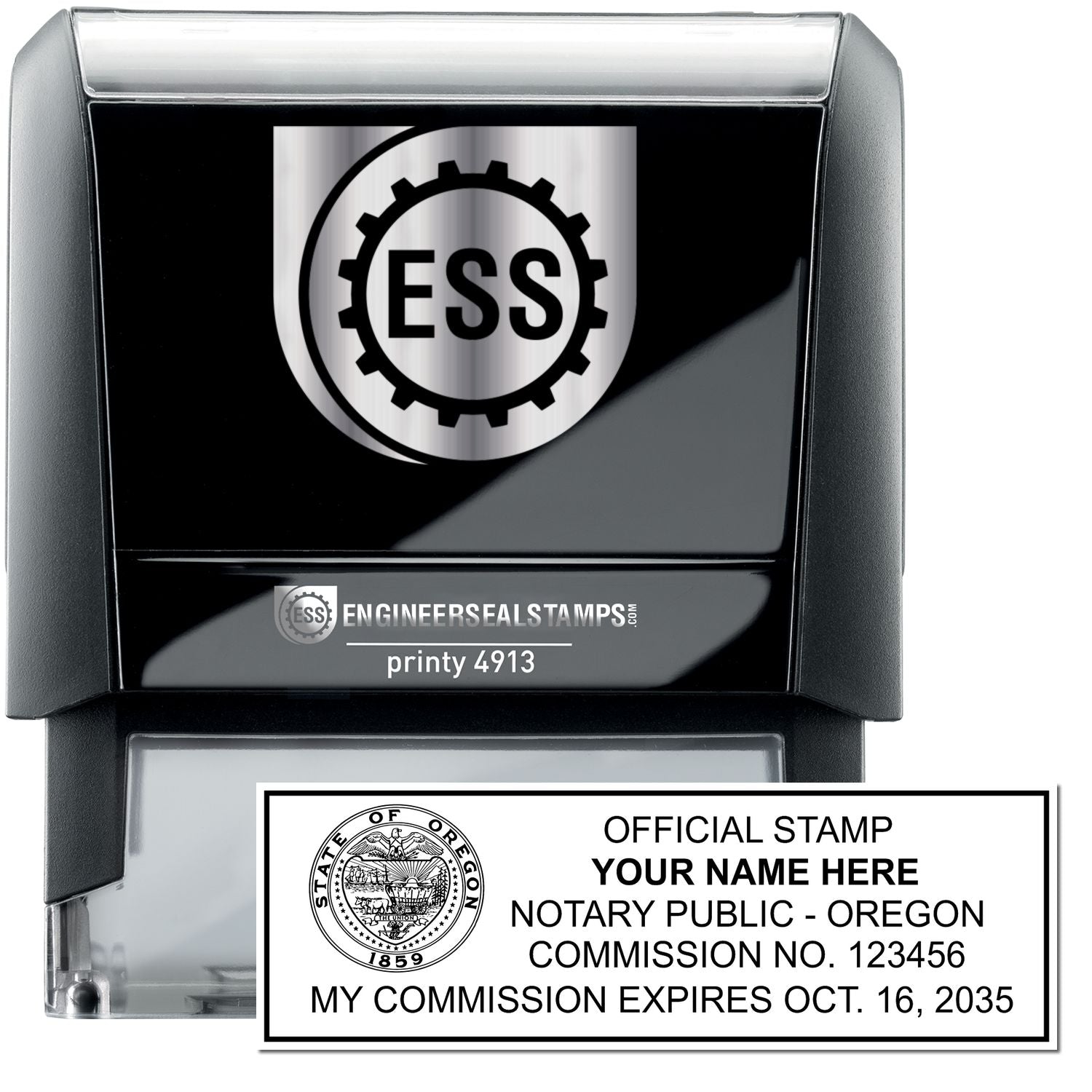
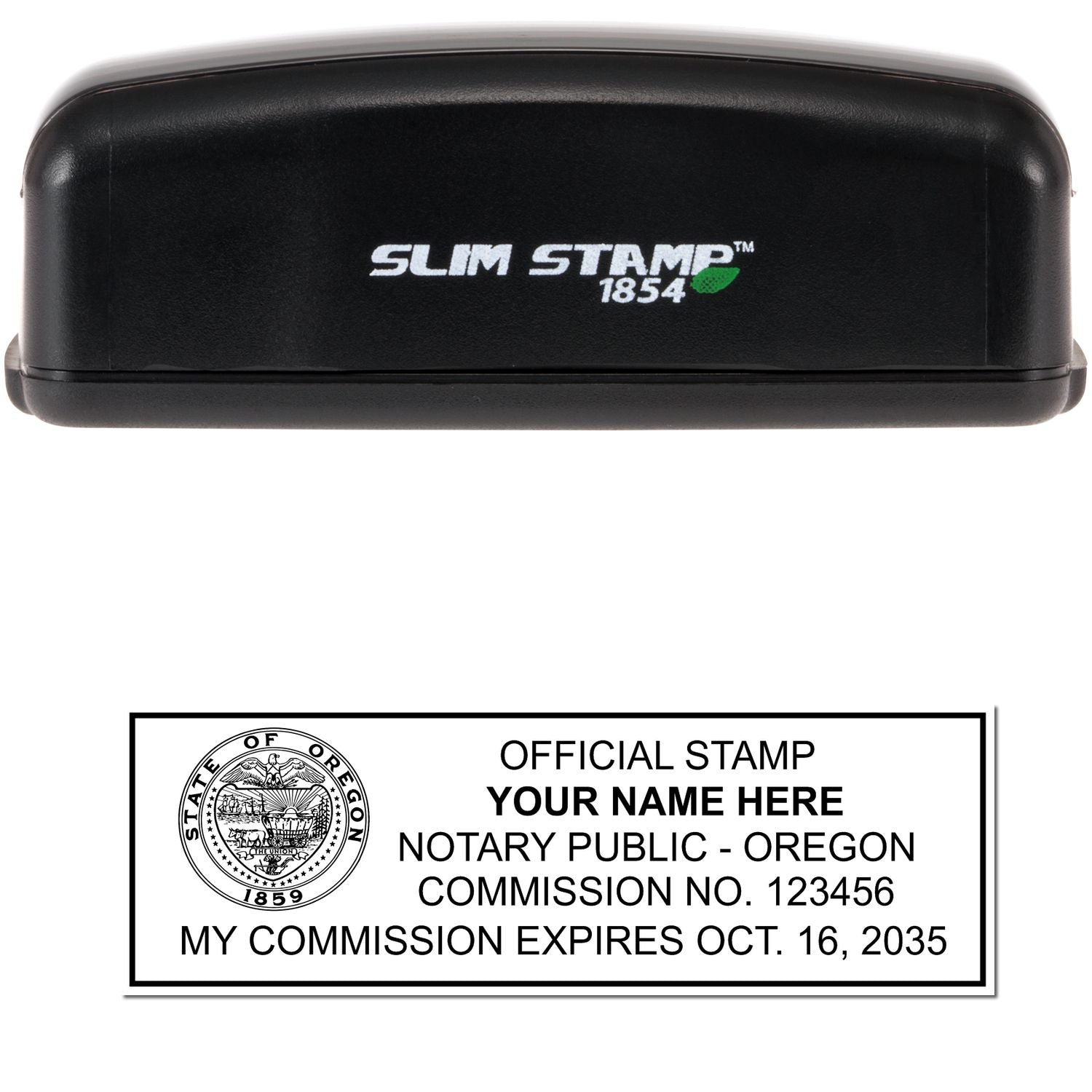
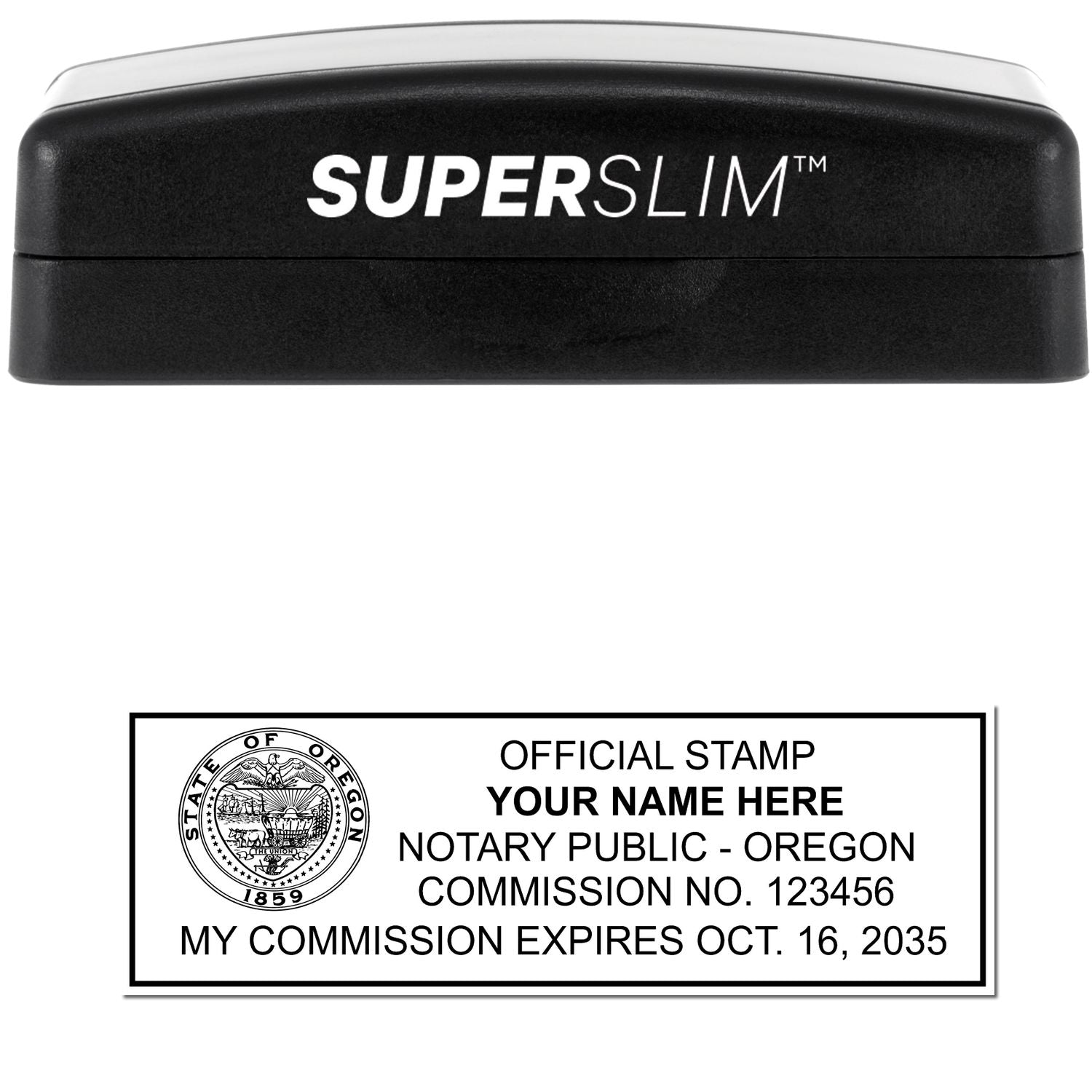
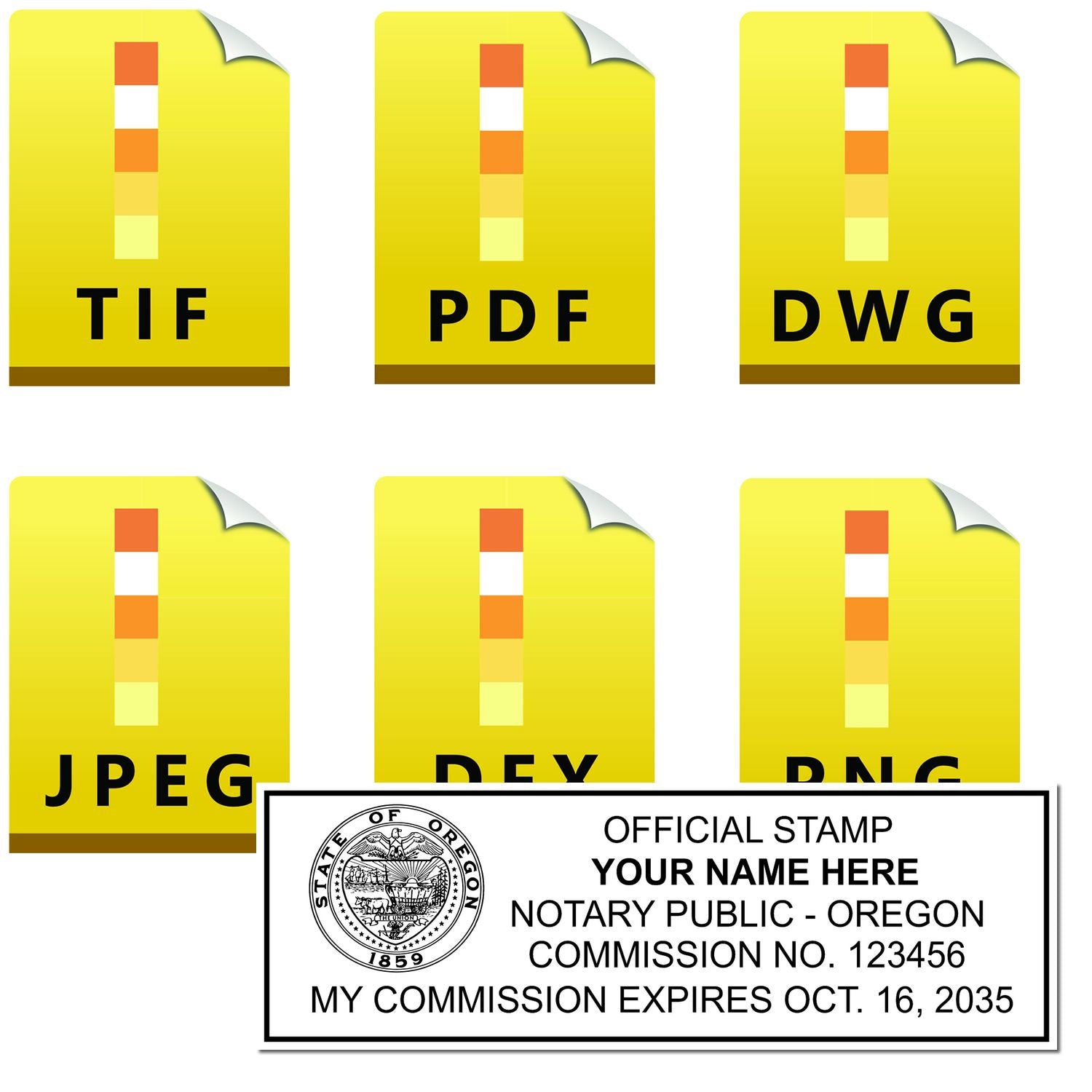
Order after the Certificate of Authorization reaches you, because a vendor must obtain it before making any Oregon notary stamp. The face carries the state seal, the words Official Stamp, your name, Notary Public and Oregon, your commission number, and the expiration date.
The vendor guidance tells makers to reproduce the certificate exactly and to refuse any order that alters, misspells or respaces it. OAR 160-100-0100(1) also has the month of the expiration date spelled out in full. Our Oregon notary stamp rules page goes through each line.
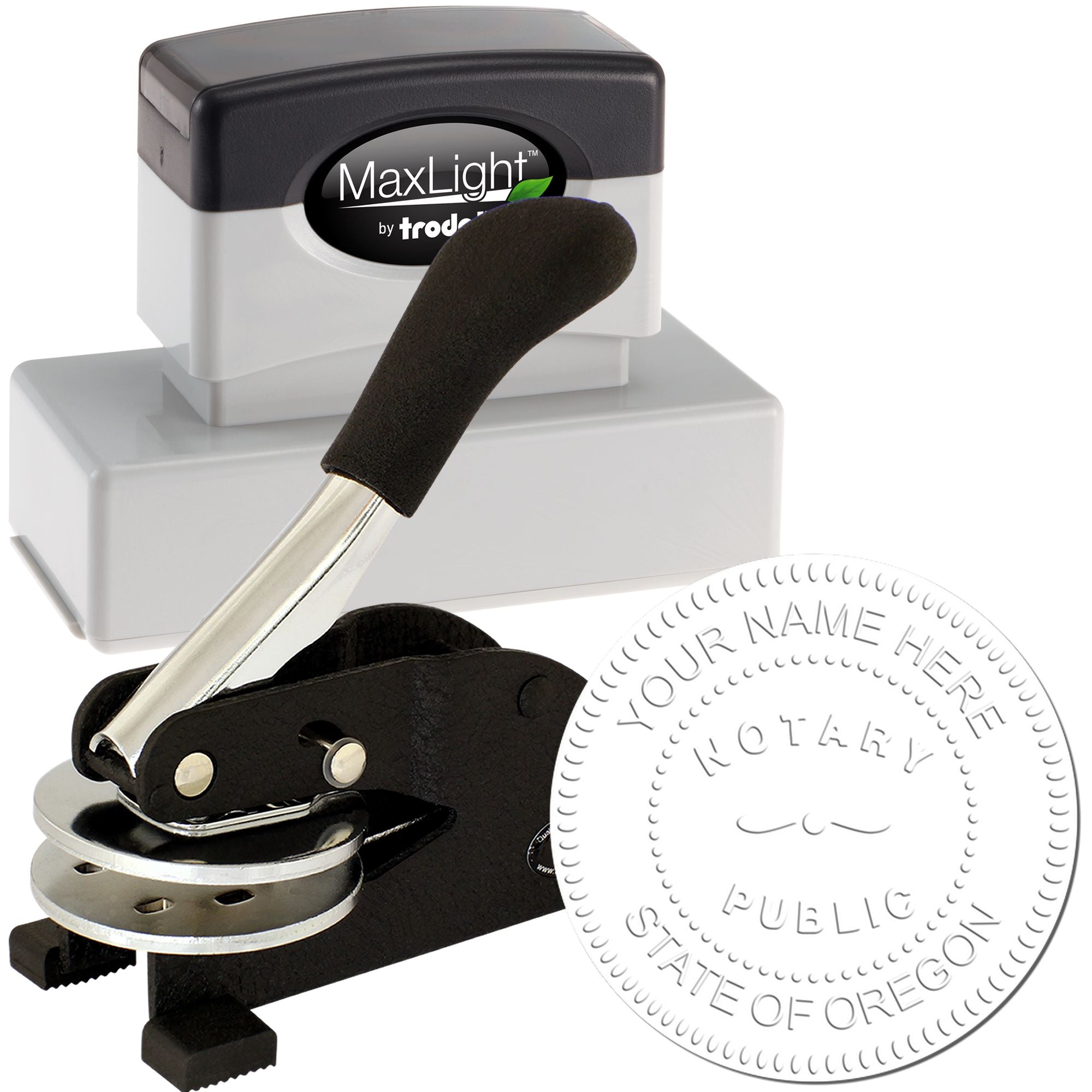
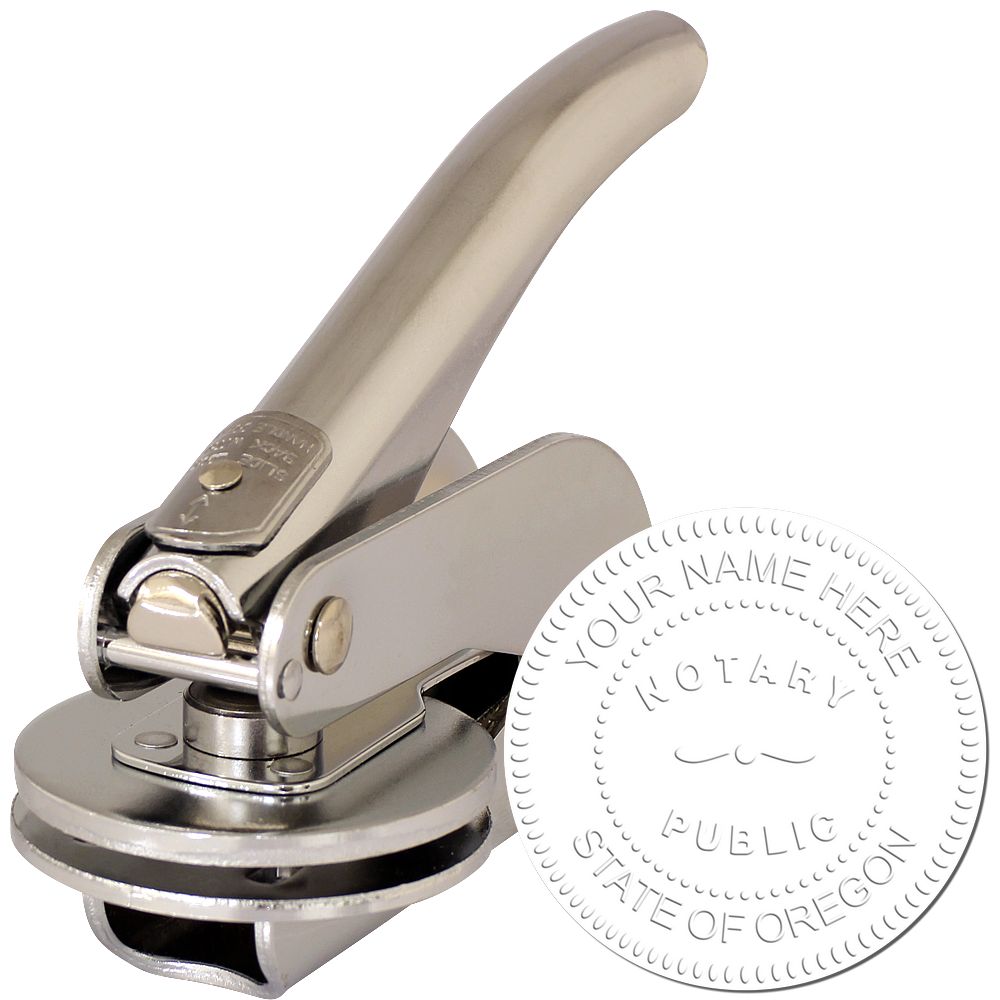
An embosser is optional and needs no Certificate of Authorization, but it can only accompany the inked stamp. The guide describes it as a protection device used in an unofficial capacity.


What must an Oregon notary journal contain?
ORS 194.300 requires every notary to keep one or more journals recording all notarial acts, on paper or electronically, and to hold each journal for at least ten years after the last act it records. Each notary keeps their own; two notaries cannot share one.
The guide lists the entry contents: date and time, type of act, the document's date and type, the signer's printed name, address and signature, how you identified the signer, any additional information, and the fee collected.
An employer may keep your journal only under a signed agreement, and the practice FAQ suggests copying the pages for your own records in that case. You also need not disclose journal entries unless the Secretary of State asks or a subpoena requires it.






What changes must you report to the Oregon Secretary of State?
Report a legal name change or an address change within 30 days, under OAR 160-100-0170. A name change goes on the notarized Notary Information Change form and brings new certificates, a lettered commission number and a new stamp.
The name change page explains that your commission number gains a letter prefix and that you receive new Certificates of Commission and Authorization. Order the replacement stamp from the new Certificate of Authorization.
For a stamp that is lost or stolen, the guide says to report the incident to the police, then file the Missing Stamp, Certificate or Journal form within ten days. A new Certificate of Authorization follows so a vendor can make the replacement.
Can Oregon notaries notarize electronically or remotely?
Yes, once you hold a commission. Oregon permits in-person electronic notarization and remote online notarization, and you must notify the Secretary of State and receive acknowledgment before performing either kind.
During a remote session you must be physically in Oregon, while the signer can be elsewhere in Oregon, in another state, or outside the United States. In-person electronic acts follow the paper rules: the signer appears, shows proper identification, and goes into your journal.







Frequently asked questions
Where can an Oregon notary perform notarizations?
The guide sets one location rule: you must be located in Oregon for every notarization, including remote ones. The signer on a remote act can be outside the state.
How much can an Oregon notary charge?
ORS 194.400 caps most fees at $10 per notarial act and allows up to $25 for an act performed under ORS 194.277. Under OAR 160-100-0400, you display or hand over a fee schedule before notarizing, and OAR 160-100-0420 lets you file a waiver and stop charging altogether.
Does the Secretary of State sell notary stamps?
No. The administration FAQ says the office does not sell or provide stamps or journals. You may order from any vendor, and the vendor must see your Certificate of Authorization first.
What supplies does an Oregon notary need?
The official stamp and a journal are the two the law requires. Buy the stamp with your Certificate of Authorization in hand; an embosser is optional and serves only alongside it.
How long does my training stay valid?
For six months. ORS 194.315(2) requires the course to have been completed within the six months before you apply, so finish the exam and application inside that window.
Can I change my name when I reapply?
Yes. The reapplication page lets you change your name at reapplication; apply online in your current legal name as your identification shows it, and order the new stamp in that name.
When your Certificate of Authorization arrives, use it to order from our Oregon notary stamps and seals, since every vendor has to check it before production. For stamp rules elsewhere in the country, see our notary seal requirements by state.