
To become a notary in West Virginia, you must be at least 18, hold U.S. citizenship or permanent legal residence, live or work in West Virginia, read and write English and have a high school diploma or its equivalent, then apply online with the Secretary of State for $52. West Virginia dropped its notary bond in 2018 and gives no exam. Approval brings a commission letter spelling out what your stamp must say. This guide covers each step, the cost, the stamp, journals and the 60-day renewal window.
Engineer Seal Stamps compliance desk. Checked against the West Virginia Secretary of State notary pages and West Virginia Notary Handbook (Rev. September 2025), and the Revised Uniform Law on Notarial Acts, W. Va. Code § 39-4-1 et seq. Sources read September 2026.
| Requirement | Short answer | Source |
|---|---|---|
| Eligibility | At least 18; U.S. citizenship or permanent legal residence; home, job or practice in West Virginia; reads and writes English; high school diploma or equivalent | W. Va. Code § 39-4-20 |
| Training or course | None required. The application has you affirm that you have read the notary law | W. Va. Code § 39-4-20 |
| Exam | None | West Virginia Notary Handbook |
| How to apply | Online, through the Secretary of State's filing system | Secretary of State, Applying for a Notary Public Commission |
| Application fee | $52, waived for state and local government notaries with a supervisor's letter | Secretary of State, Notary Public Forms and Fees |
| Bond | None. The $1,000 bond ended on June 3, 2018 | Secretary of State, Applying for a Notary Public Commission |
| Oath | A sworn statement, under penalty of perjury, built into the application | W. Va. Code § 39-4-20 |
| Commission term | Five years | W. Va. Code § 39-4-20 |
| Stamp | Rectangular with a border, no larger than 1 by 2.5 inches, made from your commission letter. West Virginia stamp rules | W. Va. Code § 39-4-17; Secretary of State |
| Journal | Not required, though the handbook strongly advises one | West Virginia Notary Handbook |
| Renewal | Not automatic. A new application and $52, processed no earlier than 60 days before expiration | West Virginia Notary Handbook |
| Electronic or remote | Separate e-notarization authorization at no charge; remote sessions recorded and kept five years | Secretary of State e-Notarization page; W. Va. Code § 39-4-37 |
| Name or address change | Notice within 30 days, no fee, then a new stamp | West Virginia Notary Handbook |
For journal and remote notarization rules beyond West Virginia, compare the 54-jurisdiction journal table with the 54-jurisdiction remote notarization table.
Who is eligible to become a West Virginia notary?
You qualify at 18 or older if you hold U.S. citizenship or permanent legal residence, read and write English, finished high school or its equivalent, and either live in West Virginia or work or practice at an office there. Certain convictions can block the application.
The work route is broad. The Secretary of State's application page accepts a resident of another state who works at an office address in West Virginia, with no rule about which state that is. The diploma requirement applies to anyone who was not already commissioned before January 1, 2018.
Under § 39-4-21, the Secretary of State may turn down an applicant with a felony conviction, or a conviction for a crime of fraud, dishonesty or deceit. A dishonest answer on the application is a separate ground, as is a notary commission denied in another state.
How do you apply for a West Virginia notary commission?
The whole application is online. You read the notary law, file with the Secretary of State and pay $52, wait for a commission letter, have your stamp made from it, and then receive a commission certificate good for five years.
- Read the law. The Secretary of State's first step is Chapter 39, Article 4 of the West Virginia Code, and the application asks you to confirm you have reviewed it.
- File the Application for Appointment as a Notary Public online. The handbook says it needs your exact name, a West Virginia mailing address, an email address and phone numbers, and an application missing a requirement is rejected.
- Pay the $52 fee. A state or local government employee applying for official duties can have it waived with a supervisor's letter requesting the appointment.
- Check the commission letter. It lists the exact name and address your stamp must carry, so correct any error before ordering.
- Order the rubber stamp seal with the wording the letter gives you.
- Receive the commission certificate and handbook. The application page says you may start notarizing once the certificate arrives.
The application also asks whether you plan to perform electronic notarial acts. The authorization for that is a separate filing, covered further down.
What does a West Virginia notary commission cost?
The Secretary of State charges $52 for the application and nothing for e-notarization authorization, a name or address change, a lost seal report or a resignation. With no bond to buy, your remaining costs are the stamp and any journal you choose to keep.
- Application: $52, paid online. Federal employees do not qualify for the government waiver.
- Bond: none.
- Stamp: required before your first notarization, priced by the maker.
- Later filings: no fee for changes, a lost seal report or e-notarization authorization.
- Each new term: another $52, since continuing means filing a new application.
Is there a notary exam or course in West Virginia?
No. West Virginia sets no class, course or test for a notary commission. In its place, § 39-4-20 has you state on the application that you have read the notary law and understand the duties that come with the commission.
Treat that statement as your study assignment. The Secretary of State's steps put reading the law first and reading the handbook, which arrives with the commission certificate, before your first notarization. Its e-Notarization page lists no training for electronic authorization either.
Do West Virginia notaries need a bond?
No. The Secretary of State removed the $1,000 notary bond requirement effective June 3, 2018, and the current handbook says plainly that no surety bond is needed to become a West Virginia notary. A guide that still lists the bond predates that change.
Accountability did not disappear with it. Under § 39-4-21, the Secretary of State may deny, suspend or revoke a commission for failing to follow the notary law, charging more than the maximum fee, or failing to report a change of name or address.
What stamp should a new West Virginia notary order?
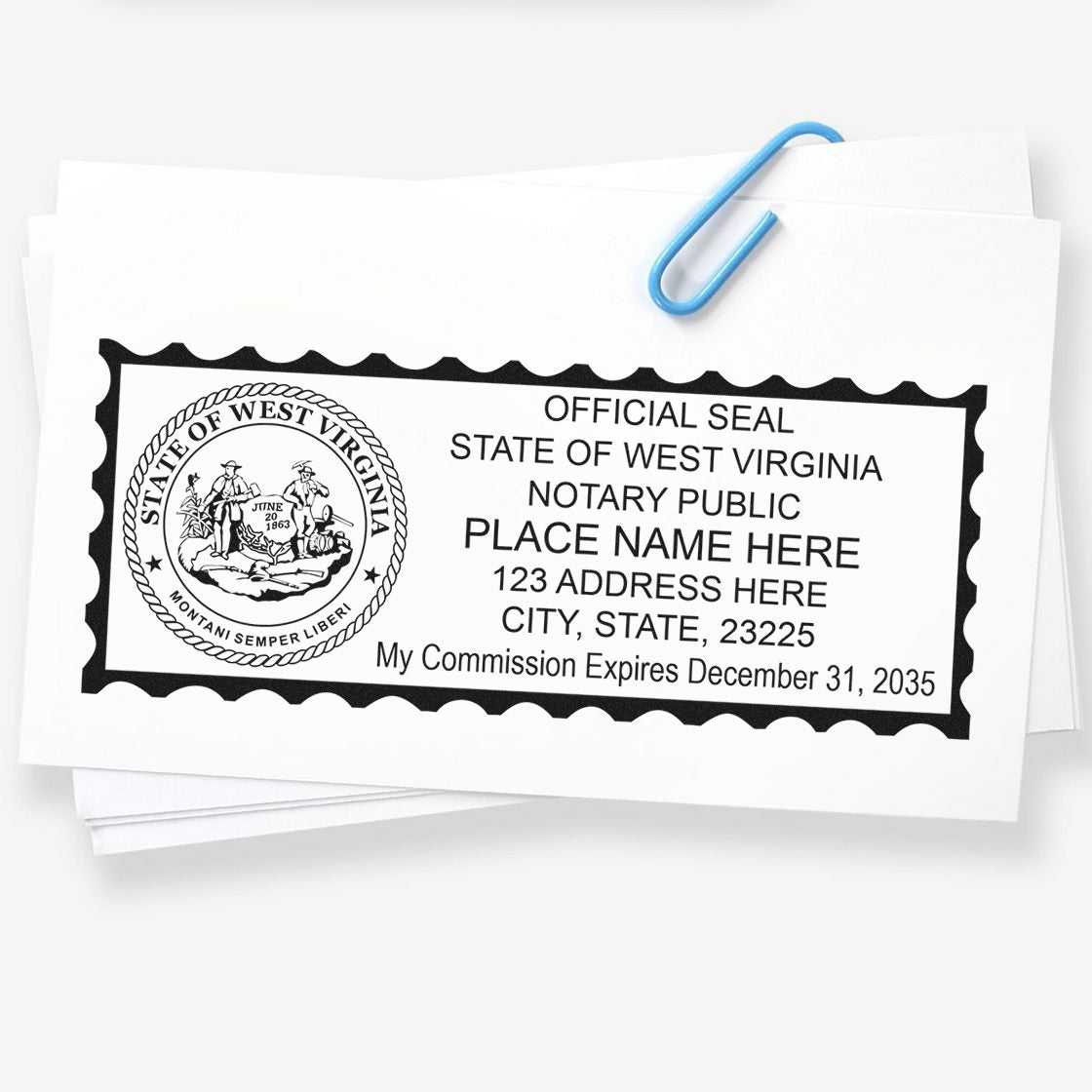
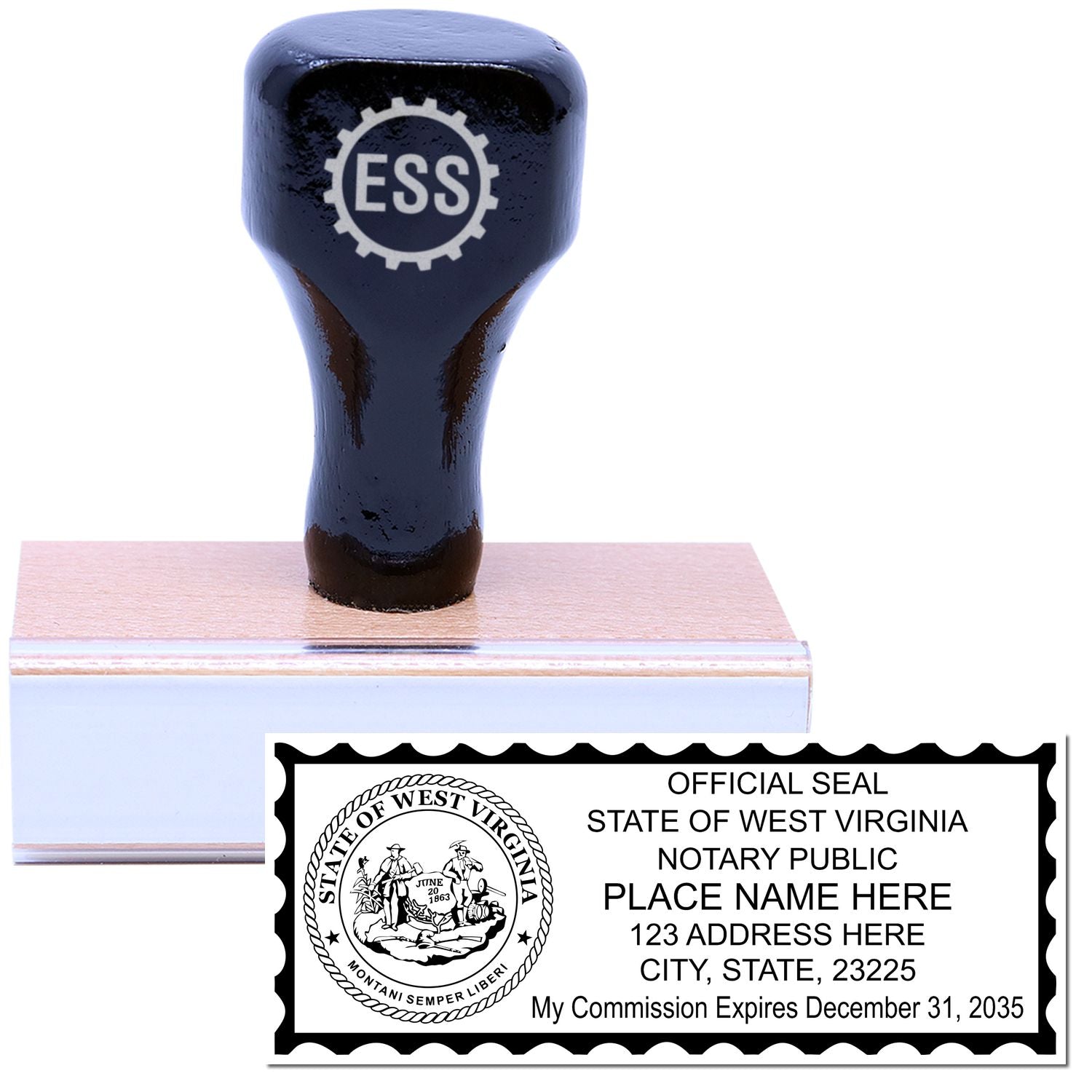
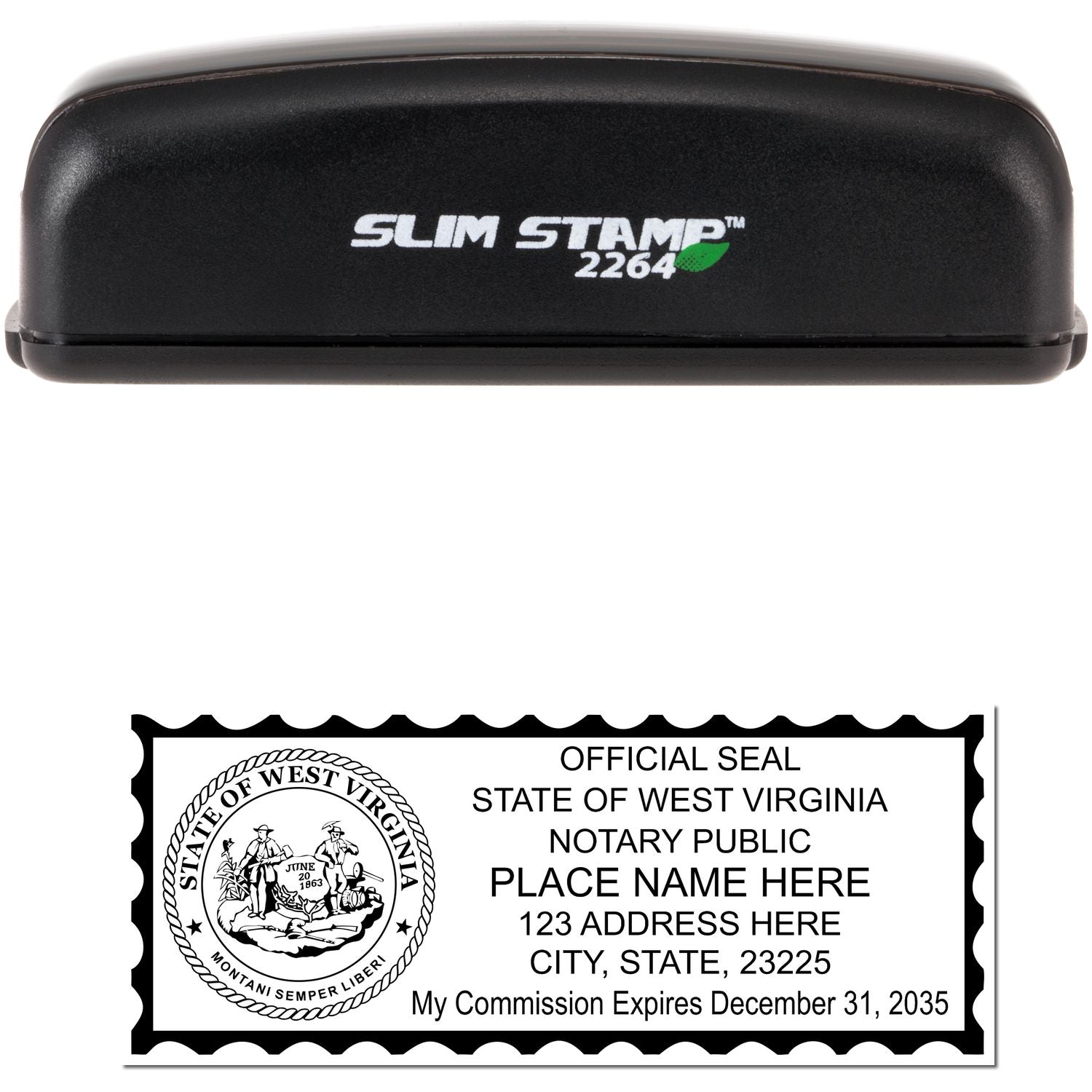
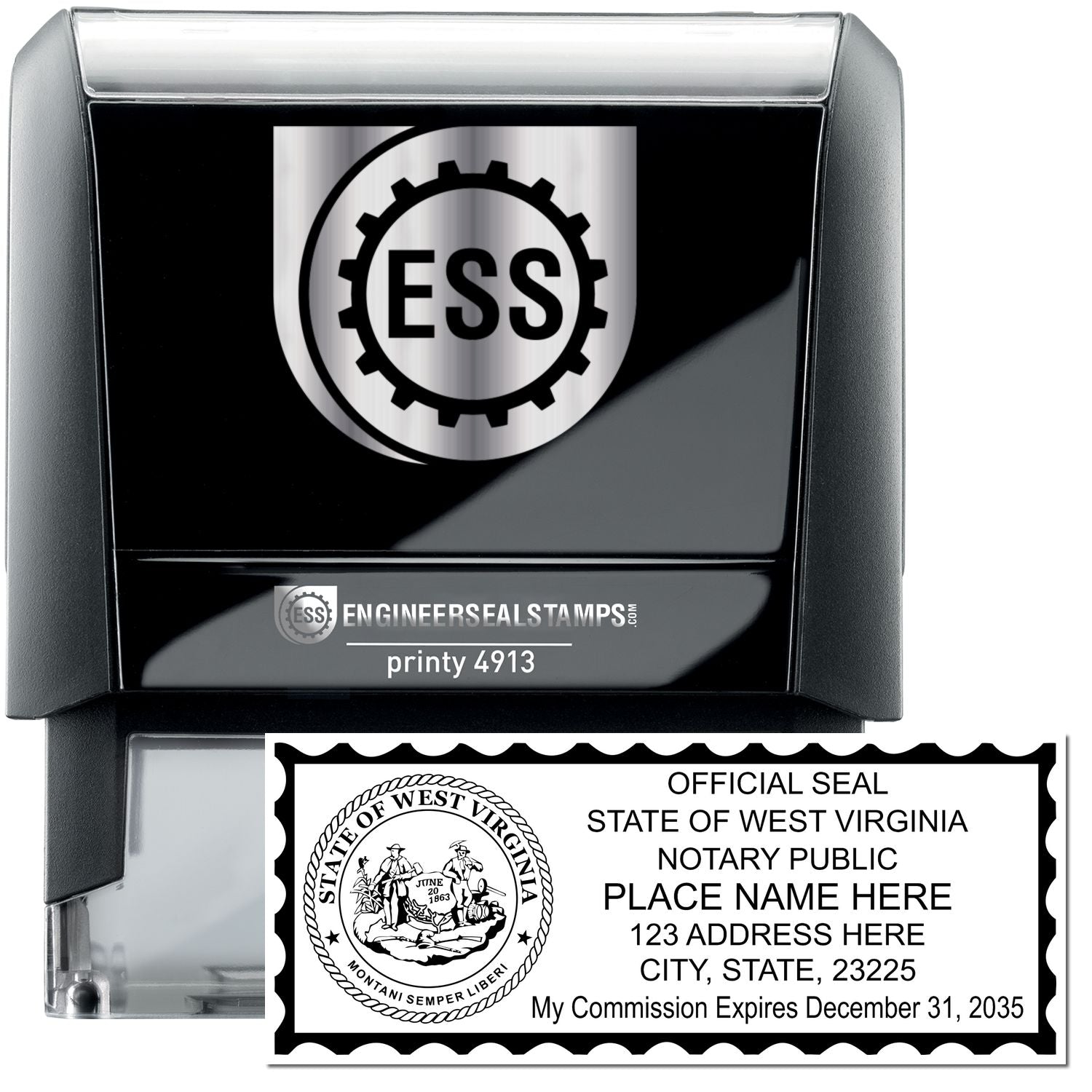
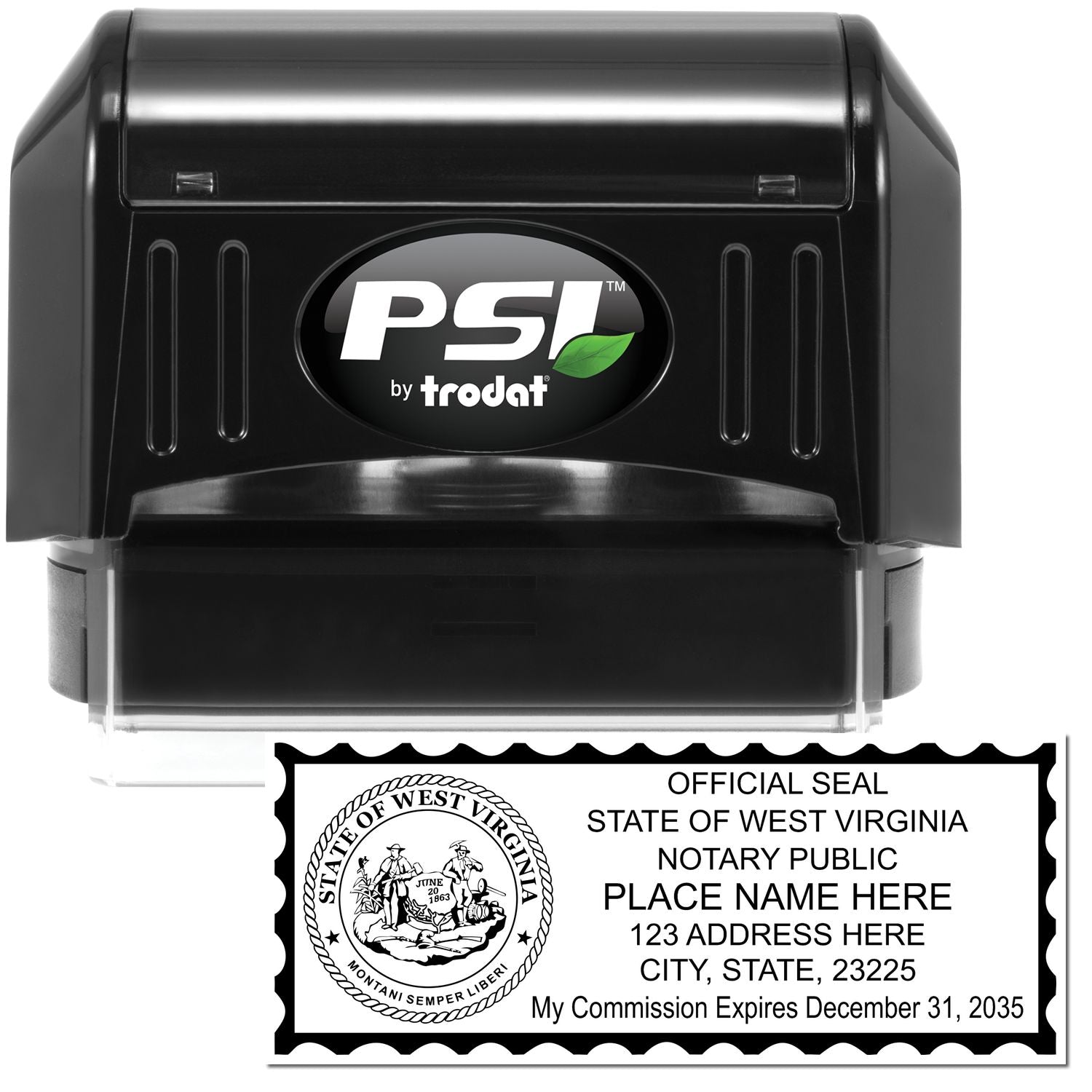
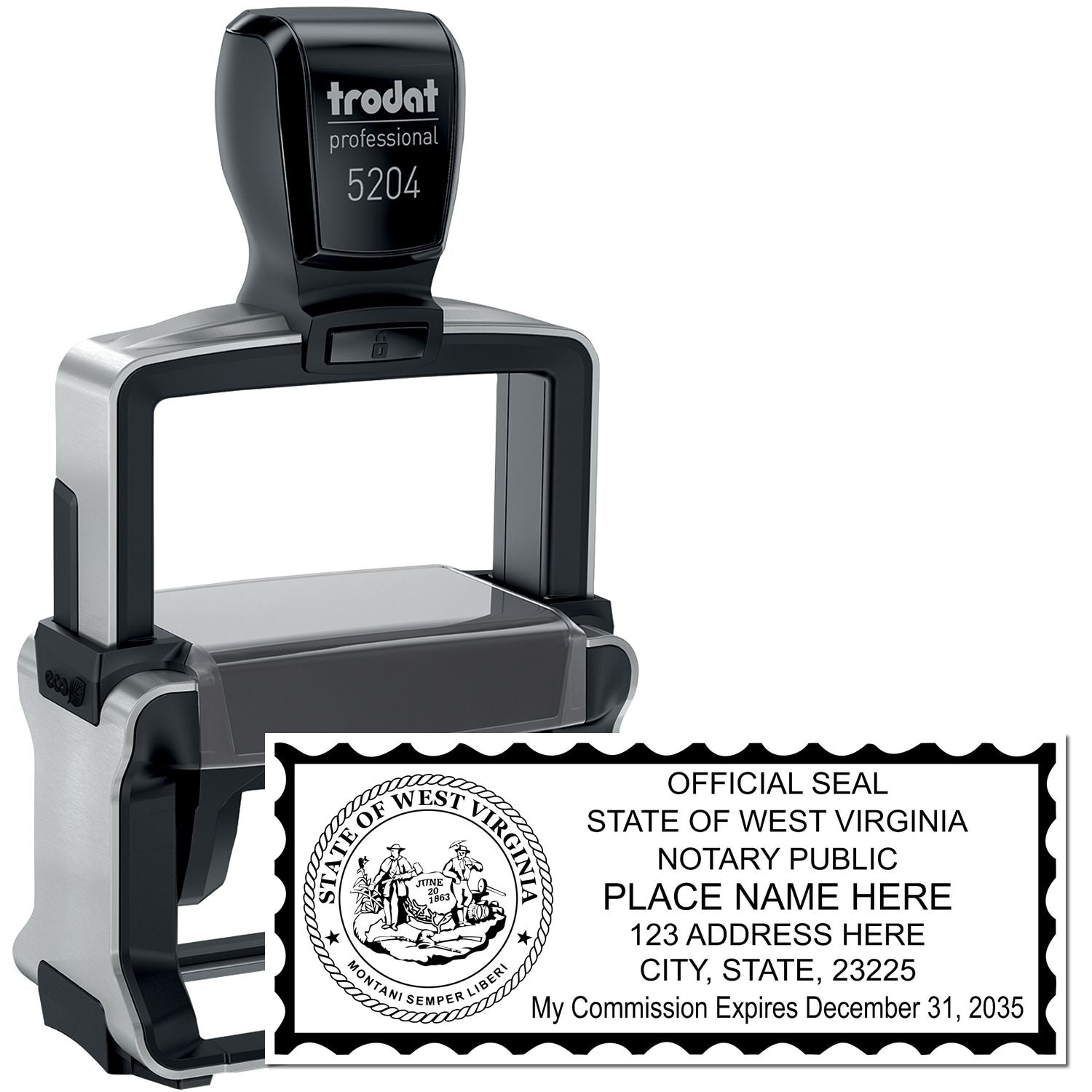
Order a rectangular inked stamp with a border, no larger than 1 inch tall and 2.5 inches wide, showing Official Seal, Notary Public and State of West Virginia, your name, your address and your commission expiration date. Wait for the commission letter first.
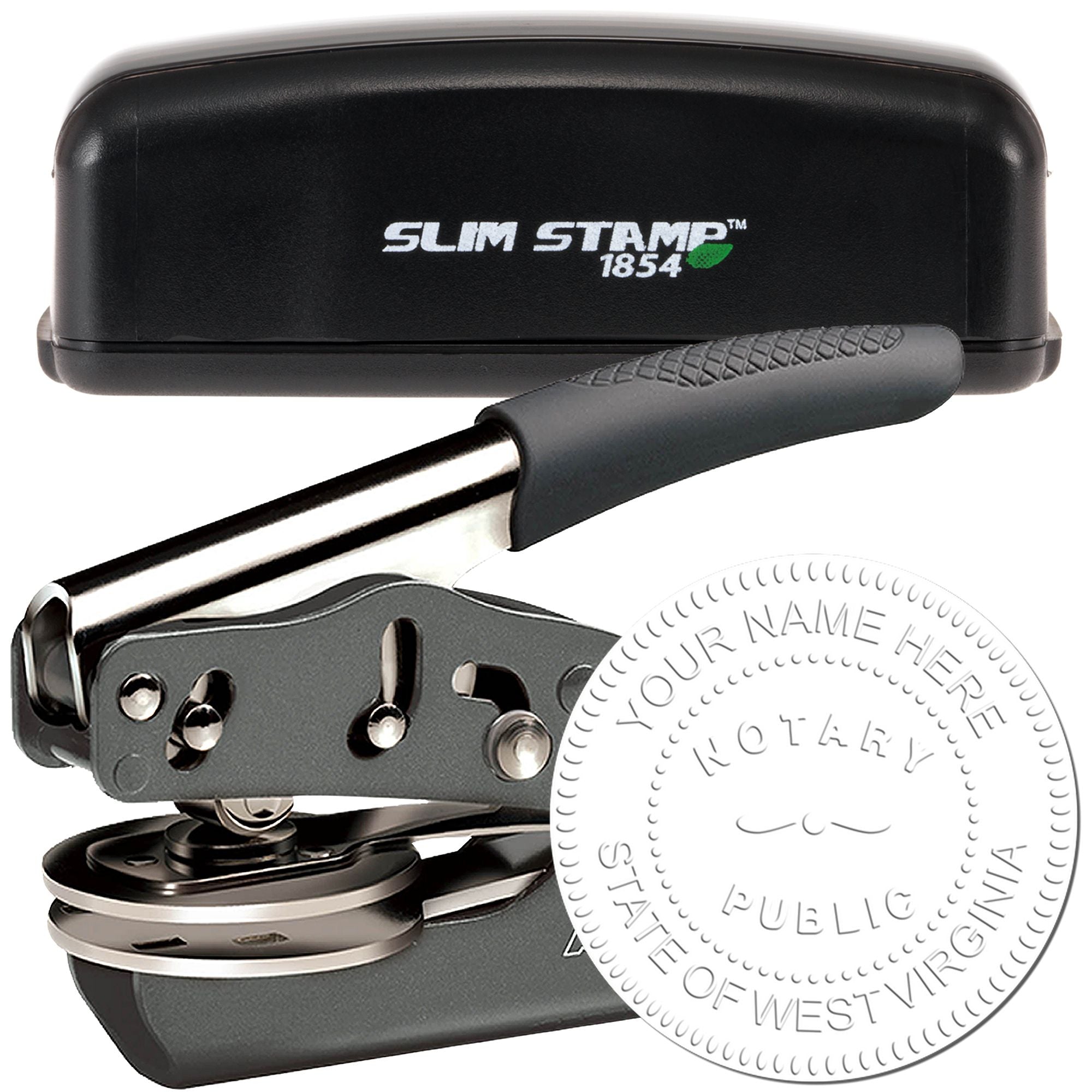
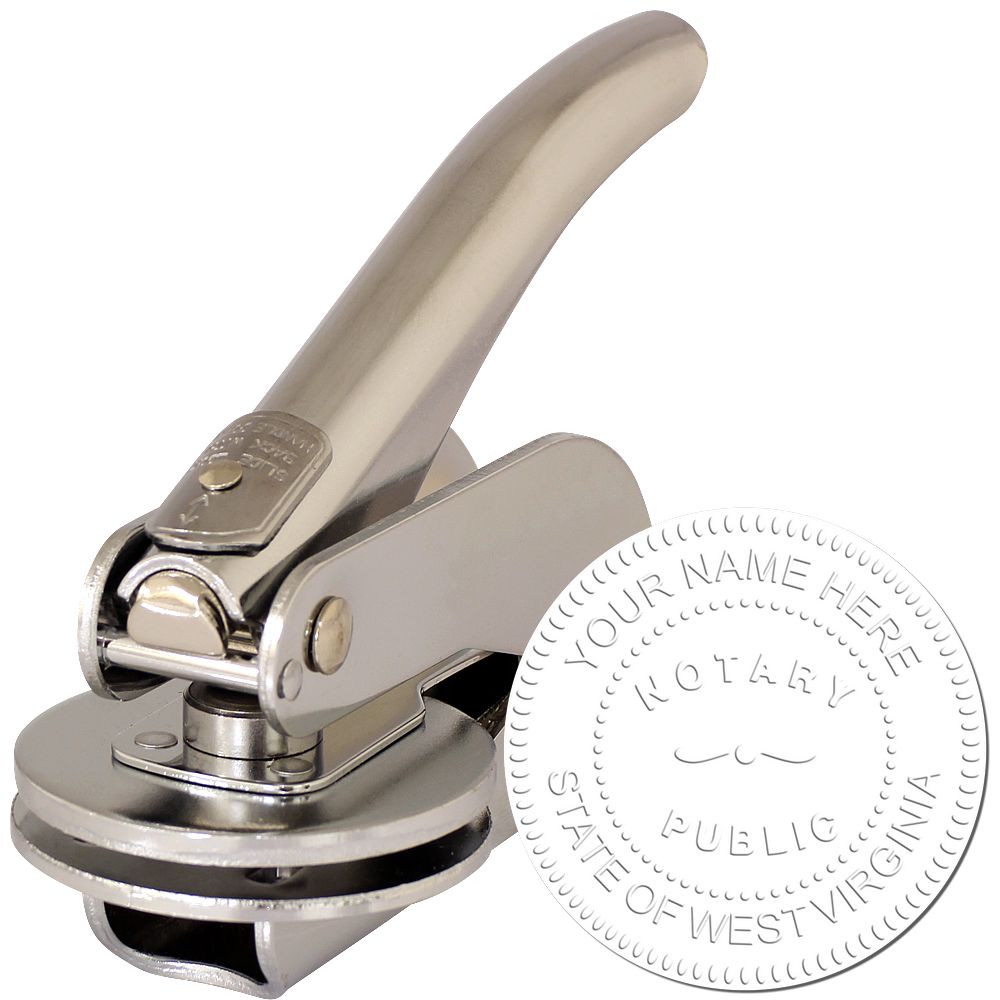
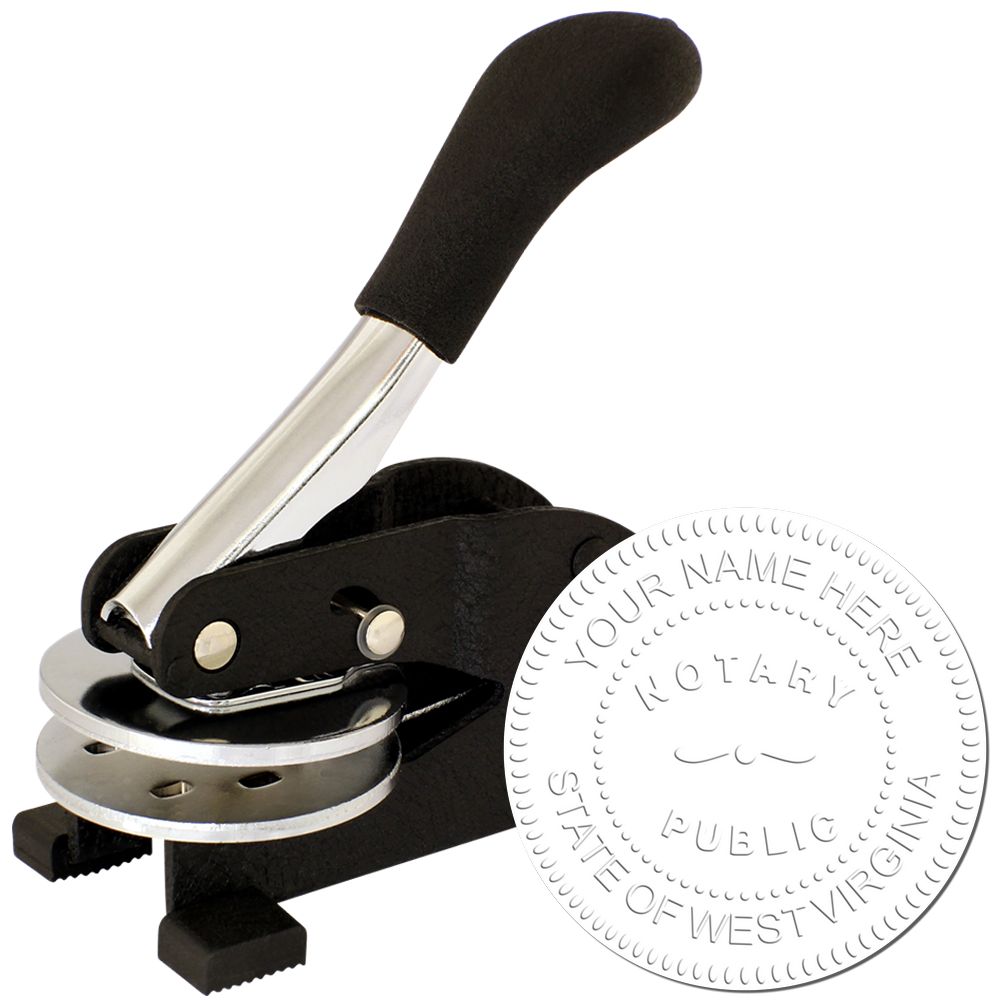
The commission letter works as your proof sheet. The handbook tells notaries to have the stamp made with the information in that letter, and § 39-4-17 requires the name, address and expiration date on the face. Any ink color is acceptable, and an embossing seal may be used in addition to the stamp but never instead of it.
Our West Virginia notary stamp guide breaks down each line of the face, the size cap and the address options.



Does West Virginia require a notary journal?
No. The handbook states that West Virginia does not require a journal of notarial acts, for paper or electronic notarizations, but strongly advises keeping one because it documents your own knowledge of each notarization if it is questioned later.
For a record book, the handbook suggests columns for the date, the type of act, the type of document, each signer's name, address and signature, notes and the fee. An electronic notary who chooses to keep one may use a permanently bound book with numbered pages or an electronic journal.
Remote online notarizations carry a firmer rule. Section 39-4-37 requires an audio and video recording of each session, kept for at least five years.





How long does a West Virginia commission last, and how is it renewed?
Each commission lasts five years. It does not renew on its own: every new term takes a fresh application and another $52 fee, and the Secretary of State will not process one more than 60 days before your current commission expires.
Mark the 60-day point on your calendar. Because the expiration date is printed on the stamp, a new commission means a new stamp as well. Use our seal expiration guide to confirm when yours runs out, and have the new stamp made from the new commission letter.
When a commission ends without renewal, § 39-4-18 requires you to destroy, deface or otherwise disable the stamp so it cannot be used.
What happens when your name or address changes, or your stamp goes missing?
Report a new name or a new home or business address to the Secretary of State within 30 days. The filing is free. The office emails an updated commission letter, and you order a new stamp that matches it.
A lost or stolen stamp follows the same pattern. Section 39-4-18 requires prompt notice to the Secretary of State, the filing costs nothing, and the office sends a new commission letter so the replacement can be made.
How do you become an electronic or remote notary in West Virginia?
Hold a traditional commission first, then file the separate E-Notarization Authorization application, Form N-2, which carries no fee. The handbook adds that you must already have the capability to notarize electronically before you ask for authorization.
For remote online acts, § 39-4-37 requires you to be located in West Virginia, to notify the Secretary of State and name your technology before the first one, and to confirm identity through personal knowledge, a credible witness or two identity proofing methods. The Secretary of State's e-Notarization page lists technology vendors and says the list is not exhaustive.





Frequently asked questions
Can someone who lives in another state become a West Virginia notary?
Yes, if you work at an office address in West Virginia. Section 39-4-20 accepts a place of employment or practice in the state in place of residency, and the other qualifications still apply.
Does the stamp have to show my home address?
No. An address is required on the face, but a business or affiliation address can take the place of your home address. Use whichever address appears on your commission letter.
What supplies does a new West Virginia notary need?
The inked stamp is the only required item. A journal is optional but advised, and an embossing seal can be added for documents where you want a raised impression next to the stamp.
How much can a West Virginia notary charge?
Up to $10 for each signature notarized and $10 for any other notarial act, under § 39-4-30. Certifying a facsimile is capped at $10 for each letter-size page kept in your file.
Where can I read the notary law myself?
The Legislature posts Chapter 39, Article 4 online, and the Secretary of State's application page sets out the steps in order.
When your commission letter arrives, pick a device from our West Virginia notary stamps and seals and match the name and address to the letter before you order. For how other states set their stamp rules, see our state by state notary seal requirements.