
To become an Ohio notary, you must be at least 18, be an Ohio legal resident or an Ohio attorney whose main practice is here, pass a BCI criminal records check, finish a three-hour course and test, apply online to the Secretary of State, and take an oath. Ohio's qualification list includes no surety bond. The course and test cost $130 and the state filing fee is $15. Commissions run five years, and this guide covers each step, the seal, the journal question and renewal.
Engineer Seal Stamps compliance desk. Checked against the Ohio Secretary of State's Notary Commission brochure, Ohio Rev. Code Chapter 147 and Ohio Adm. Code 111:6-1. Sources read September 2026.
| Requirement | Ohio answer | Source |
|---|---|---|
| Eligibility | Age 18 or older and an Ohio legal resident. A nonresident qualifies only as an attorney admitted in Ohio whose principal place of business or primary practice is in the state. | Ohio Rev. Code § 147.01(B)(1), (2) |
| Criminal records check | A BCI report completed within the six months before you apply. Attorneys and peace officers are exempt. | Ohio Rev. Code §§ 147.01(B)(3), 147.022 |
| Education | A three-hour program from a provider the Secretary of State authorizes. | Ohio Adm. Code 111:6-1-03(A) |
| Test | Given by the same provider. After a failed attempt you may retest after 30 days and within six months. | Ohio Adm. Code 111:6-1-03(A) |
| Application | Filed electronically with the Secretary of State, with the background check, course certificate and a signature image uploaded. | Ohio Rev. Code § 147.01; Ohio Secretary of State, Notary Commission brochure |
| Fees | $130 to the education and testing provider, plus a $15 filing fee to the Secretary of State. | Ohio Adm. Code 111:6-1-03(A) |
| Bond | Not one of the qualifications, and Chapter 147 has no bond section. | Ohio Rev. Code § 147.01(B) |
| Oath | Taken in person before a notary or another officer who can administer oaths, before your first official act. | Ohio Rev. Code § 147.01 |
| Term | Five years. An Ohio attorney's commission does not expire while the attorney stays in good standing and keeps the Ohio residence or practice tie. | Ohio Rev. Code § 147.03 |
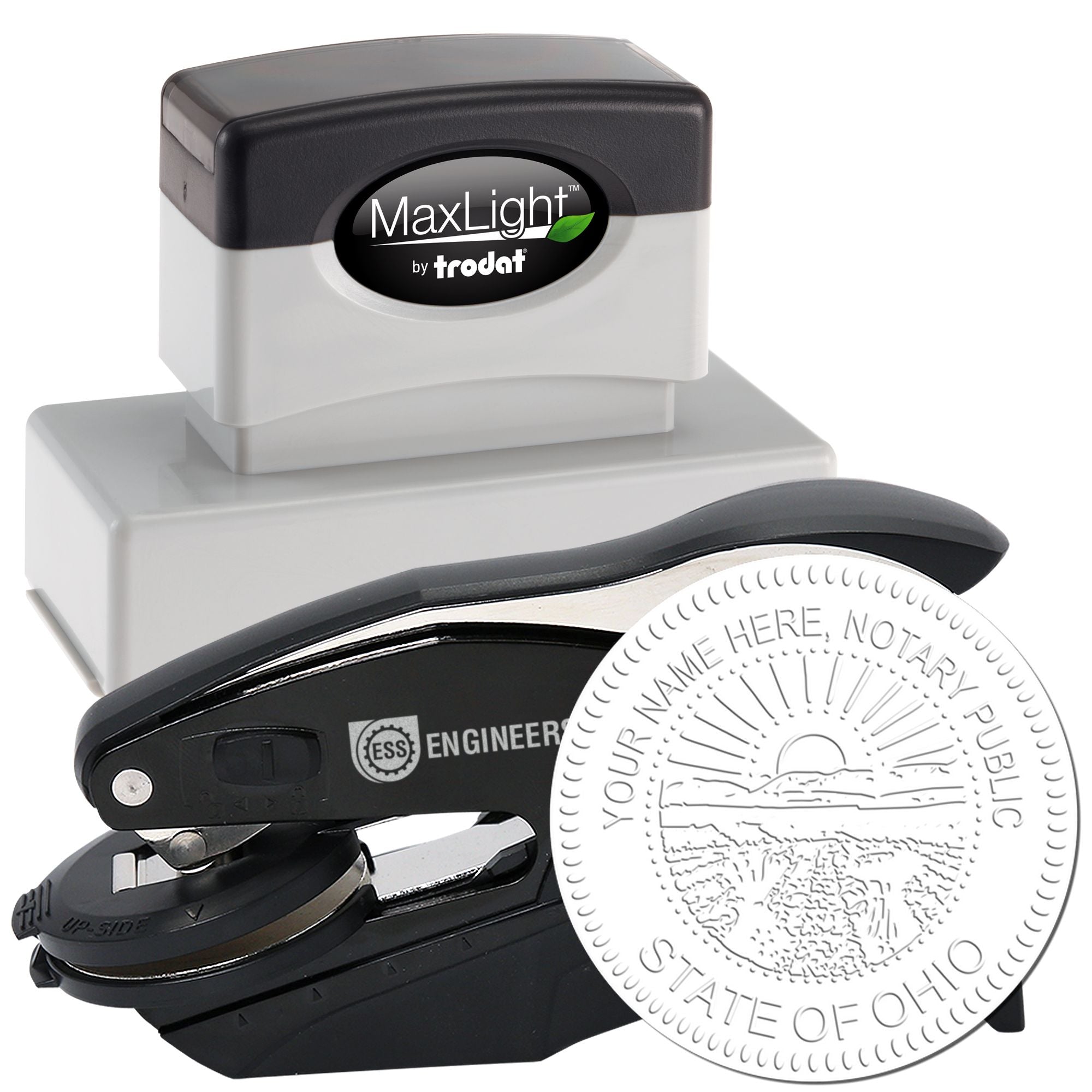
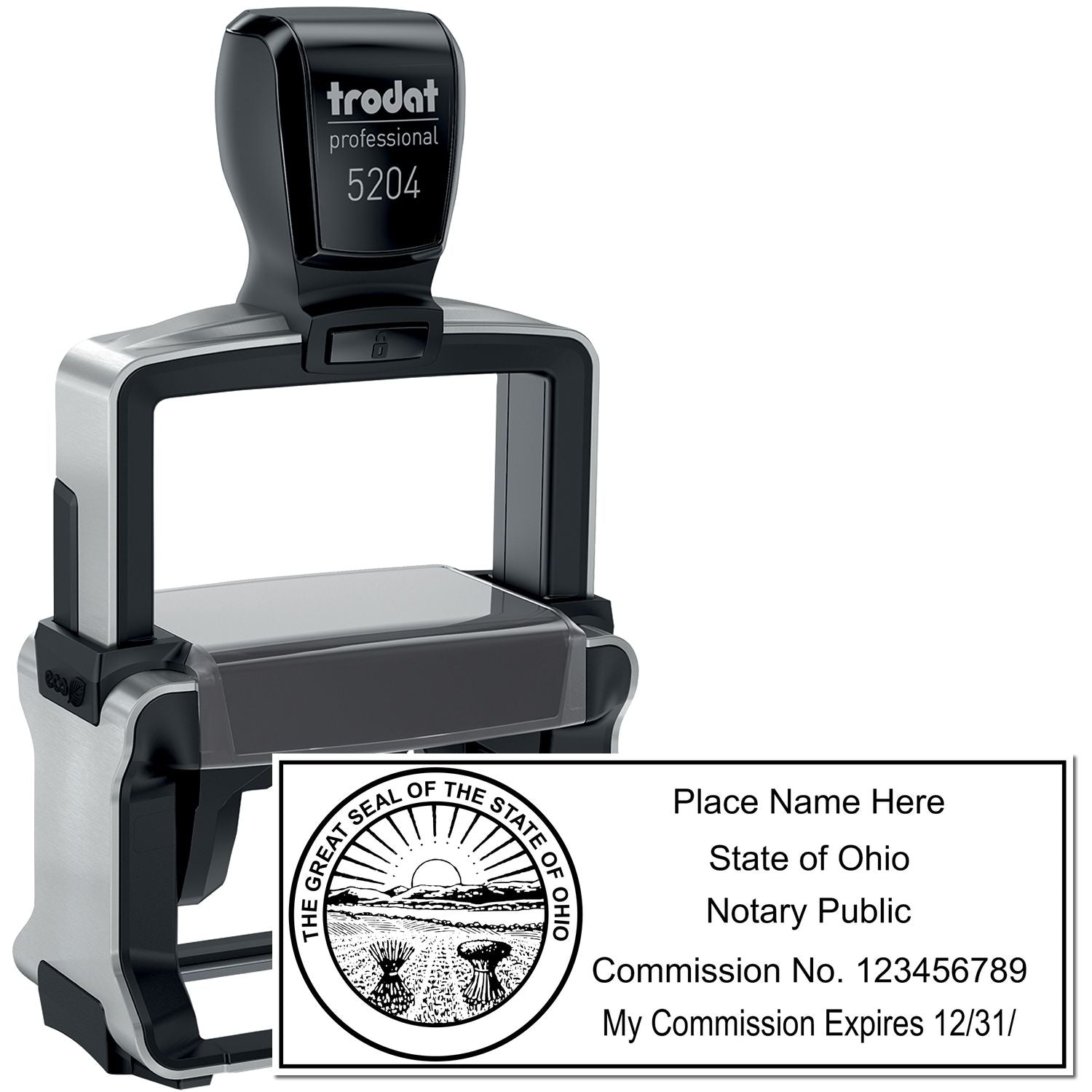
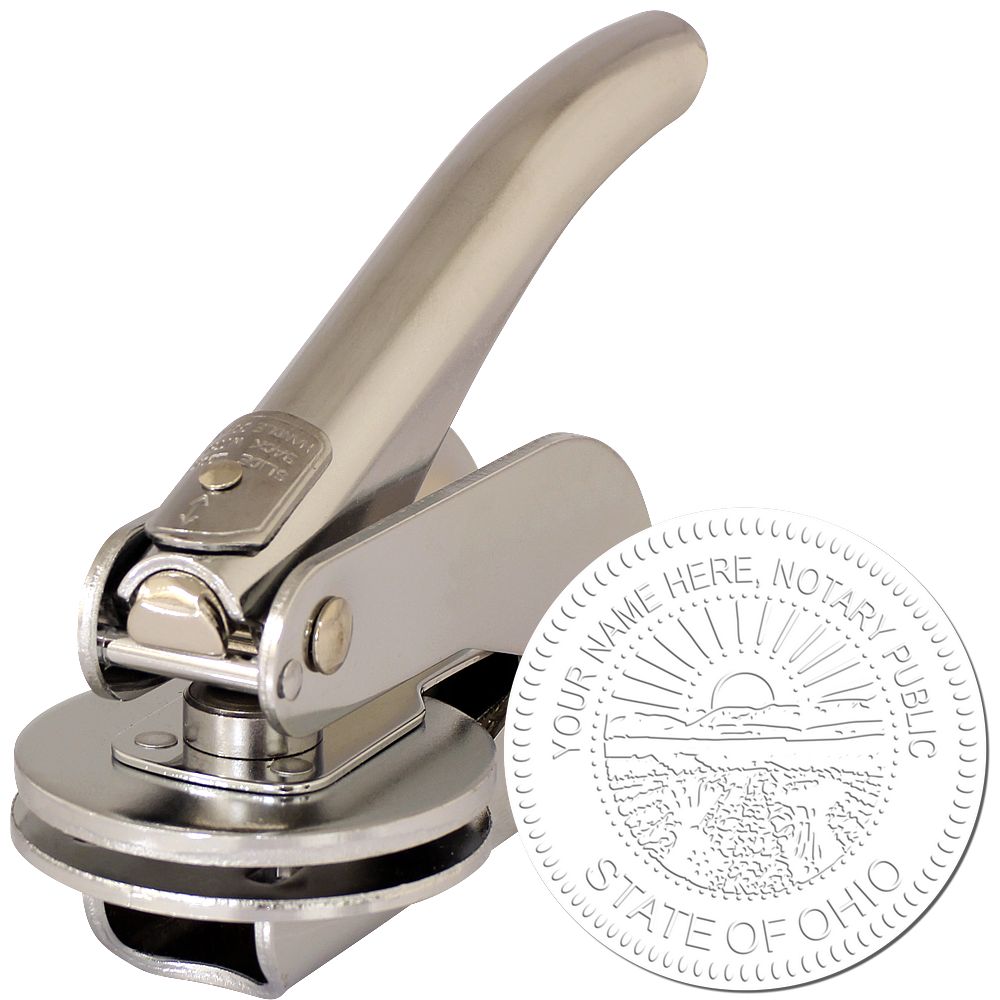
| Seal | State coat of arms in a circle 3/4 to 1 inch across, with your name and State of Ohio. Inked or embossed. See our Ohio notary seal rules. | Ohio Rev. Code § 147.04 |
| Journal | An electronic journal is required for online notarizations. | Ohio Rev. Code § 147.65 |
| Renewal | File up to three months before expiration with a new background check, a one-hour course ($45) and the $15 filing fee. | Ohio Rev. Code § 147.031; Ohio Adm. Code 111:6-1-03(C) |
| Online notary authorization | Optional for commissioned Ohio residents: a two-hour course and test ($250) plus a $20 filing fee. | Ohio Rev. Code § 147.63; Ohio Adm. Code 111:6-1-03(D) |
How the Ohio journal rule and remote notarization rule compare with the other 53 jurisdictions: see notary journal requirements by state and remote online notarization by state.
Who can become a notary in Ohio?
Any adult who is an Ohio legal resident can qualify, provided the background check comes back clean and the course and test are done. A nonresident qualifies only as an attorney admitted in Ohio whose principal place of business or primary practice is in the state.
Ohio Rev. Code § 147.01(B) lists four conditions: age 18, the residency rule above, a criminal records check, and education plus a test. The Secretary of State appoints every Ohio notary. Since 2019 that office has run applications, education, testing and records itself, so county courts no longer take part.
Attorneys follow a lighter path. An attorney whose commission predates September 20, 2019 is exempt from the education and test requirement, and attorneys applying after that date take the education but not the test. Attorneys and peace officers also skip the criminal records check.
How do you apply for an Ohio notary commission?
Ohio's application is fully electronic and runs in a fixed order: background check, course, test, online filing, then the oath. Each upload must be current, and the criminal records check must be less than six months old on the day you file.
- Get a BCI criminal records check. The Ohio Bureau of Criminal Identification and Investigation runs it under Ohio Rev. Code § 147.022.
- Choose an authorized education provider. The Secretary of State authorizes the companies that teach the course and give the test.
- Finish the three-hour course and pass the test. The provider issues the certificate you will upload.
- File online with the Secretary of State. Upload the background check, your education and test certificates and an image of your signature, then pay the $15 filing fee.
- Receive your commission. The Secretary of State appoints you and adds you to its online database of Ohio notaries.
- Take the oath of office. Appear in person before a notary or another officer authorized to give oaths.
- Obtain your seal. Ohio requires it before you perform your first notarial act.
The statute says every submission, from a first application to a renewal, is made electronically, so there is no paper route. The Secretary of State's Notary Commission brochure sets out the same sequence.
How much does it cost to become a notary in Ohio?
The state-set costs for a non-attorney come to $145: $130 paid to the education and testing provider and $15 paid to the Secretary of State when you file. The BCI check and your seal are separate purchases on top of that.
Ohio Adm. Code 111:6-1-03 fixes these amounts. Attorneys pay $75 for the education and the same $15 filing fee. Fail the test twice and the rule sends you back to the start, with the $130 due again.
Renewal costs less: $45 for the one-hour continuing education course and $15 to file. Online notary authorization is a separate $250 course and test plus a $20 filing fee, and renewing that authorization costs $160 plus $20.
What training and test does Ohio require?
New non-attorney applicants complete a three-hour education program and pass a test, both through a provider the Secretary of State authorizes. Renewing notaries take a one-hour program instead, with no test attached.
The curriculum is set by Ohio Adm. Code 111:6-1-02, which covers topics such as a notary's jurisdiction, journals, seals, identity checks and prohibited acts. Providers must keep multiple versions of the test so that no one uniform test is in circulation.
After a failed attempt you may retest once 30 days have passed, as long as you do it within six months. A second failure means starting the application again with a new $130 fee. Renewal education may be taken no earlier than 12 months before the commission expires.
Does Ohio require a notary bond?
No. The qualifications in Ohio Rev. Code § 147.01(B) are age, residency, a criminal records check, and education with a test, and a surety bond is not among them. Chapter 147 contains no bond section at all.
That leaves one fewer purchase before your first notarization and nothing bond related to track when you renew. Your money goes to the course, the filing fee, the background check and the seal.
What stamp or seal should you order once commissioned?
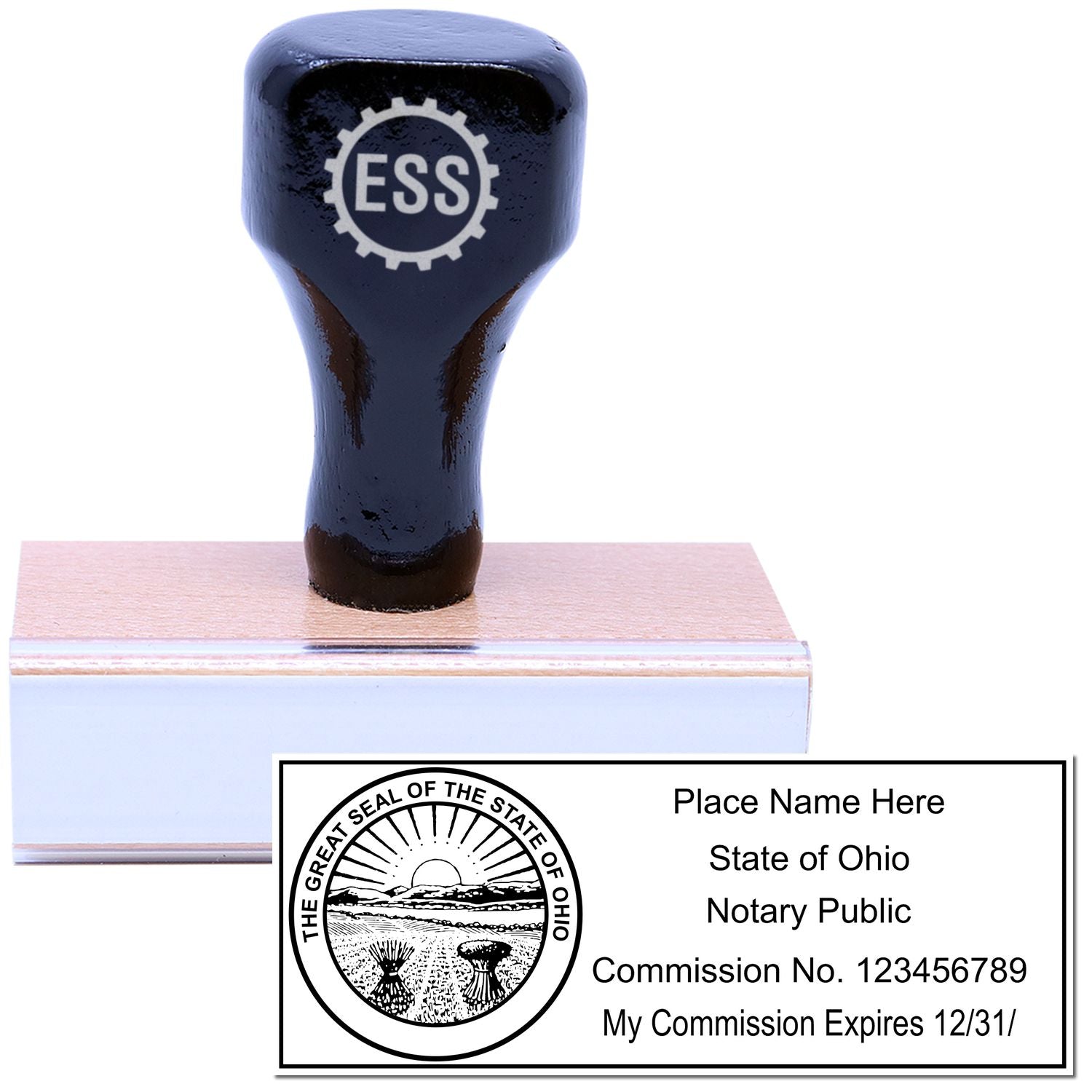
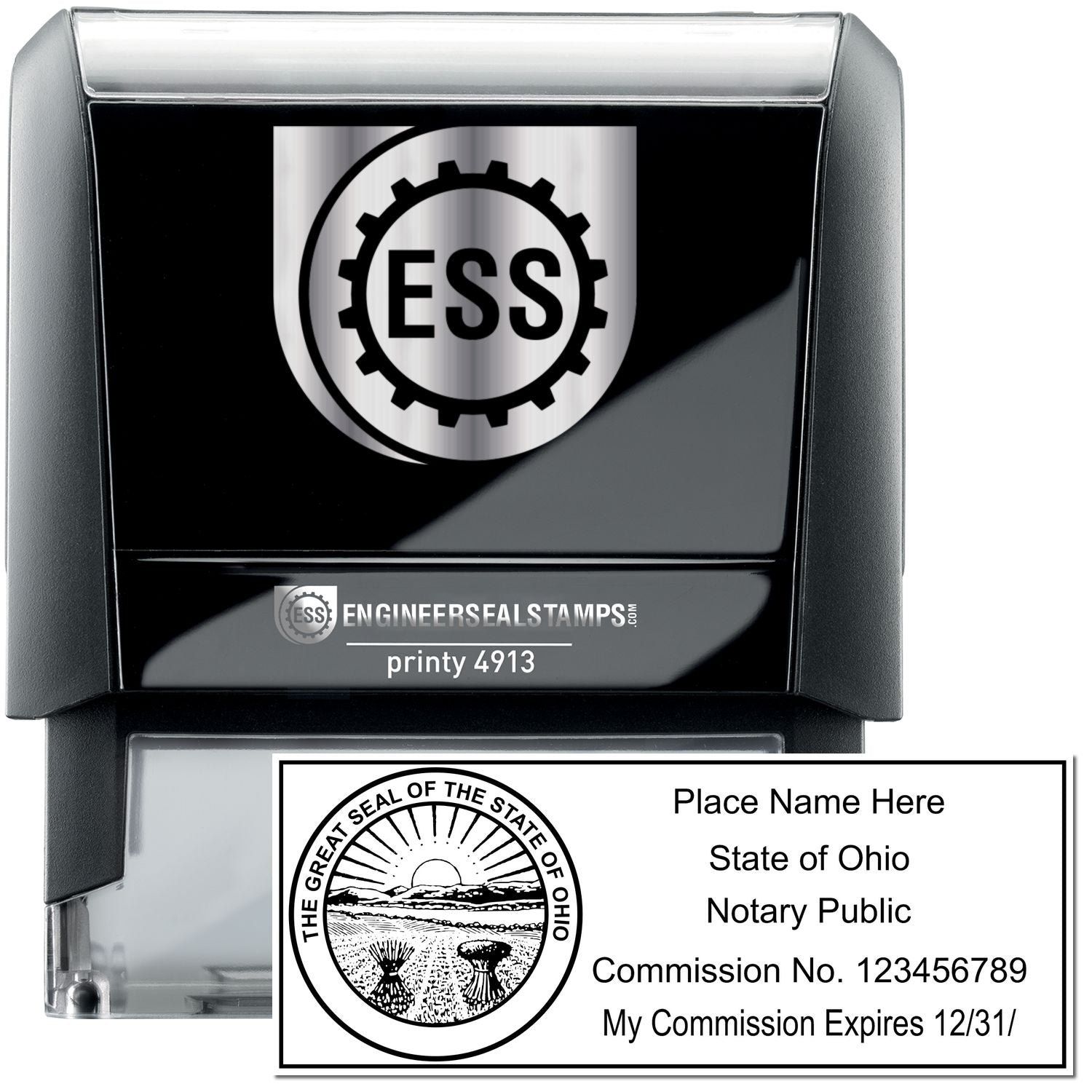
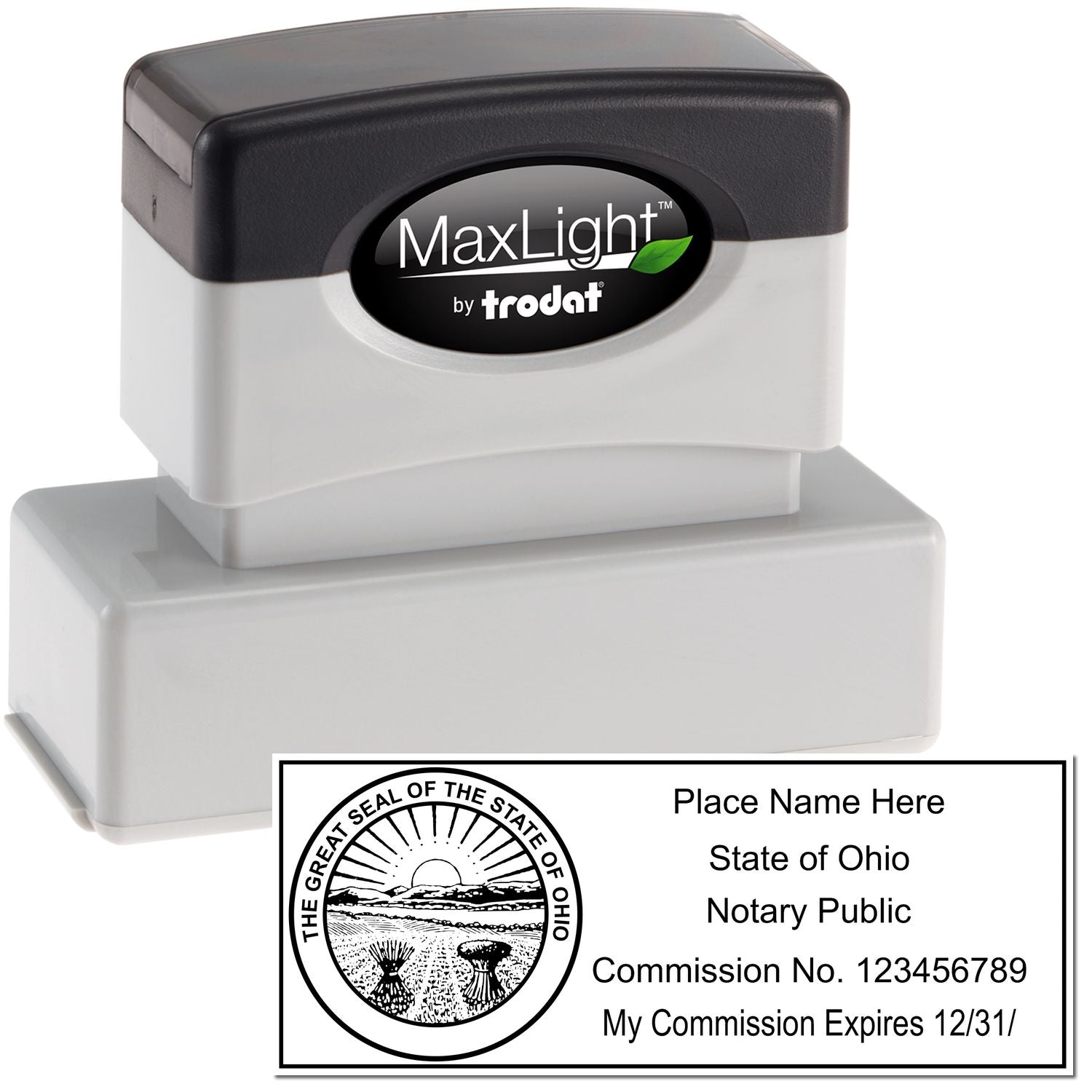
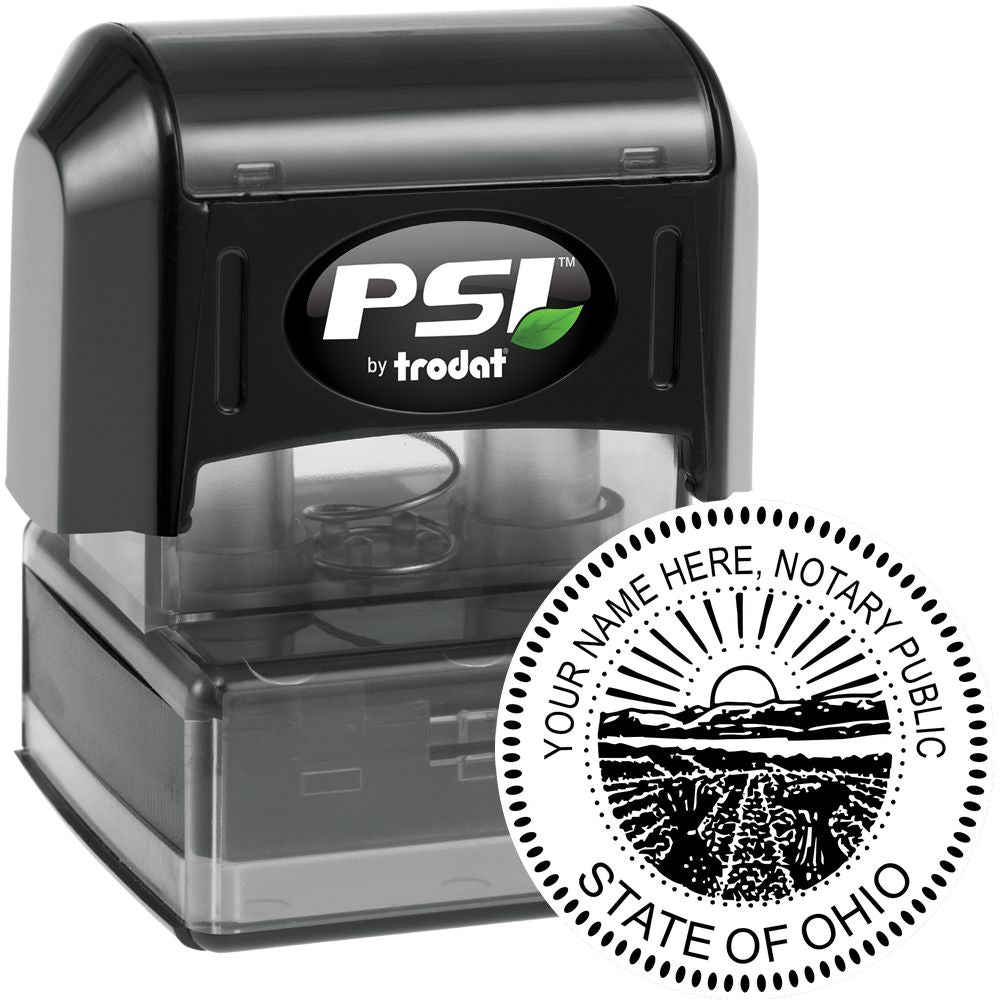
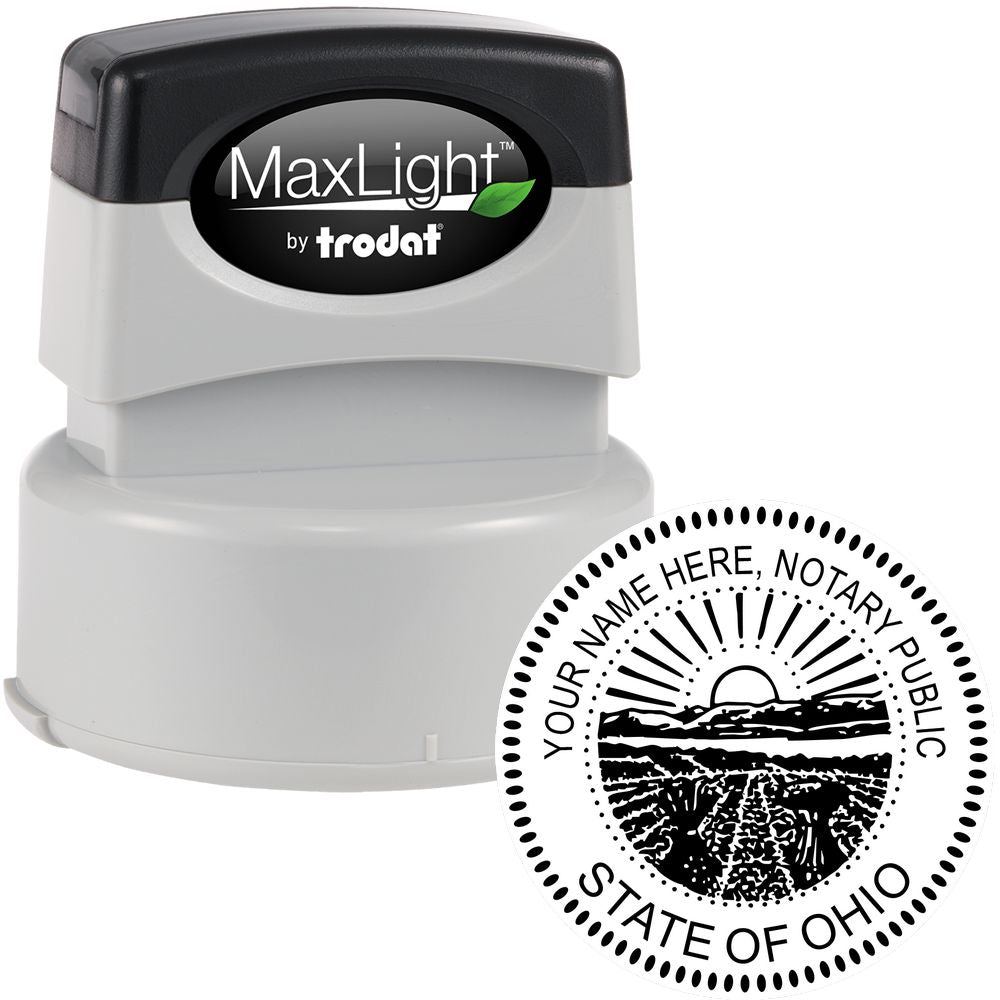
Order a seal showing the Ohio coat of arms inside a circle three quarters of an inch to one inch across, with notary public or notarial seal wording, State of Ohio, and your name. It may be an inked stamp or an embosser.
Ohio Rev. Code § 147.04 says you must obtain the seal before you discharge any official duty, so have it ready before your first notarization. The same section lets you print, type or stamp your name near your signature instead of carrying it on the seal.
The Ohio seal carries no commission number or expiration date. Your certificates still must show your seal and your commission expiration date together under Ohio Rev. Code § 147.542(F)(6), so each certificate needs the date added. Our Ohio notary seal rules page covers ink, embossers and wording in detail.






Does an Ohio notary need a journal?
Ohio's statute requires a journal for online notarizations: an online notary keeps one or more electronic journals of every online act, in date order, under Ohio Rev. Code § 147.65. The Chapter 147 sections we read set no journal rule for in-person acts.
An online notary's journal records details such as the date and time, the type of act, how the signer was identified, the fee charged and the online platform used. When the authorization ends, the journal goes to the Secretary of State or an approved repository, which holds it for ten years.
A paper journal is still a practical record for in-person work. It shows who appeared, what they signed and which ID they presented if a notarization is ever questioned.







How long does an Ohio commission last, and how do you renew it?
A non-attorney commission lasts five years. You may file for renewal starting three months before it expires, with a fresh criminal records check, a one-hour continuing education course and the renewal filing fee.
The one-hour course costs $45 and the Secretary of State's filing fee is $15, under Ohio Adm. Code 111:6-1-03(C). The renewal window comes from Ohio Rev. Code § 147.031.
Watch the date. If the commission expires before you file, the Secretary of State cannot renew it, and you apply for a new commission with the full first-time requirements. Attorney commissions are the exception: they do not expire while the attorney remains in good standing with the Ohio Supreme Court and keeps an Ohio residence or principal practice.
For help reading the date on a current seal or certificate, see our guide to checking when a notary commission expires.
What if your name or address changes?
Notify the Secretary of State within 30 days after a change of name or address, as Ohio Rev. Code § 147.05 requires. Like every other filing with the office, the notice goes in electronically.
If your name appears on your seal, a seal showing your former name no longer matches your commission, so replace it once the change is on file. The same section requires written notice if you resign and a report of any conviction for a disqualifying offense, which leads to revocation.





Frequently asked questions
Can an Ohio notary work in any county?
Yes. Ohio Rev. Code § 147.07 gives every notary statewide jurisdiction, so an Ohio commission is valid anywhere in Ohio, whichever county you live in.
How much can an Ohio notary charge?
Up to $5 for an in-person notarial act. An online notarization may cost up to $30, plus a technology fee of up to $10, and a notary may add a reasonable travel fee agreed with the signer before the act, under Ohio Rev. Code § 147.08.
Can I become an online notary in Ohio?
Yes, once you hold a commission and live in Ohio. You complete a two-hour course and test, file electronically with a description of the technology you will use, and pay the $20 filing fee under Ohio Rev. Code § 147.63. The authorization ends when your commission does.
I live in another state but work in Ohio. Can I apply?
Working in Ohio is not enough by itself. Unless you are an attorney admitted in Ohio whose principal place of business or primary practice is here, § 147.01(B)(2) requires Ohio legal residency.
Do I need a new seal when I renew?
Ohio's seal elements do not include a commission number or expiration date, so renewal by itself changes nothing the seal must show. A name change is different, as covered above.
How can someone confirm that I hold an Ohio commission?
The Secretary of State keeps an online database of commissioned Ohio notaries, and your record appears there once you are appointed.
Once your commission is issued and your oath is taken, choose a coat of arms stamp or embosser from our Ohio notary stamps and seals. For the seal wording and size in full, see the Ohio notary seal rules, and to compare Ohio with other states, read our notary seal requirements by state.