
To become an Alaska notary public, you must be 18 or older, an Alaska resident who is legally in the United States, and clear of felony convictions for the past 10 years; you then apply to the Lieutenant Governor with a $2,500 bond, a notarized oath and a $40 fee. Alaska has no course or exam. Regular commissions last four years, and renewing means a fresh application. This guide covers the steps, costs, seal, journal and reporting deadlines.
Engineer Seal Stamps compliance desk. Checked against Alaska's Office of the Lieutenant Governor notary pages and Alaska Stat. ch. 44.50, including the 2020 amendments in HB 124. Sources read September 2026.
| Requirement | Alaska answer | Source |
|---|---|---|
| Who can apply | Age 18 or older; Alaska resident legally in the U.S.; no felony conviction or felony incarceration in the 10 years before the commission | AS 44.50.020; Lieutenant Governor, Overview and Qualifications |
| Commission types | Regular, for four years, or Limited Governmental for public employees, tied to that job | AS 44.50.010; Lieutenant Governor, Types of Notary Commissions |
| Training or exam | None in the application steps | Not addressed in AS 44.50 |
| How to apply | Online through myAlaska and the Online Notary Database, or by mail | Lieutenant Governor, Notaries Public page |
| Application fee | $40, nonrefundable | AS 44.50.033 |
| Bond | $2,500 for four years from the commission date; surety signature notarized; no self-surety | AS 44.50.034(a); Lieutenant Governor FAQ |
| Oath | Signed before a notary; that signature becomes your official signature | AS 44.50.035; AS 44.50.063 |
| Commission term | Four years | AS 44.50.010(b) |
| Stamp or seal | Your name as on the certificate, "Notary Public" and "State of Alaska", within size limits. See the Alaska notary seal hub | AS 44.50.064(b) |
| Journal | Required for acts with remotely located individuals; at least one on paper; kept 10 years | AS 44.50.078; Lieutenant Governor FAQ |
| Renewal | A new application, a new bond and another $40 | AS 44.50.038; Types of Notary Commissions |
| Remote notary | Written request and approval first; $100 with a new commission or $25 per remaining year | AS 44.50.075; Lieutenant Governor, Updated Notarial Capabilities |
| Changes and lost seal | Name or address change: 30 days. Lost or stolen seal: written notice within 10 days | AS 44.50.066(a); AS 44.50.064(d) |
Two national tables put this Alaska guide in context: which states require a notary journal and where remote online notarization is allowed.
Who can become a notary public in Alaska?
You qualify at 18 or older if you have established residency in Alaska, are legally in the United States, and have not been convicted of a felony, or jailed for one, in the 10 years before the commission would take effect.
Past trouble as a notary matters too. Anyone whose earlier commission was revoked, or who was disciplined for notary misconduct, must contact the notary office before applying. On a mailed application the residence must be a physical address, not a PO Box, although the certificate can go to a separate mailing address.
Federal, state and municipal employees can instead seek a Limited Governmental commission. It covers only the employer's official business, stays active while that job lasts, and uses an Employer Approval form in place of a bond.
How do you apply for an Alaska notary commission?
Apply online through the Online Notary Database with a myAlaska account, or by mail. The online route runs in a set order: bond first, then the application, a notarized oath, and the $40 fee paid through a link in the confirmation email.
- Get your $2,500 notary bond, either commercial or on the State of Alaska bond form. The surety's signature must be notarized, and you cannot serve as your own surety.
- Sign in with myAlaska on the Online Notary Database, start the application and choose Regular as the commission type.
- Scan and upload the bond.
- Submit the application. An automated email returns a customized oath signature page as a PDF.
- Print the oath and sign it before a notary. Under AS 44.50.063 that signature becomes your official signature.
- Upload the notarized oath through the link in the email.
- Pay the $40 application fee through the same link.
By mail, send the original wet-signature notarized oath (page 2 of the application form), the bond and payment to the Notary Public Office; an emailed, scanned or photocopied oath is refused. After approval, an automated email delivers a digital copy of your certificate and the Alaska notary statutes, and the paper certificate follows within two weeks. The forms are on the Forms and Publications page.
What does it cost to become a notary in Alaska?
The state's charge is a $40 application fee that is not refunded, waived only for State of Alaska employees seeking a Limited Governmental commission. Add the premium on the $2,500 bond, the two notarizations needed for the bond and oath, and your seal.
- Application fee: $40, by credit card, or by check or money order payable to the State of Alaska.
- Bond: $2,500 of coverage from a commercial or private surety; the state sets no premium.
- Remote notarization: optional; $100 at the first request after a four-year commission is approved, or $25 for each remaining year.
- Seal: bought from a vendor after you are commissioned.
- Renewal: another $40 and a new bond every four years.
Does Alaska require notary training or an exam?
No. The Lieutenant Governor's application steps include no course and no test, and chapter 44.50 sets none. The office's statutes page and FAQ are the official reading to study before your first notarization.
Two rules from that reading apply from day one. You may notarize only inside Alaska's geographical boundaries, and on every notarial certificate you sign, in your own handwriting, exactly the name shown on your commission certificate. The full text is on the Alaska Notary Statutes page.
How does the Alaska notary bond work?
A regular commission needs a $2,500 official bond, submitted with the application and running four years from the commission date. The surety accepts financial liability for your defaults up to that amount, and it can be a company, a business or a private individual.
The Lieutenant Governor's FAQ describes two options: a commercial bond from an insurance agency, or a private bond from a business, organization or individual. Either way the surety signs before a notary, and you cannot be your own surety. HB 124 raised the amount from $1,000 to $2,500 effective January 1, 2021, so an older form or guide may still show the lower figure.
Which seal should you order after your Alaska commission is approved?
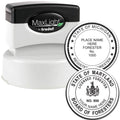
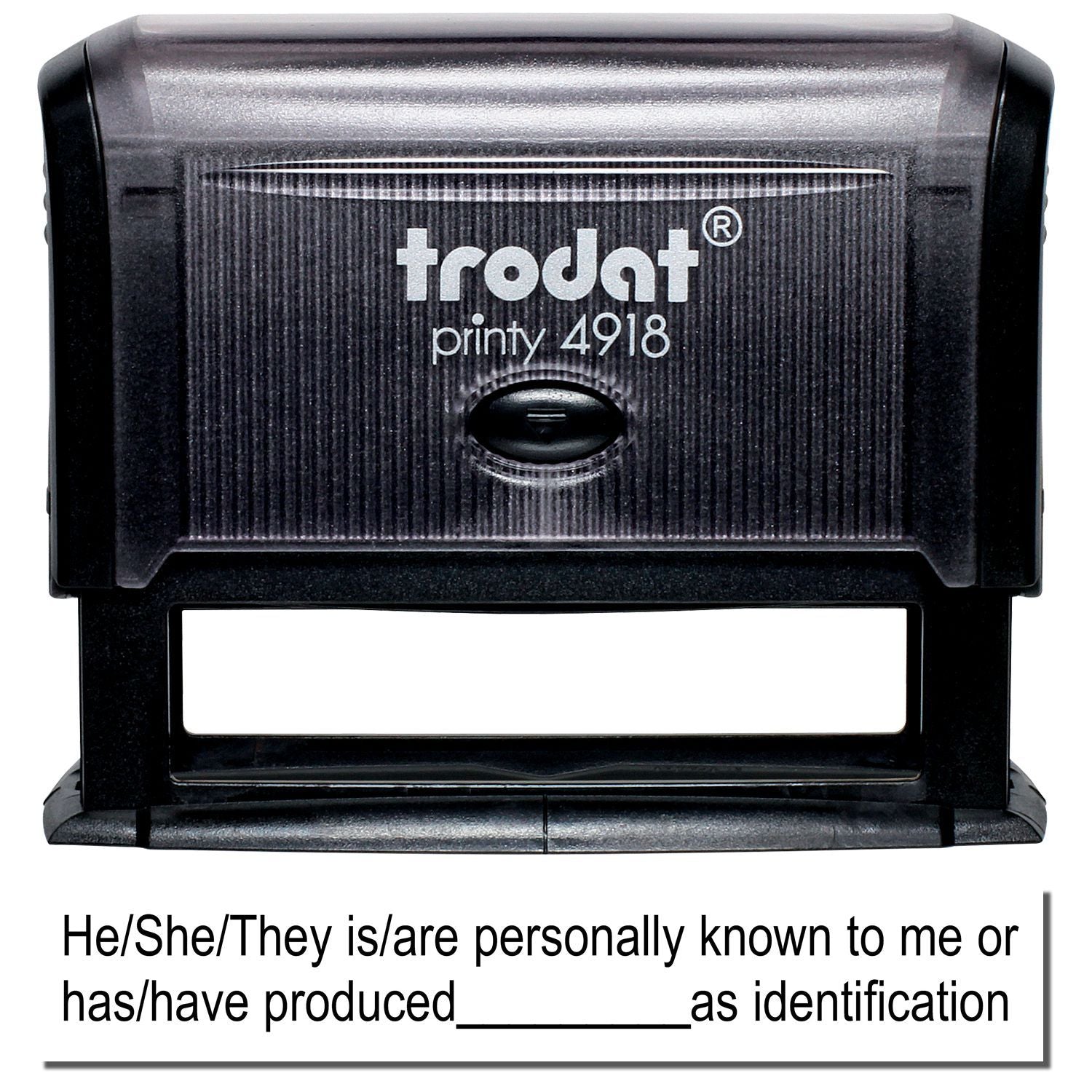
Order an inking seal once you hold your commission certificate, since vendors usually ask for proof such as a copy of it. The seal carries your name exactly as the certificate shows it, plus "Notary Public" and "State of Alaska".
AS 44.50.064(b) allows a circle up to 2 inches across or a rectangle up to 1 by 2.5 inches. The Lieutenant Governor recommends an inking seal as the main device because an embossed impression is not automatically reproducible on a copy, so an embosser may sit beside the inked seal but never replace it. The required wording has no commission number or expiration date, which is why a renewing notary usually keeps the same seal. Our Alaska notary seal guide has the full wording and size detail.
The seal is your personal property no matter who paid for it. Keep it secure and under your exclusive control, and do not hand it to an employer.




Does an Alaska notary need a journal?
For remote work, yes: AS 44.50.078 requires a journal of every notarial act performed for a remotely located individual. You keep at least one journal on paper, may add electronic ones, and retain each for 10 years after its last entry.
Entries record when each act happened, what kind of act it was and which record it involved, every signer's full name and address, the way you confirmed identity, and any fee you collected. The Notary Supplies page dates the duty to January 1, 2021. For in-person acts the law leaves the journal to you, and a bound one gives you a dated record if a document is questioned later.


How long does an Alaska commission last, and how do you renew it?
A regular commission lasts four years. Nothing renews on its own: under AS 44.50.038 a returning notary submits another application, a fresh bond and a second $40 fee, exactly as a first-time applicant would.
Apply before the current commission runs out, since the bond runs four years from the commission date and each term needs its own. The upside is the seal: with no expiration date or commission number in the required wording, the one you already own normally carries into the next term. Our guide to notary seal expiration dates explains how states that print a date differ.
Which changes must an Alaska notary report, and how fast?
Report a change of name, mailing address or physical address within 30 days, in writing and signed by you. A lost or stolen seal, or a compromised electronic seal, needs written notice to the Lieutenant Governor within 10 days.
Use the office's Name and Address Change form for the 30-day notice. Of these changes, only a new name makes your current seal wrong, because the seal must show your name exactly as the commission certificate does. An address never appears on the seal.





Frequently asked questions
Can an Alaska notary notarize outside Alaska?
No. An Alaska commission covers notarizations performed within the state's geographical boundaries only.
How much can an Alaska notary charge?
The statutes set no fee for a regular notary. If you plan to charge, you must give the signer a published fee schedule before performing the notarization.
How soon will I receive my commission certificate?
A digital copy arrives by automated email as soon as the application is approved, and the paper certificate reaches your mailing address within two weeks of approval. The office has noted that some requests may take longer while system updates are completed.
Can Alaska notaries notarize remotely?
Yes, after approval. Submit a written request to the notary administrator before the first remote act, pay $100 or $25 per remaining commission year, and use communication technology with real-time audio and video that meets the Lieutenant Governor's remote notarization guidance.
Do government employees need a bond?
Not for a Limited Governmental commission. An Employer Approval form takes the place of the bond, and State of Alaska employees do not pay the $40 fee for that commission type.
When your certificate arrives, choose an inking seal, with an embosser to pair if you want one, from the ESS Alaska stamps and seals collection. If you also notarize under another state's commission, our overview of notary seal rules in each state sets Alaska beside the rest.