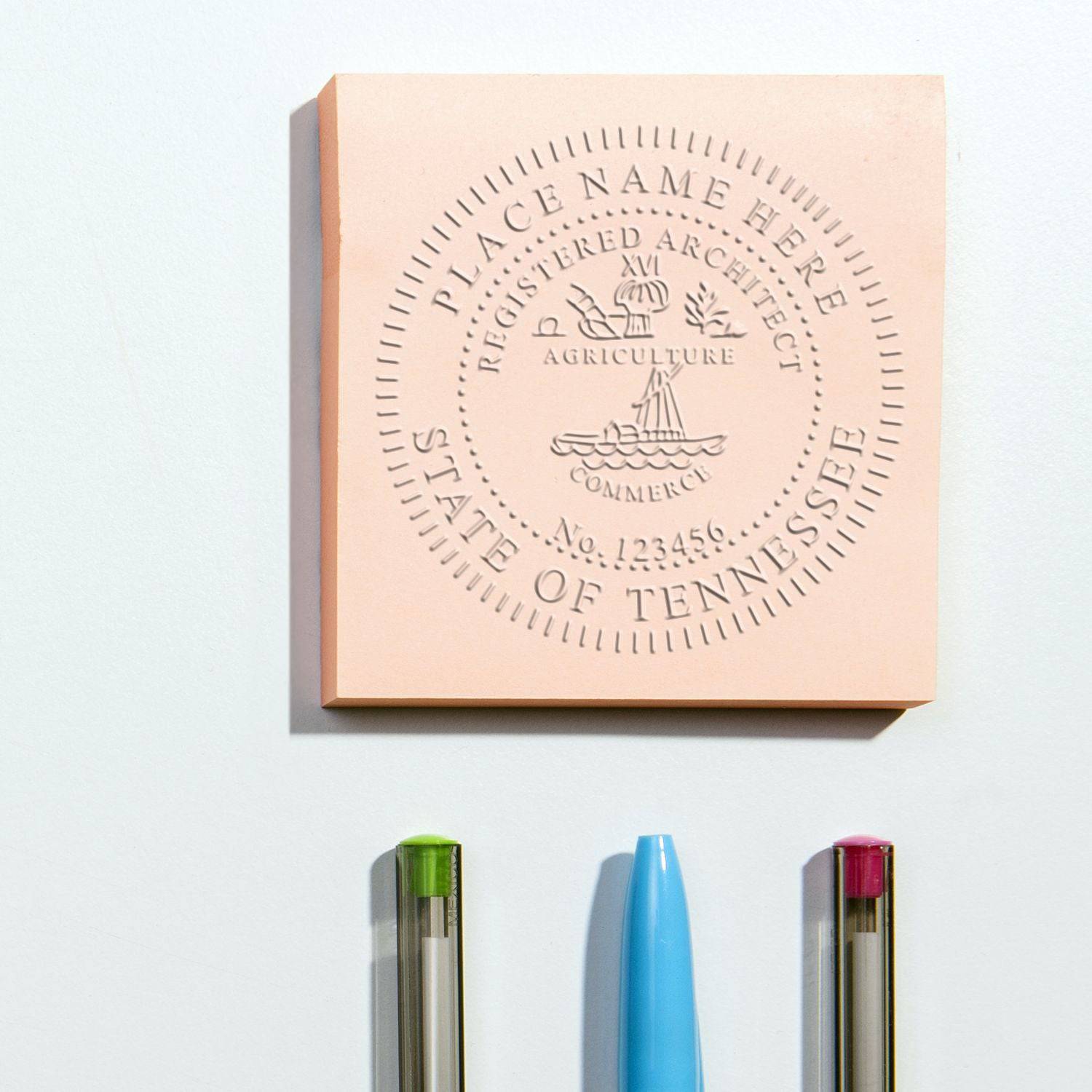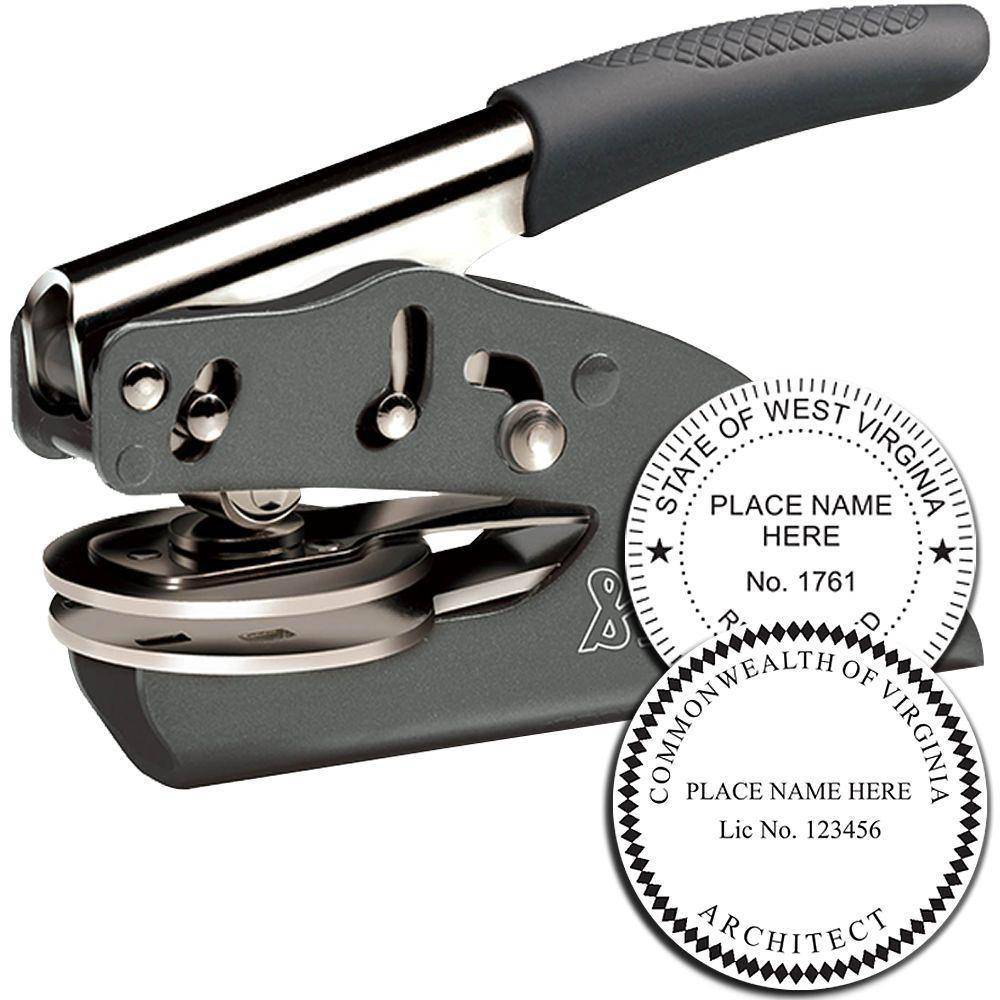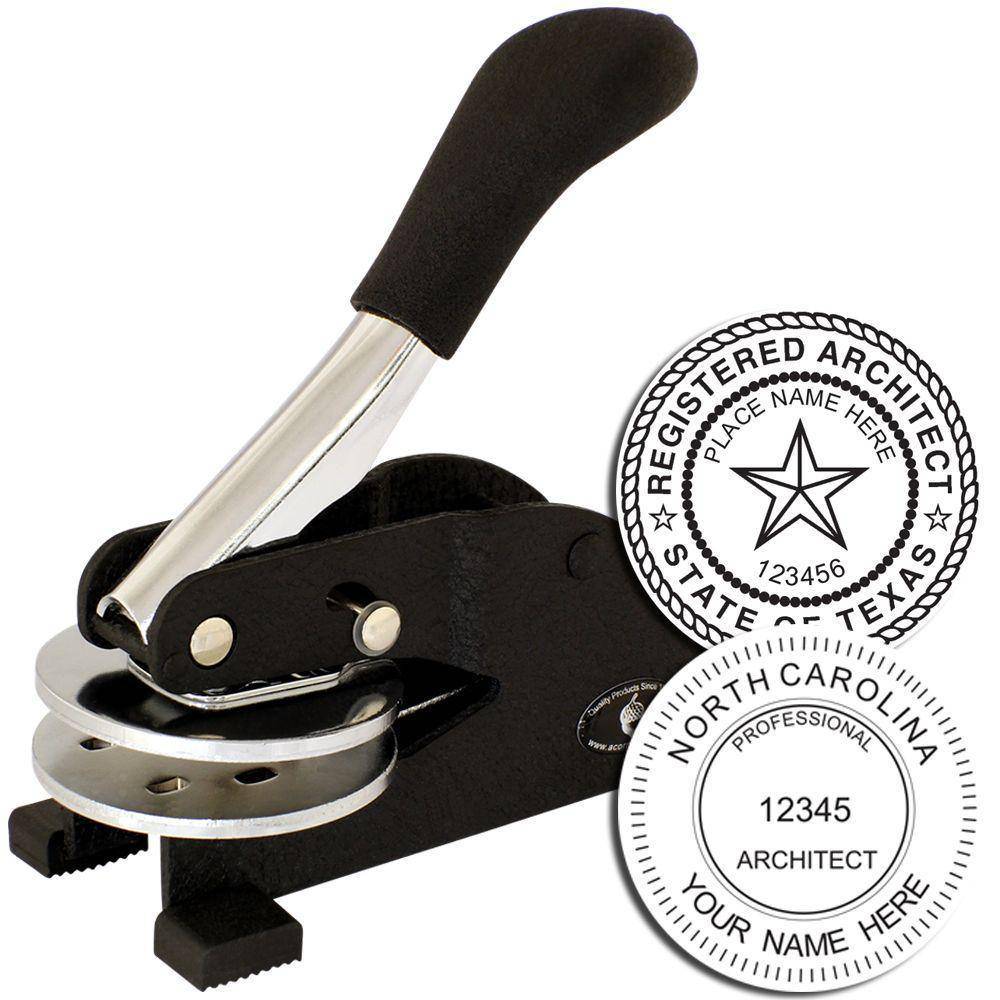
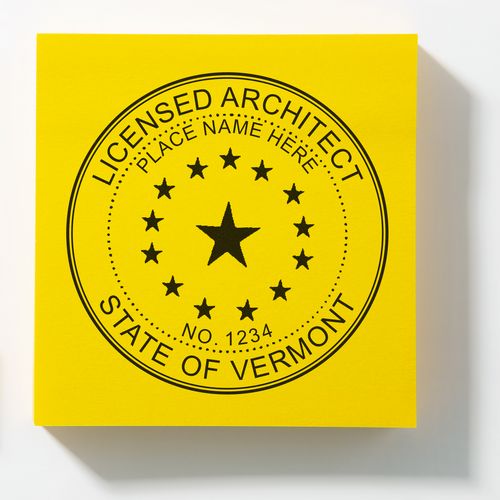
A Vermont architect seal reproduces the design the Office sends you when you are licensed, with your name added. You then file a sample impression with the Office. Neither the statute nor the Board's rules give a size, a shape or a lettering height, and they say nothing on device type or electronic sealing. This page covers the design, the scope, the silences, lapse and ordering.
Engineer Seal Stamps compliance desk. Checked against Vermont Board of Architects Administrative Rules, rule 3.2. Sources read September 2026.
| Requirement | What the rule says | Source |
|---|---|---|
| Where the design comes from | The Office supplies the seal design once you are licensed. | Vermont Board of Architects Administrative Rules, rule 3.2 |
| Personal element | Your name, added to that design. | Vermont Board of Architects Administrative Rules, rule 3.2 |
| Filing step | You buy a seal that reproduces the design, then send the Office a sample impression to keep on file. | Vermont Board of Architects Administrative Rules, rule 3.2 |
| Size, outline, lettering | No diameter, outline or letter height appears in the statute or anywhere in the Board's rules. | Vermont Board of Architects Administrative Rules, rule 3.2 |
| Inked or embossed | Neither method is specified, and neither is prohibited. | Vermont Board of Architects Administrative Rules, rule 3.2 |
| Signing and dating | Neither section 208 nor rule 3.2 asks for a signature or a date beside the seal. | 26 V.S.A. §§ 203(b), 208 |
| Documents covered | Every plan and specification you prepare or directly supervise. | 26 V.S.A. § 208 |
| Electronic sealing | No provision for it, no digital signature standard and no authentication method. | Vermont Board of Architects Administrative Rules (no electronic seal provision) |
| License not currently valid | The seal may not be used. | Vermont Board of Architects Administrative Rules, rule 3.2 |
| Giving up or reissuing the seal | Silent on surrender or destruction of the device, and on any new number or design at reinstatement. | Vermont Board of Architects Administrative Rules, rule 3.2 |
Licensed in more than one place? Check each jurisdiction in architect seal requirements by state. The seal follows registration; the degree, experience and exam routes that lead to a Vermont license are compared in how to become a licensed architect.
Where does the design for a Vermont architect seal come from?
From the Office, after you are licensed. Rule 3.2 has the Office send you the seal design on licensure. You then buy a seal that reproduces that design with your name added, and send the Office an impression of it to keep on file.
That sequence changes how you order. The rule describes the face only as the Office's design plus your name, so the design itself is your specification and your name is the one item you supply. Keep the design with your license records in case you need a second device later.
Our summary of Vermont architect seal requirements sets the design step in context.
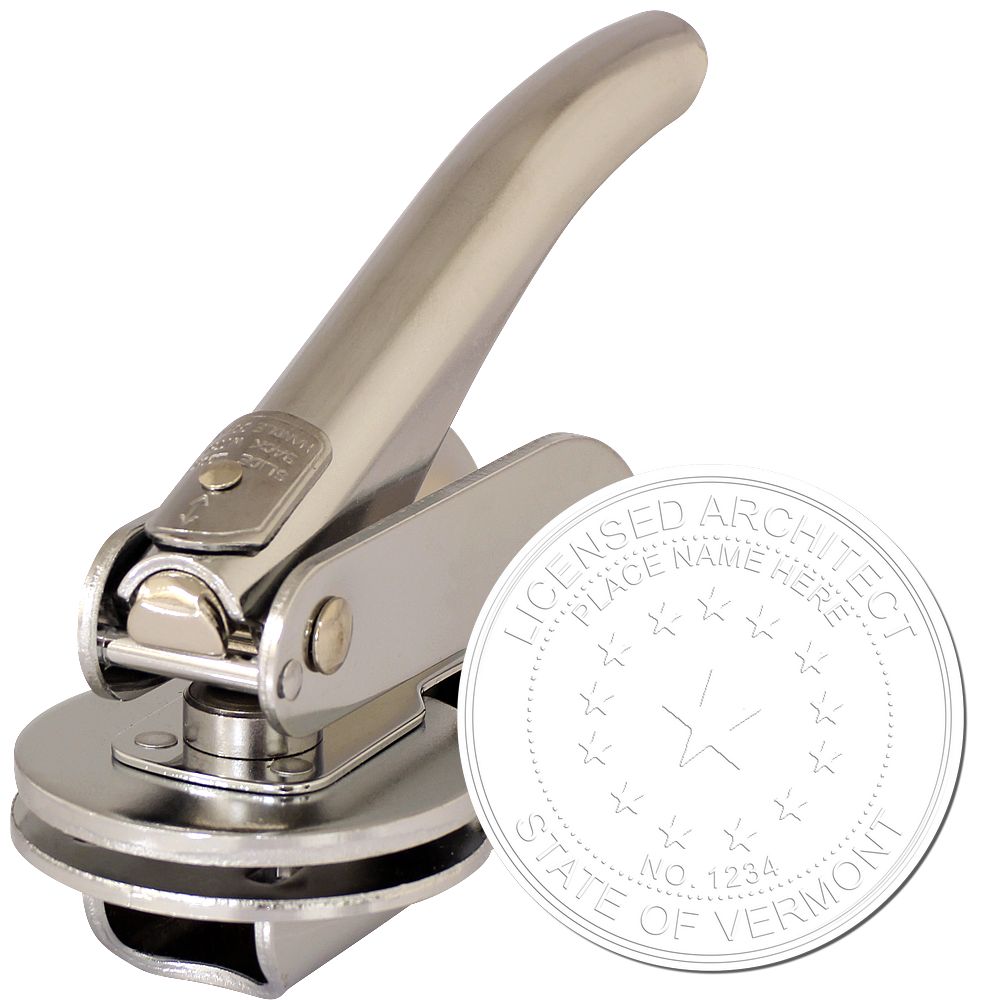
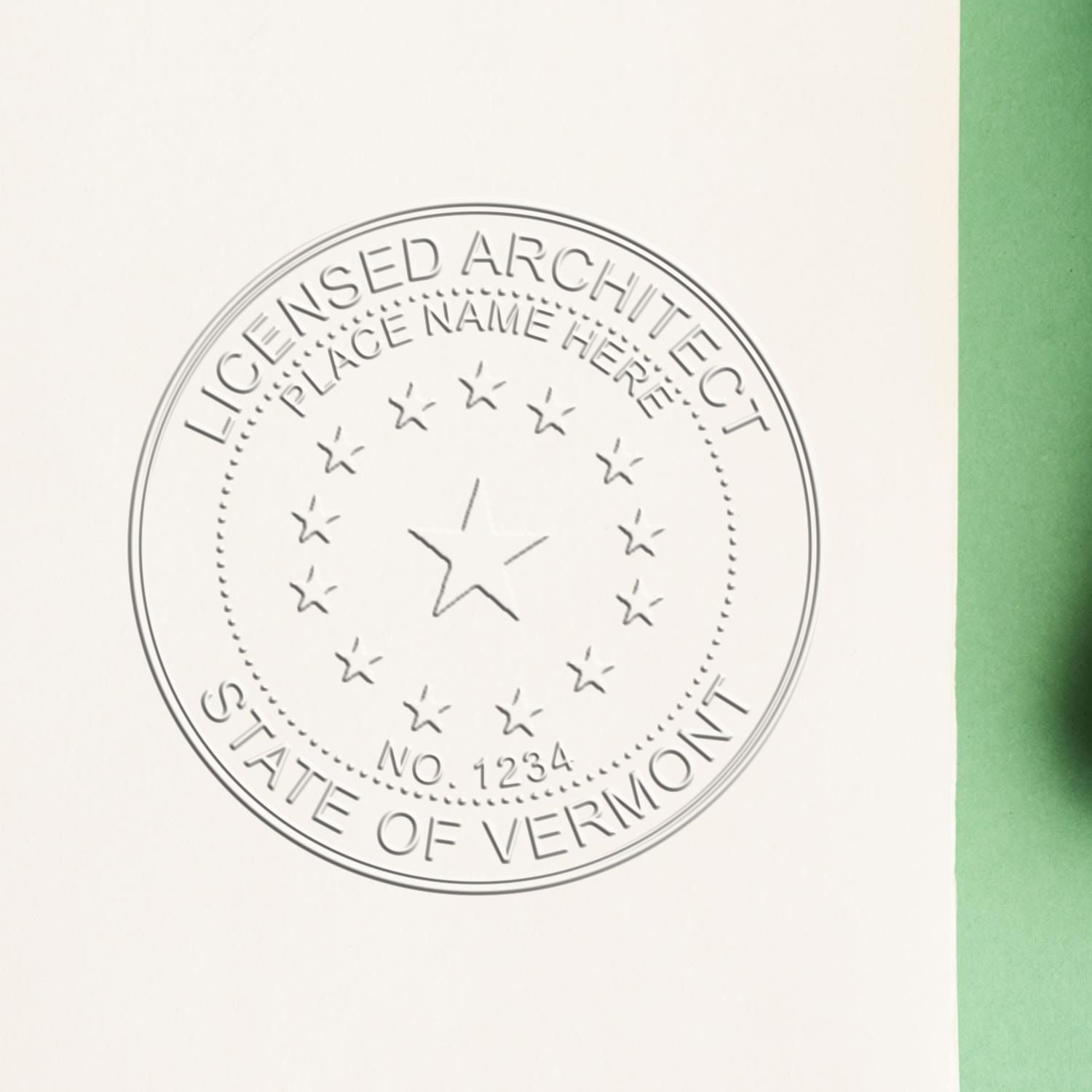
What size and shape should a Vermont architect seal be?
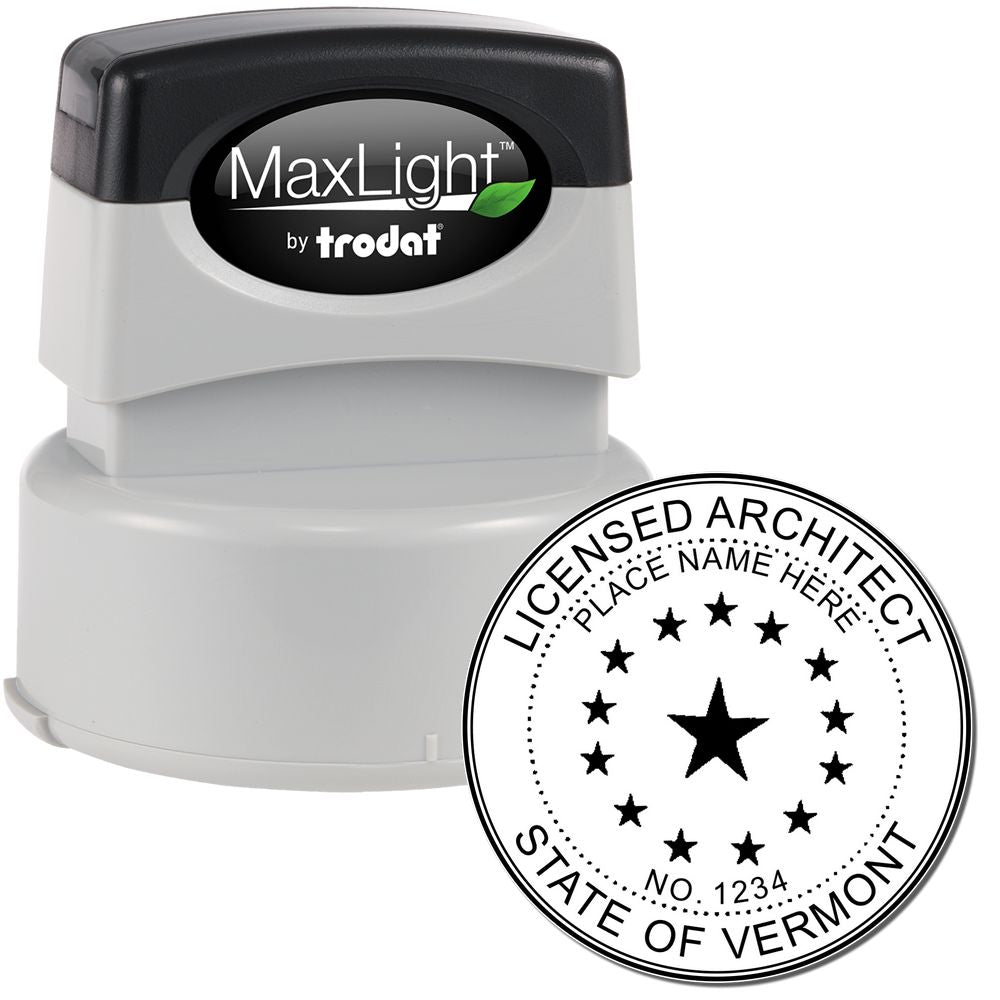
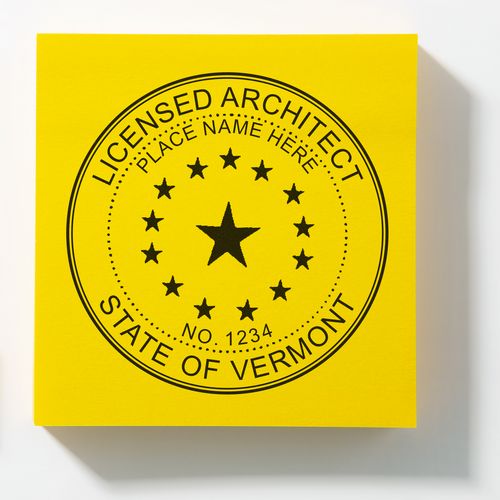
Neither the statute nor the Board's rules say. Section 208 of title 26 and the Board's rules, read from rule 1.1 to rule 4.1, set no diameter, no outline and no lettering height, so size and shape come from the design the Office supplies.
A supplier's standard diameter is a manufacturing choice, not a Vermont requirement. Work from the Office's design, and keep every element of it legible on the drawing sheets you actually issue. Our article on choosing a Vermont architect seal covers the practical options.
Can the Vermont seal be inked or embossed?
Either, as far as rule 3.2 goes. The rule talks about buying a seal that reproduces the design and sending the Office an impression, but it does not specify ink or embossing and does not prohibit either one.
The practical constraint comes from the filing step. Whatever device you choose has to produce an impression clear enough to send to the Office, and that impression has to match the design it sent you. If your plans and specifications will be copied, test how the mark holds up on a copy before you commit.
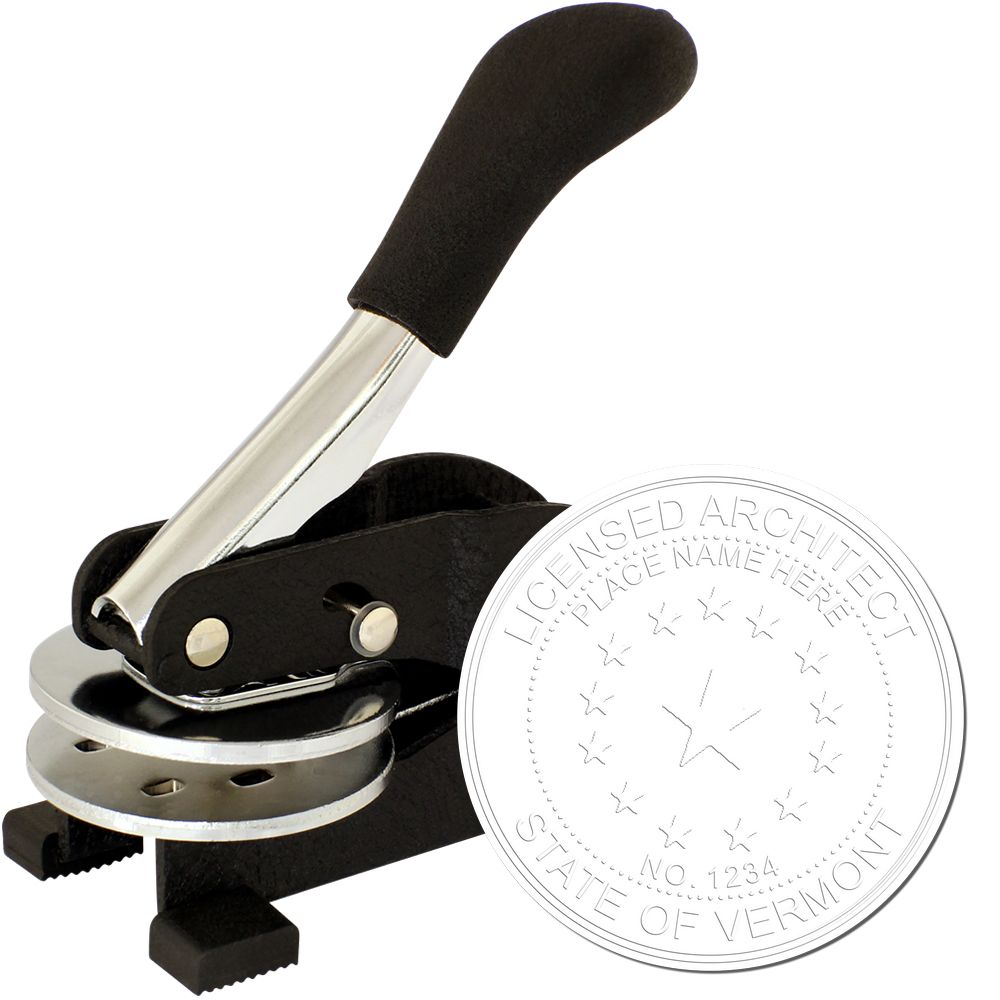
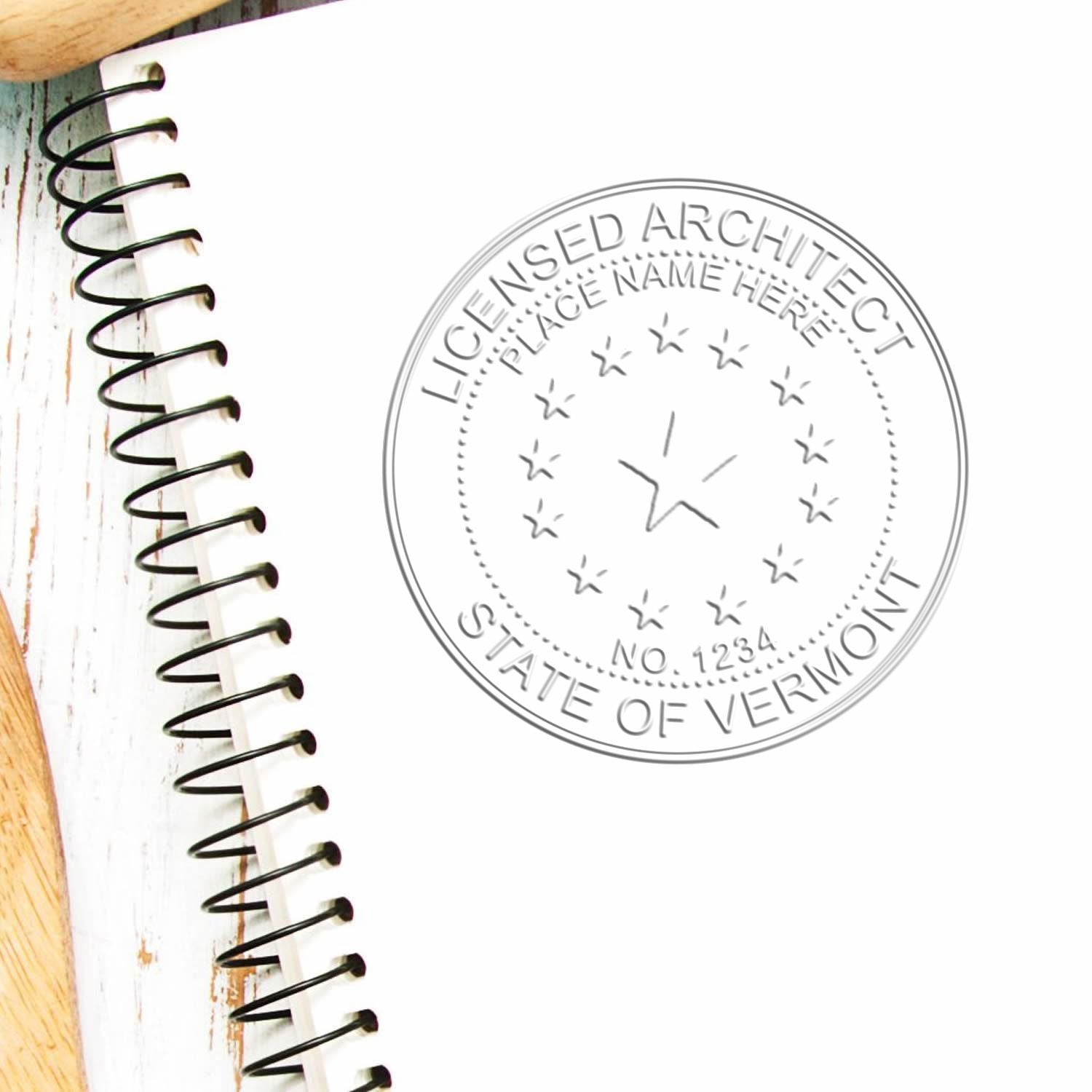


Which documents need the Vermont seal?
All plans and specifications prepared by you or under your direct supervision. Section 208 of title 26 attaches the seal to those two document types, so the duty follows both your own work and work produced under your direct supervision.
The statute names plans and specifications together. If your deliverable on a project is a drawing set and a project manual, both carry the seal. Our explainer on Vermont architect stamp requirements goes further into scope.
Does Vermont require a signature and date beside the seal?
Not in section 208 or rule 3.2. Neither one asks for a signature or a date next to the seal. The statute's requirement is that plans and specifications be stamped with the seal.
Section 203(b) of title 26 is cited alongside section 208 on this question, so read both before you settle your title block. Whatever you decide, the Board's seal rule does not set a format for a signature or a date.
Do the Board's rules cover electronic seals?
No. The Board's rules say nothing about electronic or digital seals. They set no standard for digital signatures and no method for authenticating an electronic file, so they give you nothing to follow for an electronic version of the seal.
If you issue plans electronically, the Board's rules neither authorize nor forbid an electronic seal image; they simply do not address it. Our piece on why Vermont architect stamps matter covers the role the physical seal plays.
Can you use the seal when your license is not current?
No. Rule 3.2 bars use of the seal at any time your license is not currently valid, whatever the reason it has stopped being valid.
The rules leave two related points open. They do not say whether you must give up or destroy the device, and they do not say whether reinstatement brings a new license number or a new seal design. Until the license is valid again, keep the seal out of use.
What should you give a seal maker for a Vermont order?
The design the Office sent you, your name exactly as it should appear, and your choice of device. With no published dimension, the Office's design is the drawing the maker works from, so send the clearest copy you have.
- A clear copy of the seal design from the Office
- Your name as it should appear on the seal
- Device type: inked stamp, embosser, or both
- A request for a proof you can compare with the design
Plan one extra impression on good paper for the Office's file. Our note on the Vermont architect professional seal covers product choices.
How do you check the seal before filing an impression with the Office?
Lay a test impression next to the design the Office sent and compare them element by element. The seal has to reproduce that design with your name added, so any difference in wording, layout or proportion shows up at this stage.
Then check your name letter by letter and make one clean impression on plain paper for the filing. Our overview of Vermont architect stamp guidelines has more on day-to-day use.
What do Vermont's seal rules leave unsaid?
Quite a lot. They give no size, shape or lettering height and name no device. Section 208 and rule 3.2 ask for no signature or date beside the seal, and the rules say nothing on electronic sealing, surrender of the device or reissue at reinstatement.
What they do settle is short and firm: the design comes from the Office, your name goes on it, an impression goes back to the Office, plans and specifications carry the seal, and the seal stays unused while your license is not valid.
Frequently asked questions
Does my license number go on the Vermont seal?
Rule 3.2 names two things for the face: the Office's design and your name. It does not list a license number, so follow the design the Office sends for anything beyond your name.
Can I order the seal before I am licensed?
There is nothing to build it from yet. The Office sends the seal design once you are licensed, and the seal has to reproduce that design, so the order follows licensure.
Can I use a seal made for another state?
Not as a Vermont seal. Rule 3.2 calls for a seal that reproduces the design the Office sends, and artwork cut for another jurisdiction does not reproduce it.
Does the impression I file have to come from the actual seal?
Yes. The rule has you buy the seal and then send the Office an impression, which means a mark made by that device rather than a drawing or a digital mock-up of it.
Can I seal plans while my renewal is being processed?
It depends on whether the license is currently valid during that window. Rule 3.2 bars use only while the license is not currently valid, so a license that has expired stops the seal and one still in force does not.
Once the Office's design is in hand, choose a device from our Vermont stamps and seals collection and send the design with your order.