
To become an Arizona notary, you must be at least 18, a U.S. citizen or permanent legal resident who files taxes as an Arizona resident, pass the Secretary of State's exam, and submit your application with a four-year $5,000 bond and the $43 filing fee. The exam became mandatory for new and renewing notaries on July 1, 2025. Commissions last four years. Read on for the steps, costs, stamp rules, the 2026 thumbprint journal rule and how renewal works.
Engineer Seal Stamps compliance desk. Checked against the Arizona Secretary of State notary pages and Notary Public Reference Manual, and A.R.S. §§ 41-266, 41-269, 41-270, 41-319 and 41-323. Sources read September 2026.
Arizona notary requirements in one table
| Requirement | Short answer | Source |
|---|---|---|
| Who qualifies | 18 or older; U.S. citizen or permanent legal resident; Arizona resident for income tax purposes; reads, writes and understands English | A.R.S. § 41-269(B) |
| Training or course | Not required. The Secretary of State's notary workshops are not available at this time | A.R.S. § 41-270(B); Secretary of State Notary Workshop page |
| Exam | Required since July 1, 2025: 45 questions, 60 minutes, 80% to pass, $46.75, open book | A.R.S. § 41-270; Secretary of State New Notary page |
| How to apply | Pass the exam and buy the bond, then submit the application, original bond and fee together | Arizona Notary Public Reference Manual |
| Filing fee | $43: a $25 application fee plus an $18 bond filing fee | Arizona Notary Public Reference Manual |
| Bond | $5,000 surety bond for a four-year term, bought in duplicate | A.R.S. § 41-269(D) |
| Oath | Oath of office printed on the bond, completed before the commission issues | A.R.S. § 41-269(C) |
| Commission term | Four years | A.R.S. § 41-269(E) |
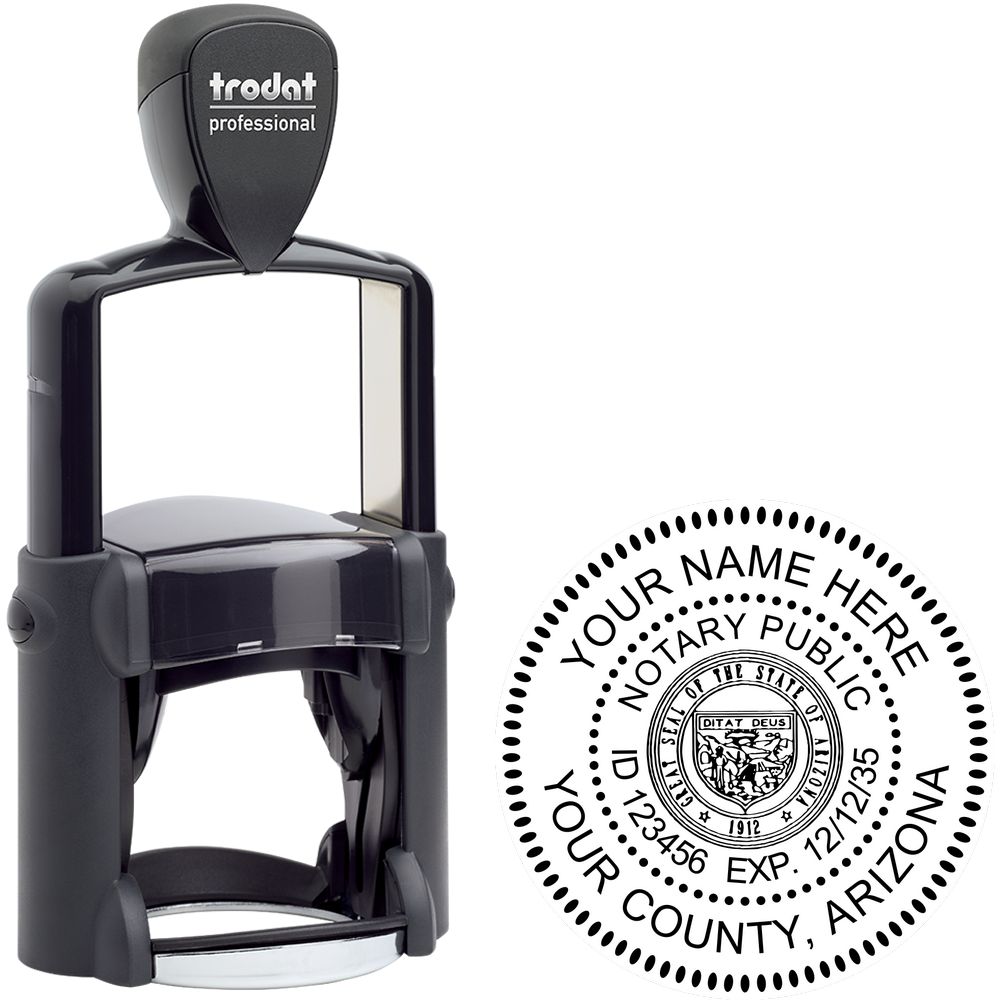
| Stamp | Six face items, including the great seal, your county and your commission number. Up to 1.5 by 2.5 inches. Arizona stamp details | A.R.S. § 41-266 |
| Journal | Paper journal for acts on tangible records; right thumbprint for real property documents and powers of attorney from September 12, 2026 | A.R.S. § 41-319; SB 1479 (2026) |
| Renewal | As early as two months before expiration; pass the exam again, file a new bond and pay $43; new stamp every time | Secretary of State Existing Notaries page |
| Electronic or remote | A separate request for current commission holders; no added fee or bond at this time | Secretary of State Remote and eNotary page |
Record keeping and remote acts differ widely by state. The Arizona rules sit beside every other jurisdiction in notary journal requirements by state and remote online notarization and the electronic seal.
Who qualifies to become a notary in Arizona?
Arizona sets seven qualifications in A.R.S. § 41-269(B). You must be 18, a U.S. citizen or permanent legal resident, an Arizona resident for income tax purposes, able to read, write and understand English, not disqualified, exam qualified, and keeping an approved reference manual.
The tax residency test goes further than a mailing address. The statute requires you to claim your Arizona home as your primary residence on both your state and federal tax returns, so someone who lives in another state and works in Arizona does not qualify.
A.R.S. § 41-271 lists felony convictions, and convictions for crimes of fraud, dishonesty or deceit, among the grounds to refuse a commission, along with a false statement on the application. The New Notary page words it differently: no felony conviction unless your civil rights have been restored, and no conviction for a lesser offense involving moral turpitude or incompatible with a notary's duties. After a revocation, you wait one year before applying again.
What are the steps to apply for an Arizona notary commission?
Take the exam first, then buy the bond, then file. The Reference Manual says the application, bond and fee must be submitted together to be processed, and the Secretary of State puts processing at about four weeks.
- Register for the exam with the testing vendor named on the Secretary of State's New Notary page and get your candidate ID number. The page says to do this before you complete the application.
- Pass the exam with 80% or better. The Reference Manual says a passing score is good for 90 days.
- Buy a four-year $5,000 bond in duplicate from a surety authorized to do business in Arizona. Sign both principal lines the way you sign your application.
- Take the oath of office, which is printed on the bond, and have the bond notarized with jurat wording and no blank lines.
- Complete the New Arizona Notary Web Application and save a PDF or printed copy for your records.
- Submit the signed application, the original bond and the $43 fee together. The duplicate bond stays with you.
- Check your commission certificate for your name, county and dates, then order the stamp and journal.
The bond dates run four years apart, with the expiration date one day short of the fourth anniversary of the effective date. The New Notary page also asks that the bond show your correct county of residence, so check that line before you sign.
What does an Arizona notary commission cost?
Expect $89.75 in fixed charges before your first notarization: $46.75 for the proctored exam and the $43 filing fee. The bond premium, stamp and journal come on top, priced by the companies you buy from.
- Exam: $46.75 per proctored sitting.
- Filing fee: $43, made up of a $25 application fee and an $18 bond filing fee. The fee is nonrefundable.
- Bond: $5,000 of coverage, with a premium set by the surety.
- Stamp and journal: both needed before you notarize.
- Electronic or remote authority: no additional state fee or bond at this time.
Each renewal repeats the exam fee and the filing fee. On the income side, the Reference Manual caps what a notary may charge at $10 per notary public signature.
What is on the Arizona notary exam, and how do you prepare?
The exam has 45 questions drawn from the 2025 Notary Public Reference Manual. You get 60 minutes and need 80% to pass. The manual is built into the exam as an open book resource, so you cannot bring a paper copy.
A.R.S. § 41-270 lets the Secretary of State require an exam of new applicants, renewing notaries and notaries with suspended commissions, and it has done so since July 1, 2025. The same section allows a course of study, but the Secretary of State's notary workshops are not being offered at this time.
Testing is proctored at sites around the state, including Flagstaff, Goodyear, Phoenix, Tempe, Tucson and Yuma. The Secretary of State has temporarily suspended the remote testing option because of a technical issue.
Study the manual itself. It is the source of every question, and A.R.S. § 41-269(B)(7) requires you to keep an approved manual as a reference once commissioned. The Secretary of State posts the Arizona Notary Public Reference Manual as a PDF.
How does the Arizona notary bond work?
Arizona requires a $5,000 surety bond, on file with the Secretary of State before the commission issues. You may notarize only while a valid bond is on file, and the surety is liable if you violate Arizona notary law.
Only a surety or similar entity licensed or authorized to do business in Arizona may issue the bond, and it has to cover acts performed during your term (A.R.S. § 41-269(D)). A surety must give the Secretary of State 30 days' notice before canceling, and must report any payment to a claimant within 30 days.
An employer may not cancel the bond of a notary employee who leaves the job. Buy the bond in duplicate: the original goes to the Secretary of State with your application, and you keep the copy.
What stamp does an Arizona notary need?
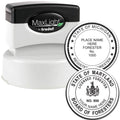
Every Arizona notary needs an inked stamp showing the great seal of Arizona, the words notary public, your name, your county, your commission number and your expiration date. Order it only after your commission certificate arrives and the details on it are right.
Any shape works. The impression may be up to 1.5 inches high and 2.5 inches wide, or up to 1.5 inches across if round (A.R.S. § 41-266(B)). The Secretary of State asks for dark ink, although no statute sets a color. An embosser may be used with the stamp, never instead of it.
The Reference Manual tells new notaries to give the stamp vendor a copy of the commission certificate. Never place the stamp over your signature or any other signature on the document (A.R.S. § 41-266(C)). Our Arizona notary stamp guide walks through each face element.


What must an Arizona notary journal record?
Arizona requires a paper journal for every notarial act on a tangible record. Since September 12, 2026, SB 1479 also requires the signer's right thumbprint for deeds, quitclaim deeds, deeds of trust, other real property documents and powers of attorney.
Under A.R.S. § 41-319, each entry records the date, a description of the document and the type of act, each signer's printed name and address, the type of identity evidence and any fee charged. The Reference Manual adds each person's signature, requires entries in chronological order and says to keep journals for at least five years.
The thumbprint rule has set fallbacks and exceptions:
- If the right thumb is unavailable, take the left thumb or any available finger, and note which in the journal.
- If the signer cannot give any print, record that fact with an explanation.
- It does not apply to a trustee's deed from a judicial or nonjudicial foreclosure, or to a deed of release and reconveyance.
- Remote acts are excluded when the journal holds the signer's credential number and you keep the audio and video recording for at least seven years.
The Reference Manual notes that not all journals have a thumbprint area, so check yours before you notarize a deed. The journal is also a public record: a member of the public who supplies details of a specific transaction may view or copy the entry.


How long does an Arizona commission last, and how do you renew?
An Arizona commission lasts four years. You can renew as early as two months before it ends by passing the exam again and submitting a new application, a new notarized bond and the $43 fee.
The Reference Manual requires a new stamp showing the new expiration date before you notarize under the renewed commission, which puts Arizona among the few states that require a new stamp at every renewal. Any unpaid civil penalty for a late address notice or loss report must be paid before you can renew (A.R.S. § 41-323(C)). The Existing Notaries page lists the renewal filing, and our notary seal expiration guide covers tracking the date.
What happens if you move, change your name or lose your stamp?
Tell the Secretary of State within 30 days when your home, business or mailing address changes; a late notice can bring a $25 civil penalty. A lost, stolen or compromised journal or stamp must be reported within ten days.
Missing the loss deadline carries a $1,000 civil penalty under A.R.S. § 41-323. For a theft, the Secretary of State says to inform your local police first. After reporting, you may replace the stamp, as long as the new one is distinguishable from the old one.
For a name change, send the Secretary of State your exact previous and new names with legal documentation of the change, such as a marriage license or divorce decree.
Can Arizona notaries notarize electronically or remotely?
Yes, once they hold a traditional commission. You request electronic or remote online notary authority through the Secretary of State's online system, naming your technology vendor, and there is no additional fee or bond at this time.
You must contract with a vendor that supplies the technology; the Secretary of State lists vendors but endorses none. The request asks for the vendor's name, website and a description of the technology, and the office says the process takes one to two weeks from submission to certificate. The $10 fee cap applies to electronic and remote acts as well.






Frequently asked questions
How long does the Arizona process take, from exam to commission?
Pass the exam first, then allow about four weeks of processing once the Secretary of State has your complete application, bond and fee. A filing missing any of the three is not processed, and your passing score is only good for 90 days.
Can I notarize outside the county on my stamp?
Yes, anywhere in Arizona. The Reference Manual limits Arizona notaries to acts within the state's boundaries, not within a county. A document headed for another state can still be notarized here if the signer appears before you in Arizona.
Can I become an Arizona notary if I live in another state?
No. A.R.S. § 41-269(B)(3) requires Arizona residency for income tax purposes, with Arizona claimed as your primary residence on your returns. Working in Arizona is not enough on its own.
Is there an official Arizona notary practice test?
The Secretary of State's notary pages we read send candidates to the Reference Manual rather than to a practice test. Every question comes from that manual, so reading it section by section covers the tested material.
Who owns the stamp and journal if my employer paid for them?
You do. A.R.S. § 41-269(G) keeps the stamping device, the commission and any journal of public record entries with the notary, whoever paid. The same section lets you notarize outside your employer's workplace when you are off duty.
How much can an Arizona notary charge?
No more than $10 per notary public signature, according to the Reference Manual. The Secretary of State applies the same $10 per act ceiling to electronic and remote notarizations.
When your certificate arrives and the name, county and dates check out, order your stamp from our Arizona notary stamps and seals collection. For the face layout, see the Arizona stamp requirements page, and compare other states on our national notary seal requirements page.