To become a notary in Arkansas, you must be 18, able to read and write English, a U.S. citizen or permanent resident alien, and an Arkansas resident or a resident of an adjoining state who works or runs a business in Arkansas, then pass the online exam, buy a $7,500 bond and apply to the Secretary of State for $20. A commission lasts ten years. This page walks through the steps, the county filing, the seal, journals and when to renew.
Engineer Seal Stamps compliance desk. Checked against the Arkansas Secretary of State notary pages, FAQs and Notary Public & eNotary Handbook, and A.C.A. §§ 21-14-101 through 21-14-108. Sources read September 2026.
| Requirement | Short answer | Source |
|---|---|---|
| Who may apply | Adults 18 and up who read and write English, hold U.S. citizenship or permanent resident alien status, and live in Arkansas, or in an adjoining state while working or running a business in Arkansas | A.C.A. § 21-14-101; Notary Handbook |
| Disqualifiers | A felony conviction, or a notary commission revoked in the past ten years | A.C.A. § 21-14-101(b) |
| Training or course | No course for a traditional commission; the notary page offers a training video | Secretary of State notary page |
| Exam | Required for new and renewing notaries: 30 online questions, 24 correct to pass | Secretary of State FAQ; Notary Handbook |
| How to apply | Online account in the Secretary of State's filing portal, opened after the exam | Notary Handbook; Notary System User Guide |
| Application fee | $20, plus a card convenience fee | A.C.A. § 21-14-101(c); Notary Handbook |
| Bond | $7,500 surety bond, filed with the recorder of deeds in your county | A.C.A. § 21-14-101(e) |
| Oath | Signed before the circuit clerk, recorded, then sent back to the Secretary of State | A.C.A. § 21-14-101(g); Notary Handbook |
| Commission term | Ten years | A.C.A. § 21-14-101 |
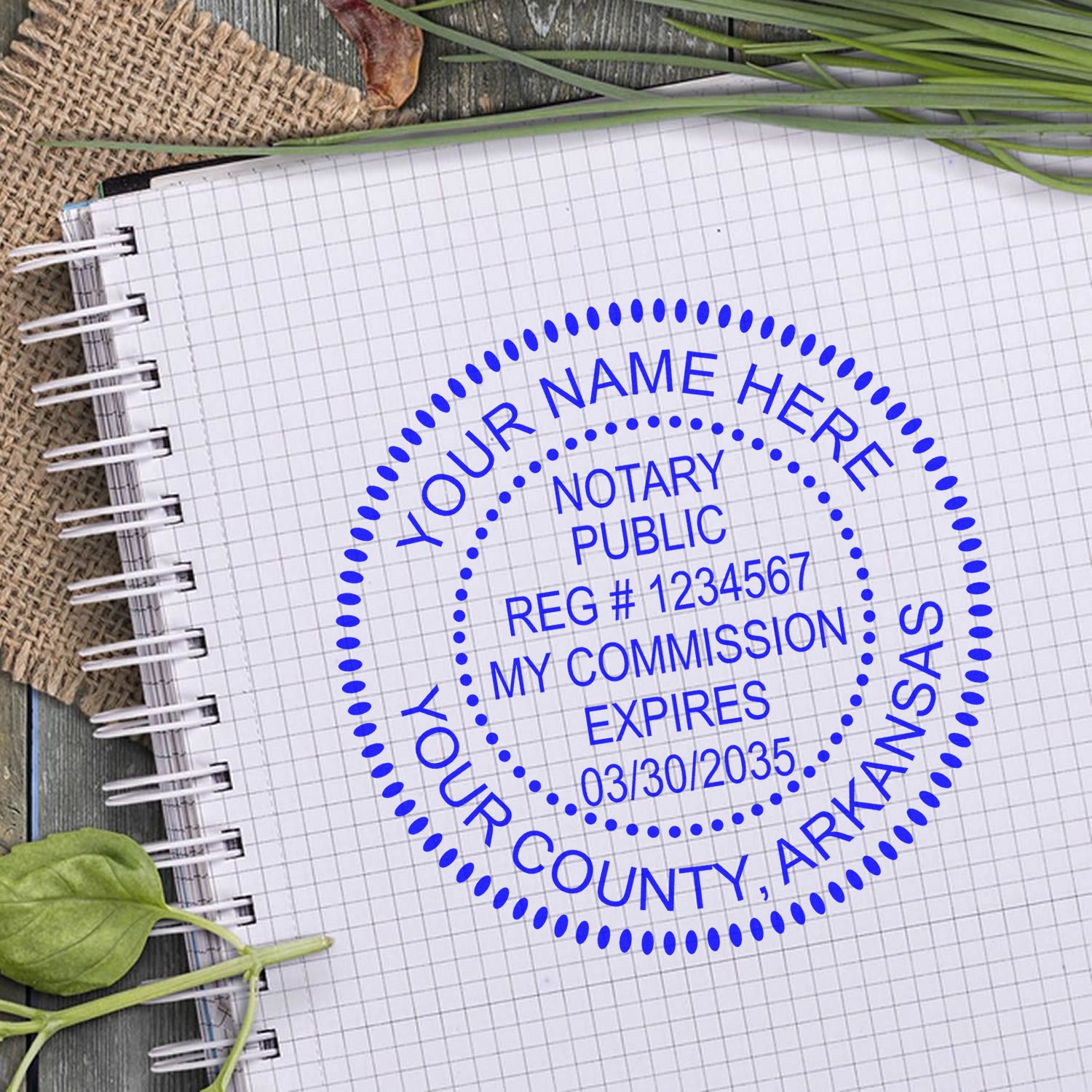
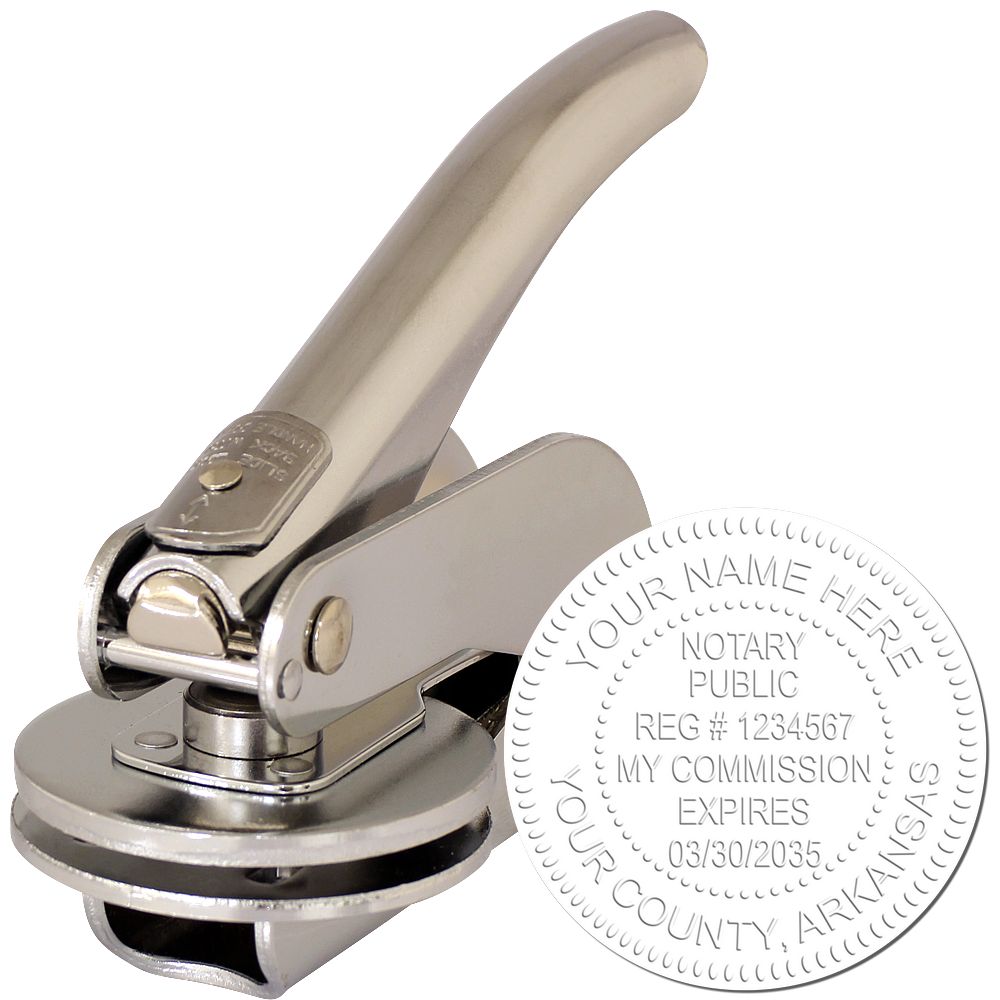
| Seal | Blue or black ink, rubber stamp or embosser, five required items, ordered after the Certificate of Commission. Arkansas seal rules | A.C.A. § 21-14-107; Notary Handbook |
| Journal | Not required by law; highly recommended | Secretary of State FAQ |
| Renewal | New application and $20 at the 60-day mark; exam and a new bond again | A.C.A. § 21-14-108(c); Notary Handbook |
| Changes on file | Tell the Secretary of State and the circuit clerk within 30 calendar days | A.C.A. § 21-14-103 |
| eNotary | Separate commission: $30 training course and exam, $25 online application | Secretary of State eNotary page |
For journal and remote notarization rules beyond Arkansas, compare the 54-jurisdiction journal table with the 54-jurisdiction remote notarization table.
Who can become a notary in Arkansas?
Adults 18 or older who read and write English, are U.S. citizens or permanent resident aliens, and are Arkansas legal residents or legal residents of an adjoining state who work or run a business in Arkansas. A felony conviction rules you out.
A.C.A. § 21-14-101 also bars anyone whose notary commission was revoked in the past ten years, and asks for a valid residential or employment address in Arkansas. A permanent resident alien qualifies with a recorded Declaration of Domicile, a form linked from the Secretary of State's notary page.
Act 215 of 2019 opened a path for a nonresident spouse of a U.S. military service member who works or runs a business in Arkansas. The Secretary of State asks those applicants to contact its office before filing.
What are the steps to get an Arkansas notary commission?
Bond, then exam, then the online application. After approval, you carry the oath certificates and the bond to your county, send the recorded oath back to the Secretary of State, and receive a Certificate of Commission before you order a seal.
- Buy a $7,500 surety bond from an authorized surety insurer or qualifying Arkansas business.
- Create an account in the Secretary of State's online filing portal.
- Pass the online exam to earn the Certificate of Arkansas Notary Exam Completion.
- Complete the New Notary Public Application and upload your bond.
- Pay online by credit or debit card. A convenience fee is charged and shows on your receipt.
- Print two copies of your Notary Oath of Commission once the application is approved.
- Take both copies and the bond to your county's recorder of deeds, where you sign the oath before the circuit clerk, who files it with your original bond.
- Mail the recorded oath to the Secretary of State as soon as possible.
- Receive your Certificate of Commission, then order your seal.
The Secretary of State's Notary System User Guide walks through the portal, from account setup to the bond upload.
How much does an Arkansas notary commission cost?
The state application fee is $20, set by A.C.A. § 21-14-101(c), and a convenience fee is added when you pay online by card. The bond premium and the seal make up the rest, priced by whoever sells them to you.
- Application: $20 plus the card convenience fee.
- Bond: $7,500 of coverage; the premium is set by the surety.
- Seal: required, and replaced at every renewal.
- Renewal: another $20 under A.C.A. § 21-14-108(c), plus a new bond.
- eNotary add-on: $30 for the training course and exam, and $25 for the online application ($20 plus a $5 convenience fee).
On the other side of the counter, the handbook says a notary need not charge for notarial acts, and any fee charged must be reasonable and agreed with the client before the act.
What is on the Arkansas notary exam?
Every new and renewing notary takes an online, multiple-choice exam before the application opens. It has 30 questions, and you need 24 correct answers, a score of 80 percent, to pass.
A.C.A. § 21-14-101(d) lets the Secretary of State require applicants to show they have reviewed the notary law. The notary page links the exam and a training video. Read the Notary Public & eNotary Handbook first; it sets out the application steps and the rules on seals, certificates and changes.
How does the Arkansas notary bond work?
You need a $7,500 surety bond, or an equivalent surety contract, filed with the recorder of deeds in the county where you live. Adjoining-state residents file theirs in the Arkansas county where they work.
A copy goes up with the online application, and the original is filed at the county. The Secretary of State's FAQ points out that many local insurance agencies that handle car, home or renters coverage also write surety bonds.
The bond ties you to a county. Moving to another county transfers your commission there, and A.C.A. § 21-14-102 requires filing the original bond or a certified copy in the new county. Each renewal needs a new bond.
What seal does an Arkansas notary need?
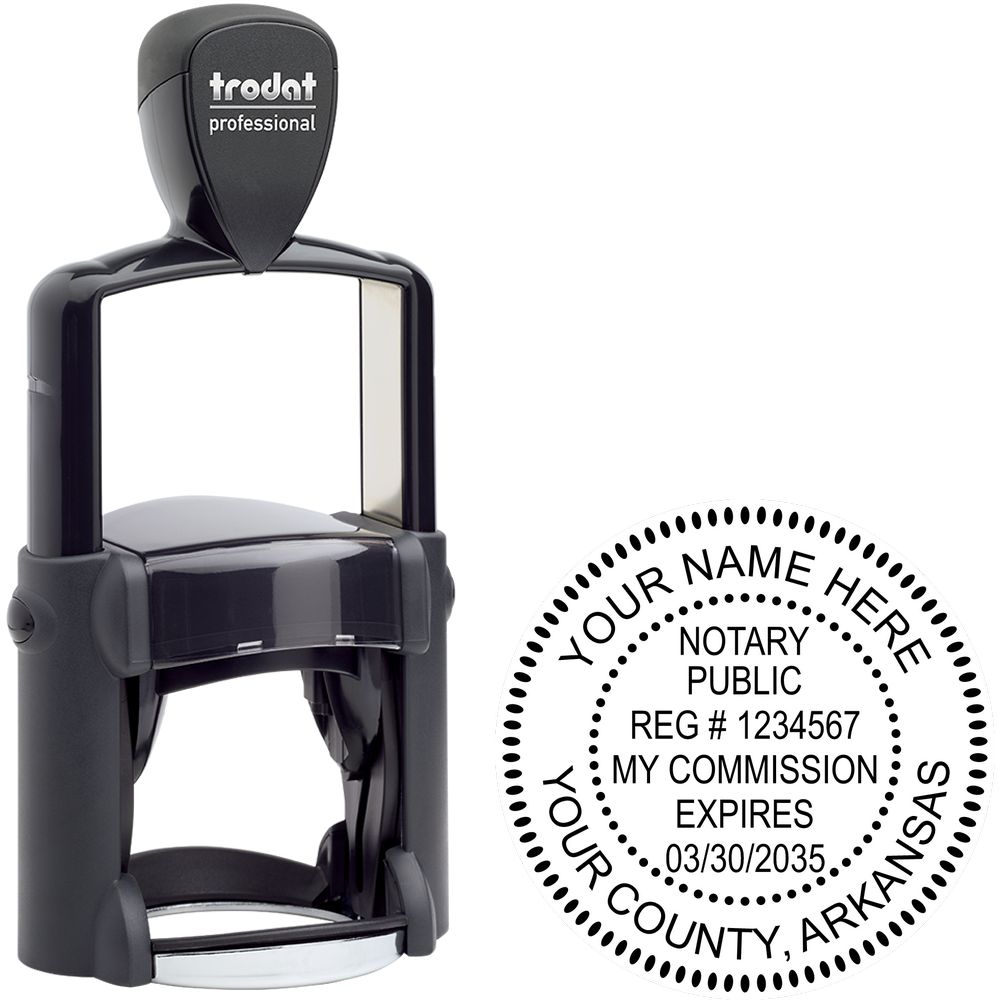
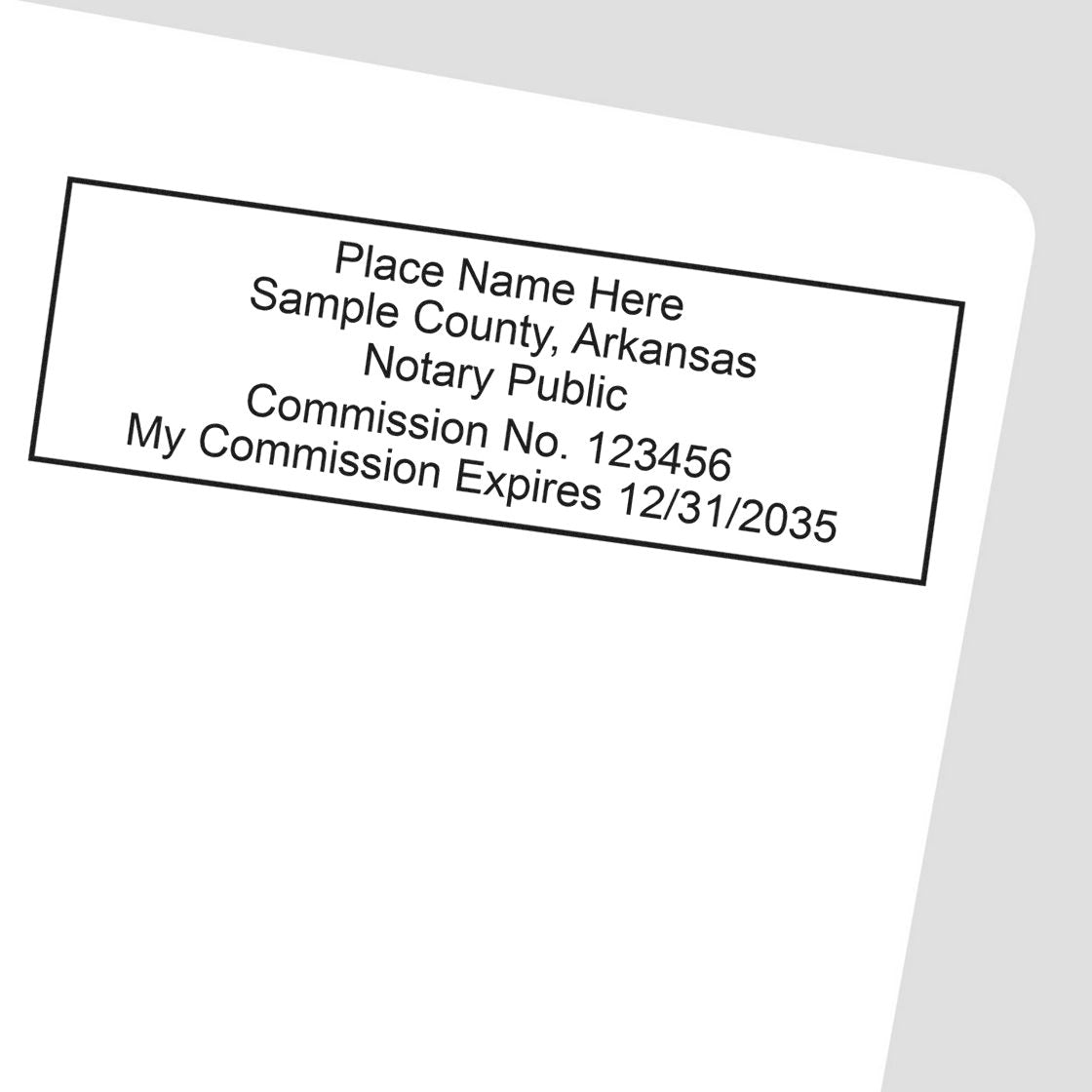
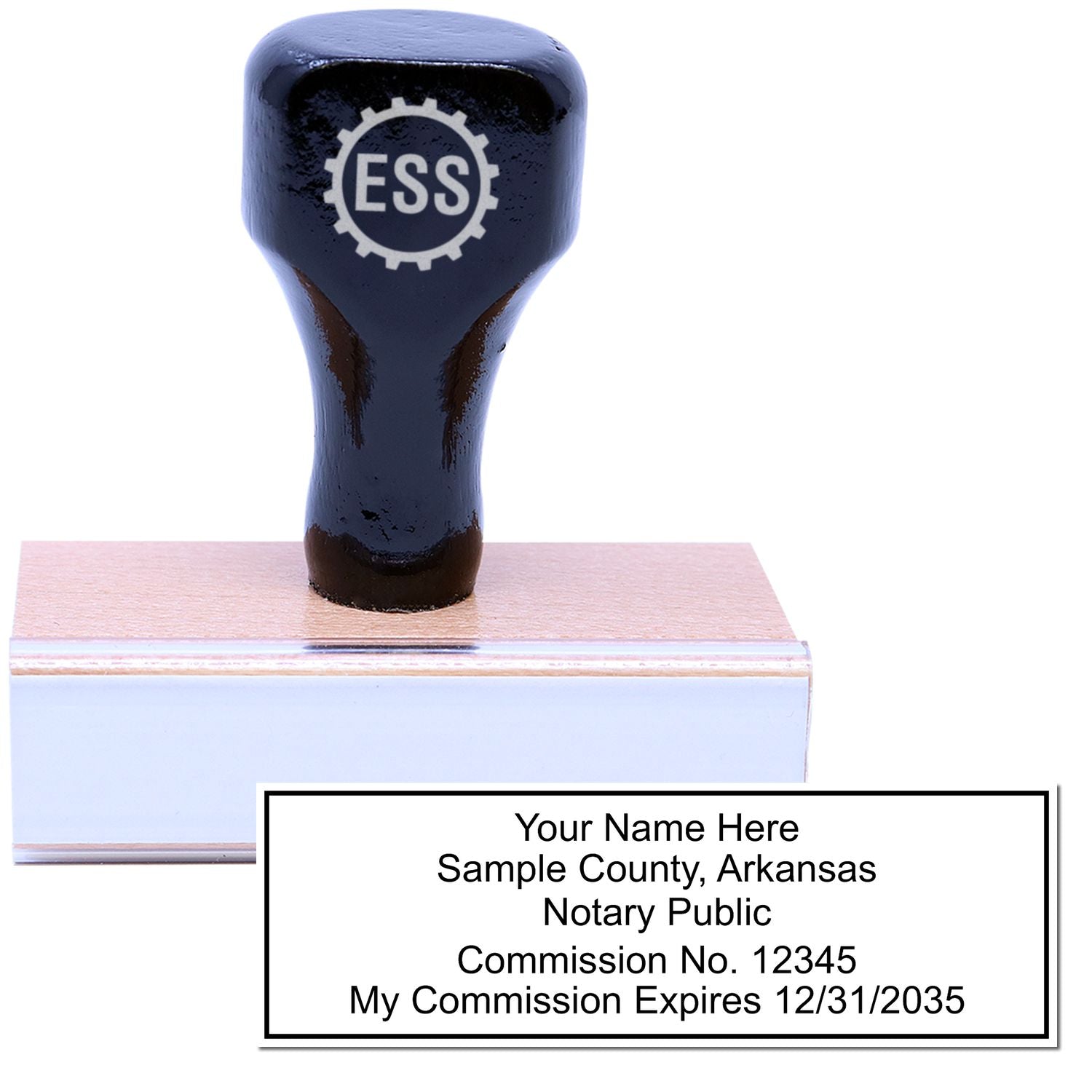
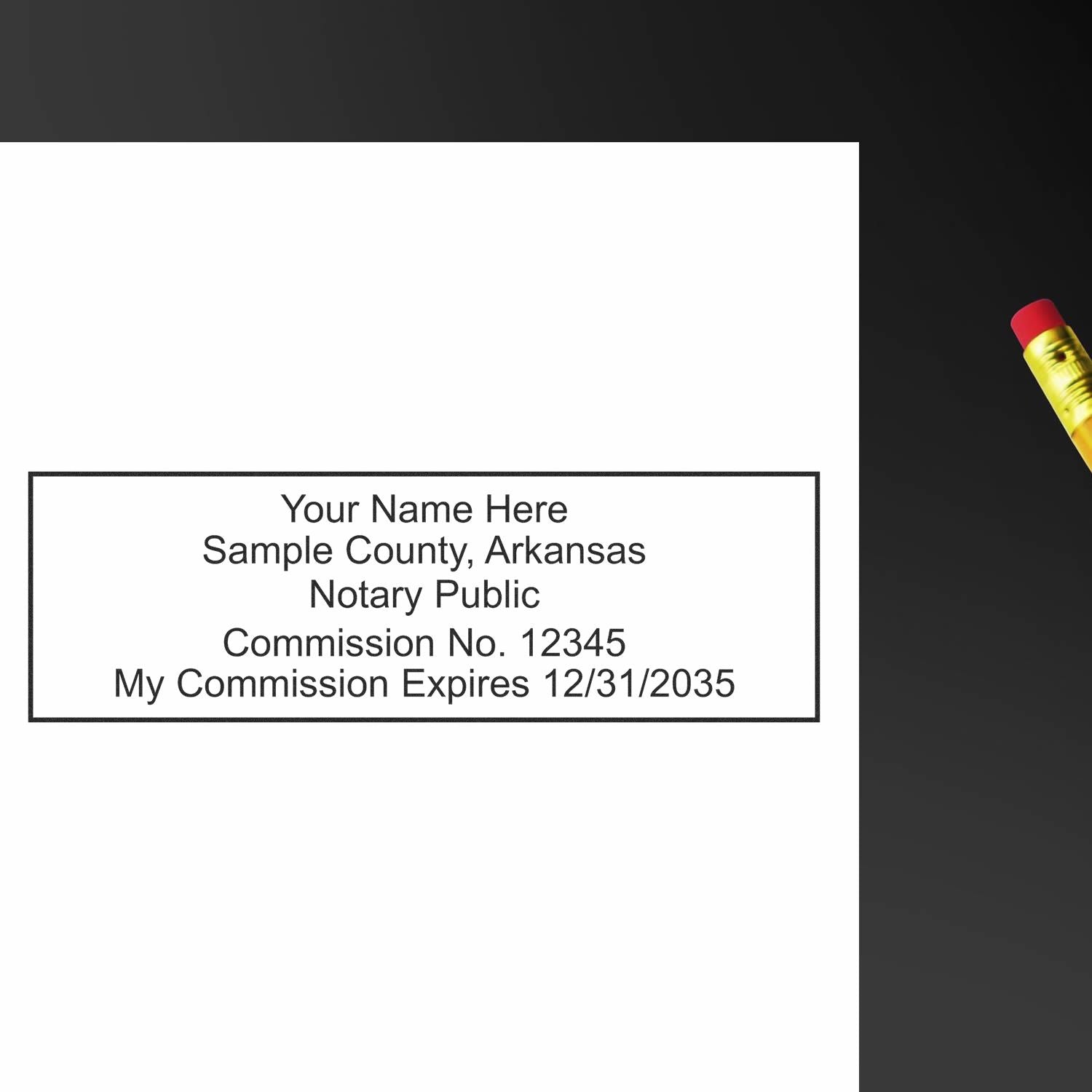
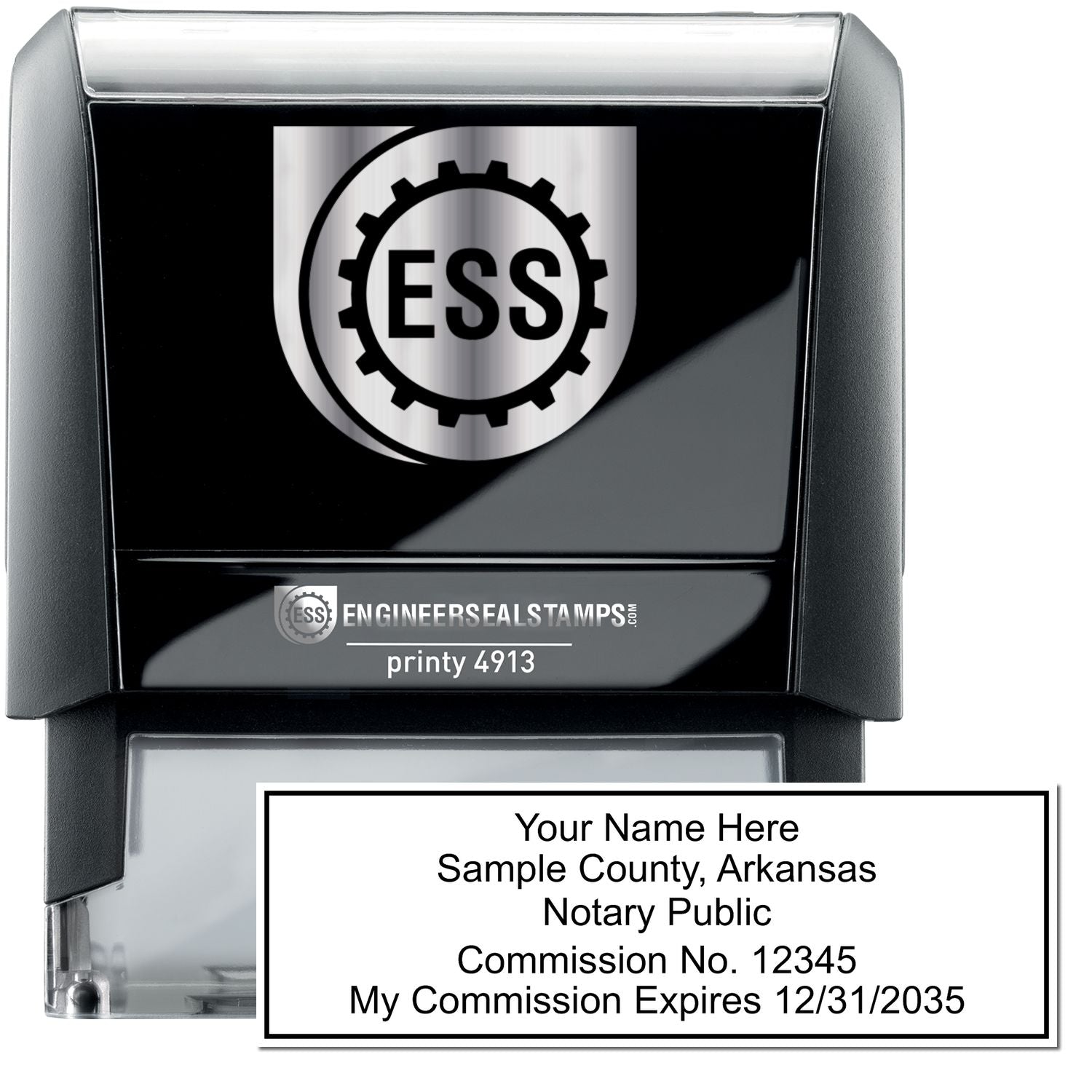
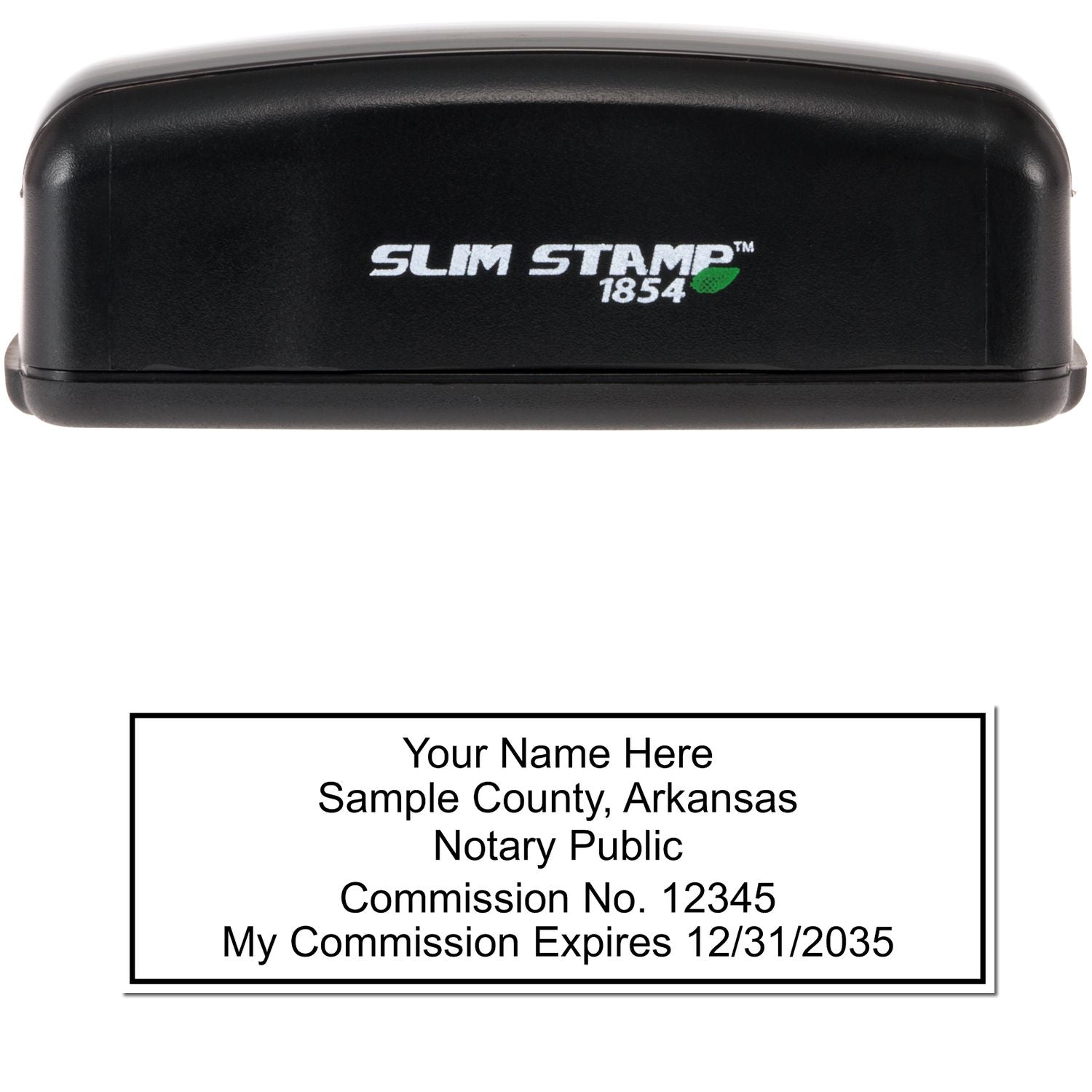
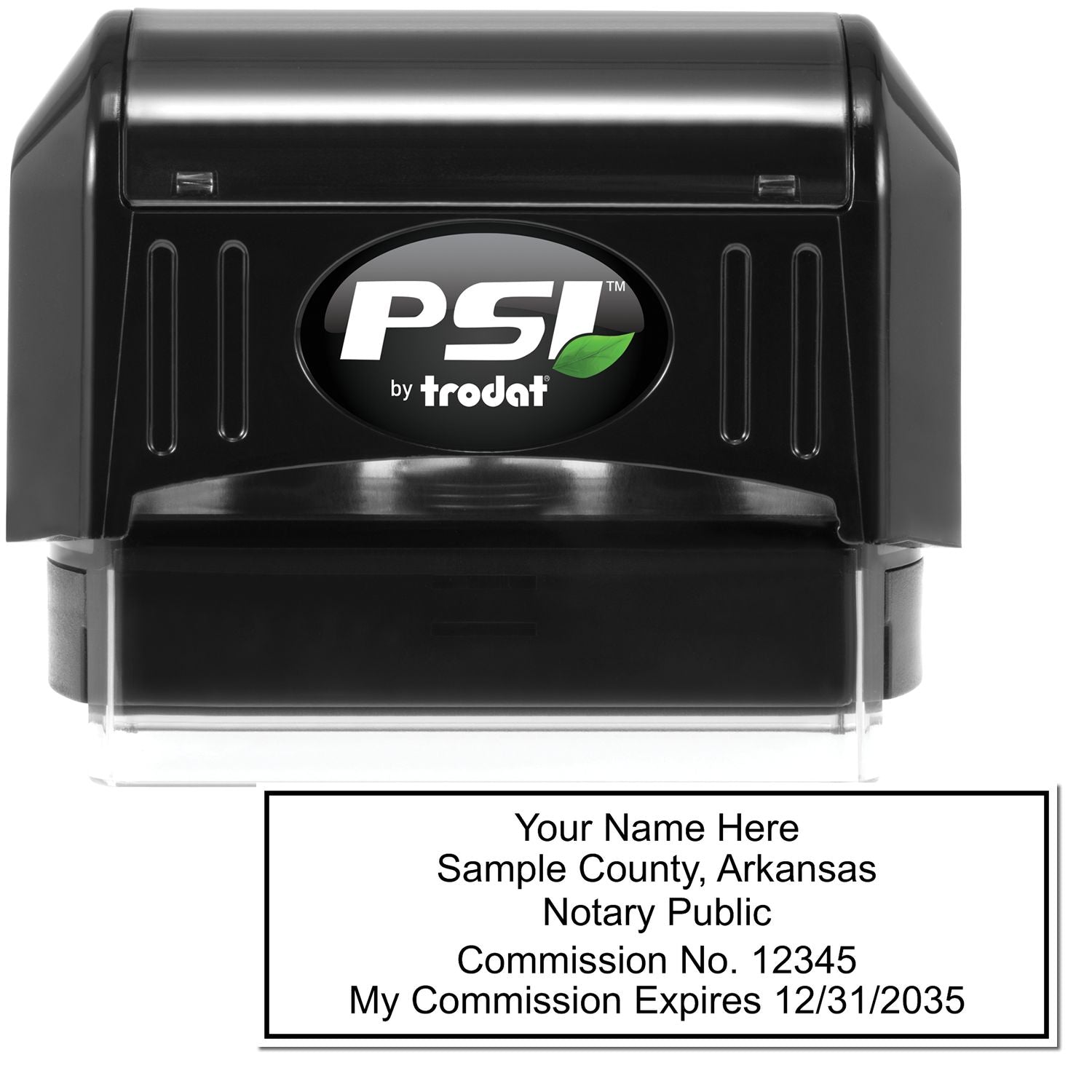
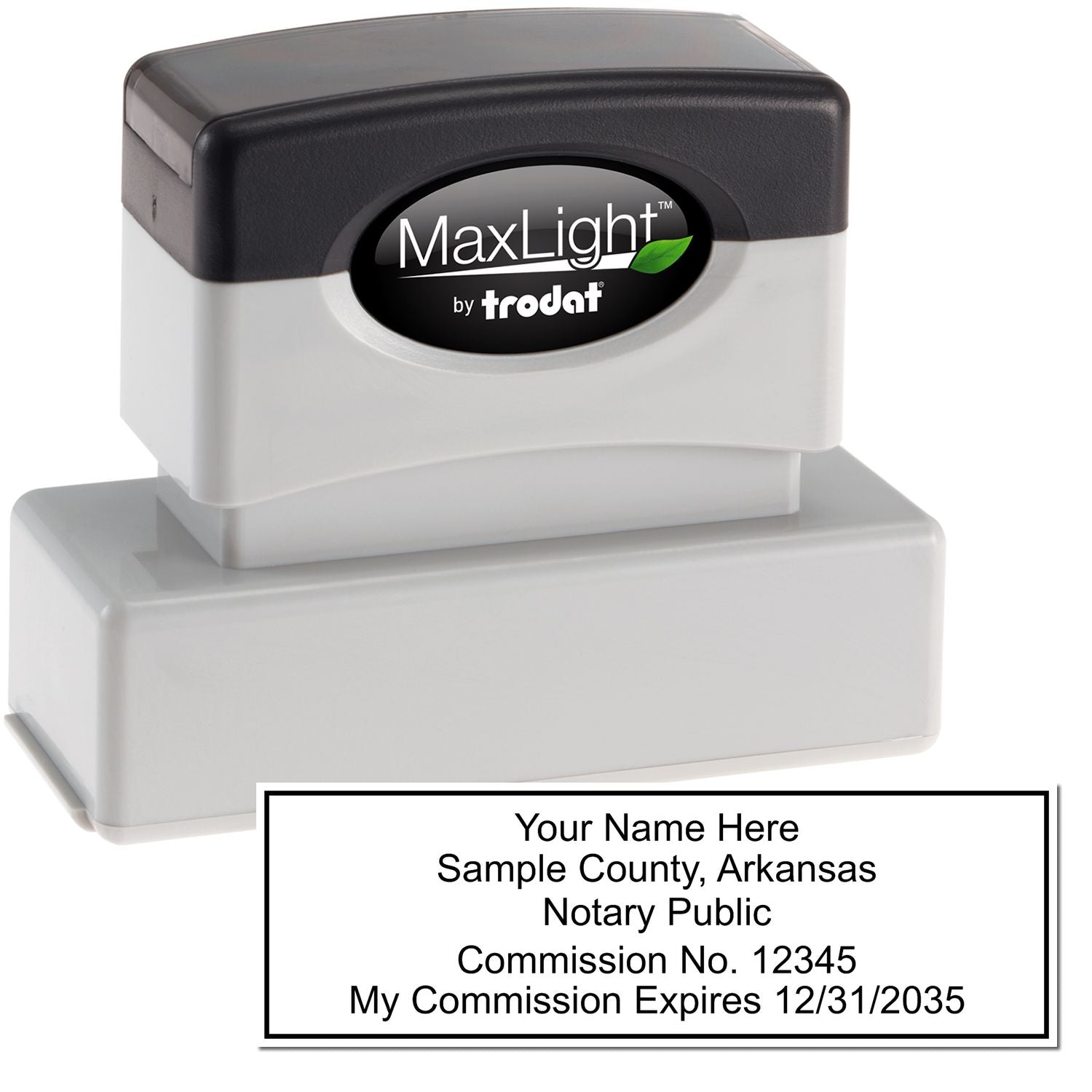
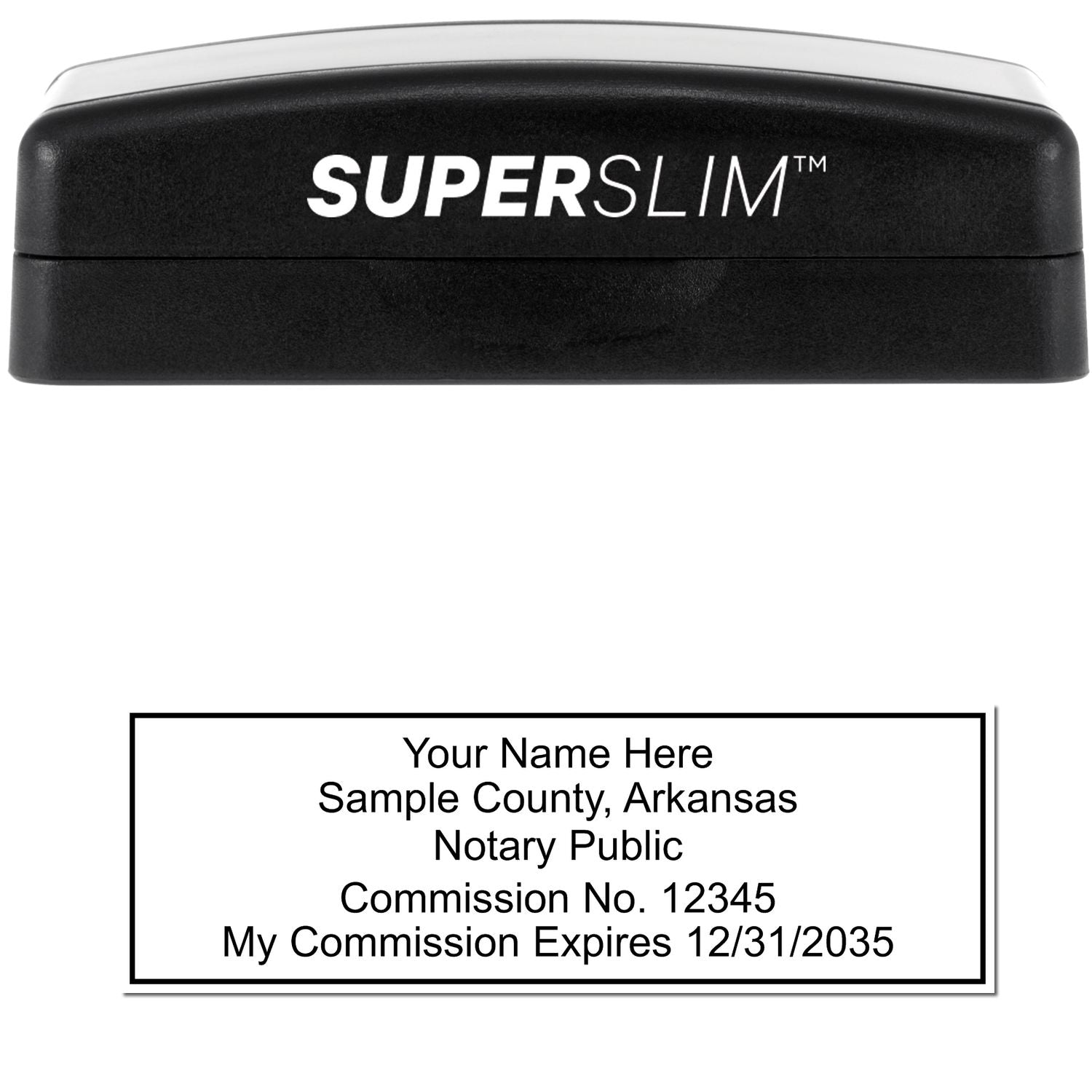
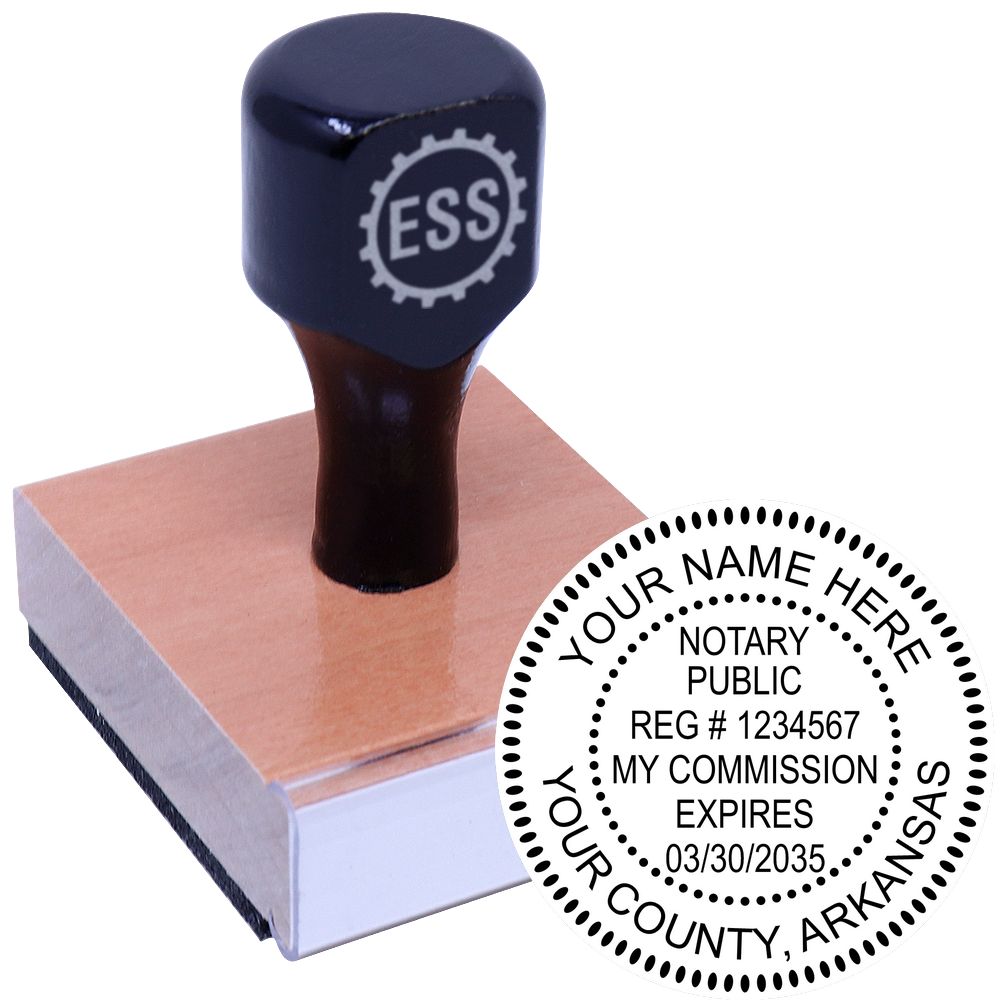
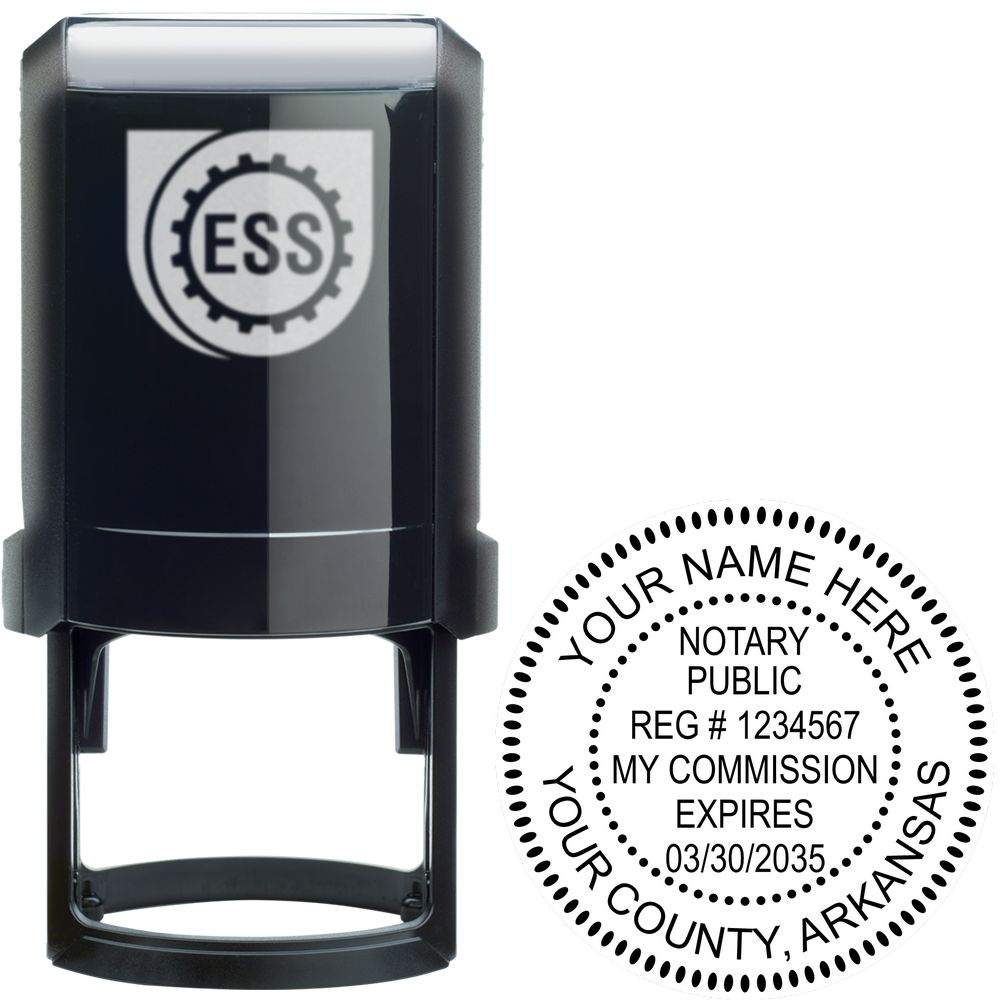
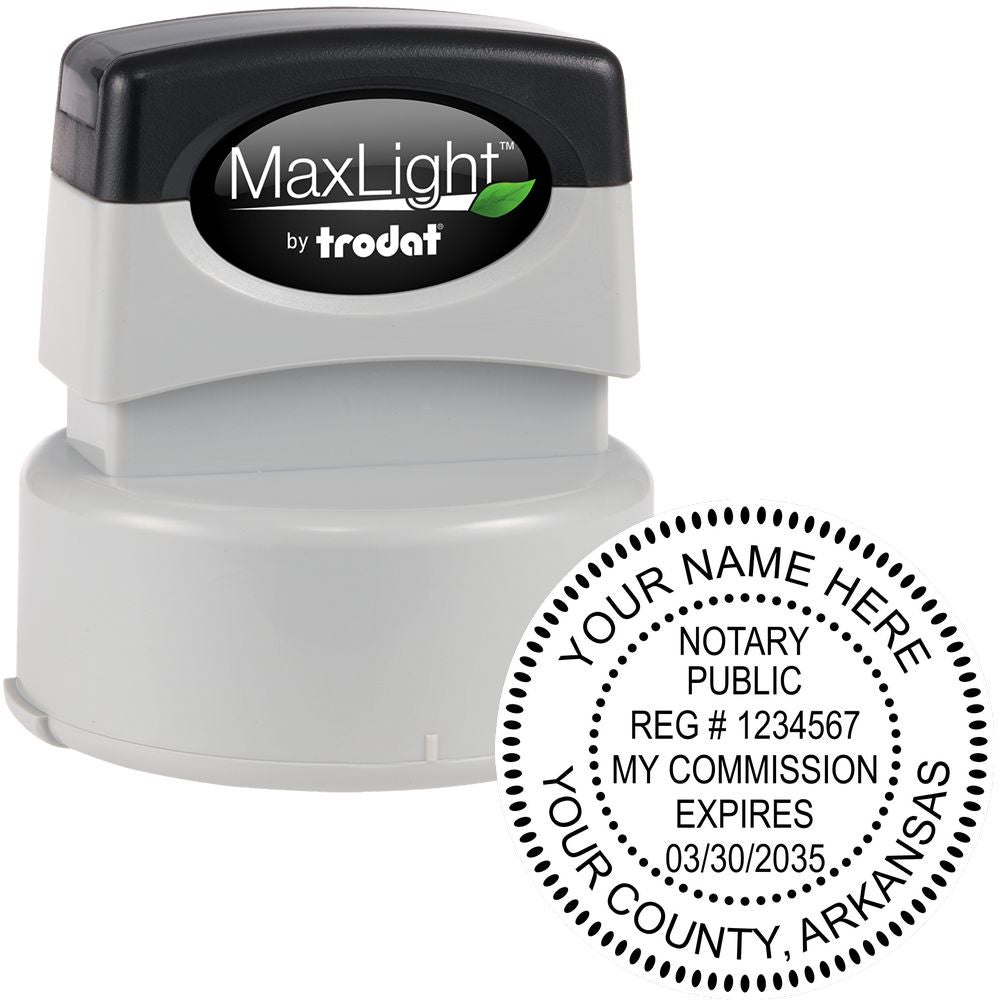
A rubber stamp or embosser inked in blue or black. Its face carries five items: your name spelled as you sign it, your bond county, the words notary public and Arkansas, your commission number, and the date the commission ends. Order it after the Certificate of Commission arrives.
A.C.A. § 21-14-107 sets no size or shape but requires a clear, legible impression that can be photographed. Leave off the state's official seal and any outline of Arkansas, both barred by statute, and the FAQ rules out abbreviations such as AR or Ark. The handbook notes that many stamp makers ask to see the completed Certificate of Commission first.
Our Arkansas notary seal guide covers each required item and the inked embosser option.


Do Arkansas notaries have to keep a journal?
No. The Secretary of State's FAQ says Arkansas law does not require notaries to keep a record of their official acts, but it highly recommends one, because a journal helps you recall a notarization if you are asked to testify about it later.
Ink matters beyond the seal. A.C.A. § 21-14-107 requires your official signature on every notary certificate to be in blue or black ink as well, so match your pen to your seal.



How long does an Arkansas commission last, and when do you renew?
Ten years. A.C.A. § 21-14-108(c) calls for a new application and $20 fee sixty calendar days before your commission expires, and the Secretary of State's FAQ says a renewal cannot be filed any earlier than that.
Renewal runs through your online account, and you pass the exam and secure a new bond again. The FAQ adds that each renewal needs a new stamp, since the expiration date on it changes. Notarizing after expiration is barred by § 21-14-108(b), so check the date on your seal well ahead of the window.
Which changes must an Arkansas notary report?
Report a change of mailing address or status that alters your record to both the Secretary of State and the circuit clerk of your county within 30 calendar days. A move to another county transfers the commission and calls for a new seal naming that county.
After a marriage, deliver a certified copy of the marriage certificate to both offices; a change by court order needs a certified copy within 30 days of its filing. The July 2026 user guide says address changes can be filed online but name changes cannot, so a name change goes in on paper. A new name also means a new seal.
How do you become an Arkansas eNotary?
Hold a traditional commission in good standing, complete the eNotary training course and exam, and file the online eNotary application. The eNotary commission ends on the same date as your traditional one, and refresher training is due every two years.
The course and exam cost $30 and are presented for the Secretary of State by the American Society of Notaries. For remote online notarization, the eNotary page lists the approved solution providers you may use.





Frequently asked questions
Can I notarize outside my county of commission?
Yes. Your county of commission is your county of residence, but your jurisdiction is statewide for the full ten years, according to the Secretary of State.
Does the state send me a notary stamp?
No. The Secretary of State's FAQ says each notary is responsible for getting their own seal from a stamp maker or office supply business.
Can an embosser be my only Arkansas seal?
Yes, if it is inked. A.C.A. § 21-14-107 accepts a rubber stamp seal or a seal embosser, but the impression must be in blue or black ink either way.
I live in Texarkana, Texas, and work in Arkansas. Can I apply?
Yes. A legal resident of an adjoining state who is employed or runs a business in Arkansas qualifies, and your bond and oath are filed in the Arkansas county where you work.
Can I notarize my own signature?
No. The Secretary of State's FAQ describes a notary as an unbiased witness, which you cannot be for your own document.
With your Certificate of Commission in hand, choose a blue or black ink stamp or embosser from our Arkansas notary stamps and seals, laid out with your county and commission number. To see how Arkansas compares with other states, read our notary seal requirements for every state.