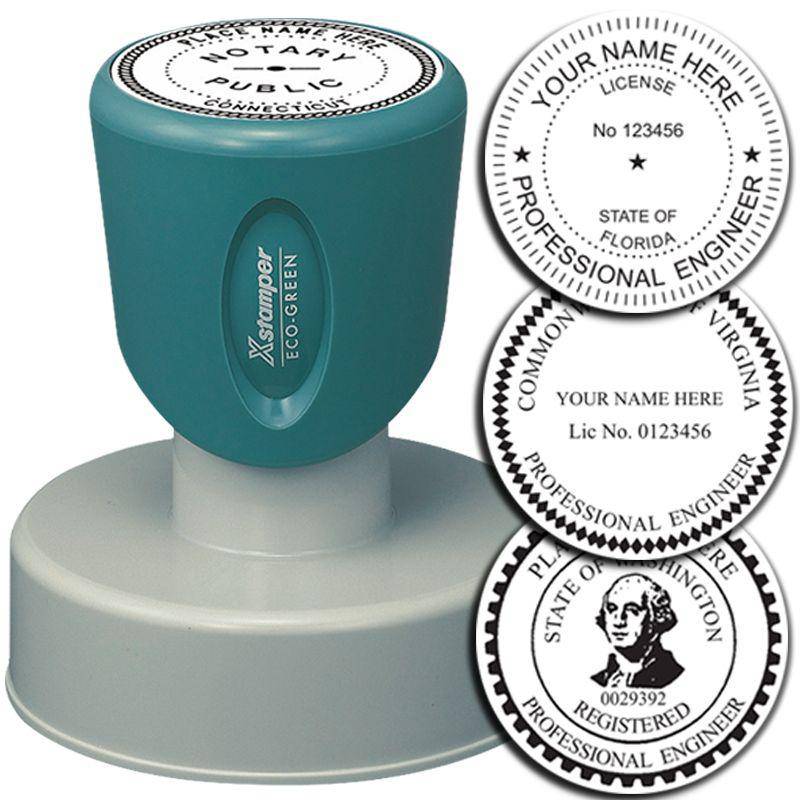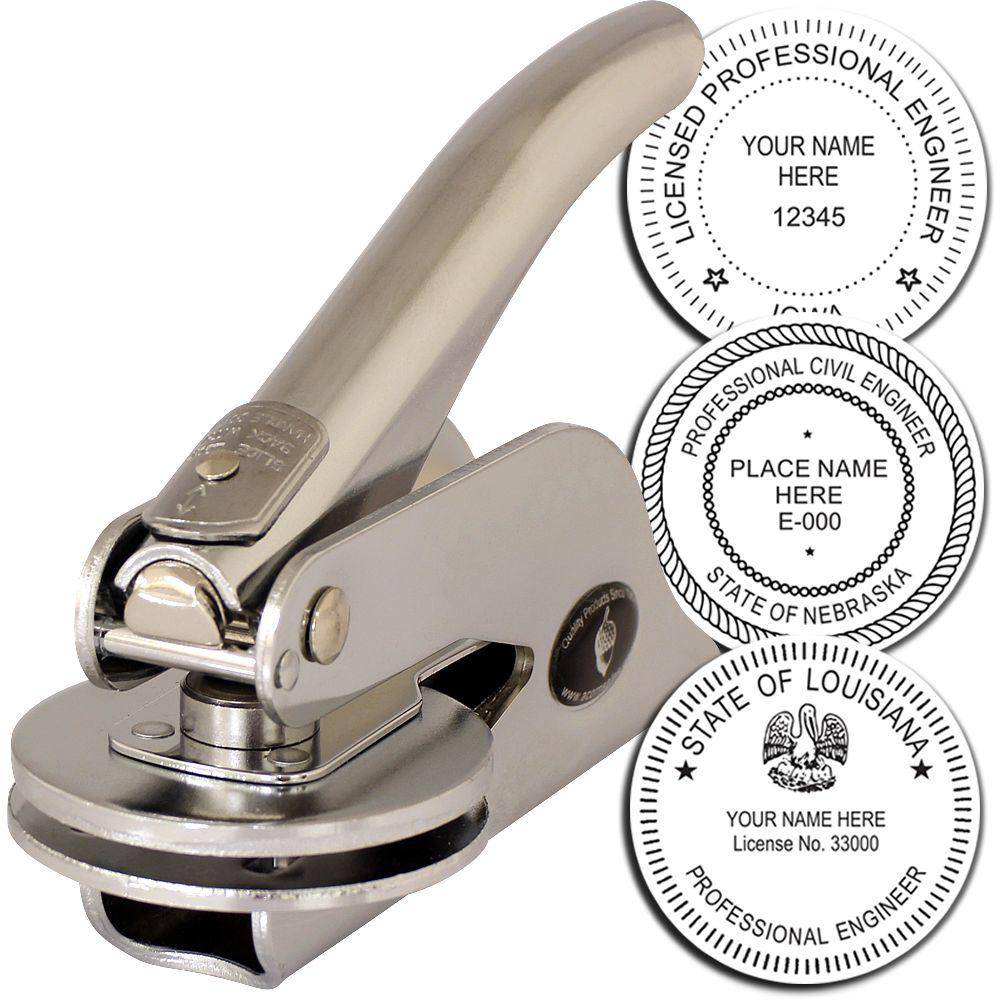

A Pennsylvania engineer's seal is circular and 1 3/4 inch across, with one permitted reduction: a pocket seal may come down to 1 1/2 inch. Four items go on the face, starting with the legend Registered Professional Engineer. Final and complete documents are what call for it. This page covers the face, the two diameters, the signing rule and what the cited sections leave open.
Engineer Seal Stamps compliance desk. Checked against 49 Pa. Code § 37.58(b) and the State Registration Board for Professional Engineers, Land Surveyors, and Geologists. Sources read September 2026.
| Requirement | What the rule says | Source |
|---|---|---|
| When the seal is used | On documents that are final or complete, in two cases: when they go to a client to be kept, and when they are put before a public or governmental agency for final review. | 49 Pa. Code § 37.59(1), (2), (3), (6) |
| Legend | The words Registered Professional Engineer. | 49 Pa. Code § 37.58(b) |
| Name | Your name as registered. | 49 Pa. Code § 37.58(b) |
| Registration number | Your registration number. | 49 Pa. Code § 37.58(b) |
| Commonwealth reference | A reference to the Commonwealth of Pennsylvania. | 49 Pa. Code § 37.58(b) |
| Size and shape | Circular, at a diameter of 1 3/4 inch. A single stated figure, not a range. | 49 Pa. Code § 37.58(c) |
| Pocket seal | The one permitted reduction. A pocket version may be brought down to 1 1/2 inch. | 49 Pa. Code § 37.58(c) |
| Devices | Four are named, and a condition is attached to how they may be used. | 49 Pa. Code § 37.58(d) |
| Signature and date | A signature may be applied across the seal, and one element on the face is protected from being covered. | 49 Pa. Code § 37.59(2), (4), (7) |
| Electronic seals | Not addressed in the seal specification. Sections 37.56a and 37.60 are the provisions cited on the subject. | 49 Pa. Code §§ 37.56a, 37.60 |
For the same rule in the other 53 jurisdictions, read professional engineer seal requirements by state.
When does Pennsylvania require the seal?
When a document is final or complete, and then in two cases. The first is a document that goes to a client to be kept on the client's records. The second is a document put before a public or governmental agency for final review.
Both turn on the state of the document rather than on the kind of project, so working sheets that never reach either destination have not triggered the duty. Why a Pennsylvania engineer seal stamp is worth having ready covers that timing from the practice side.
What has to appear on the face of the seal?
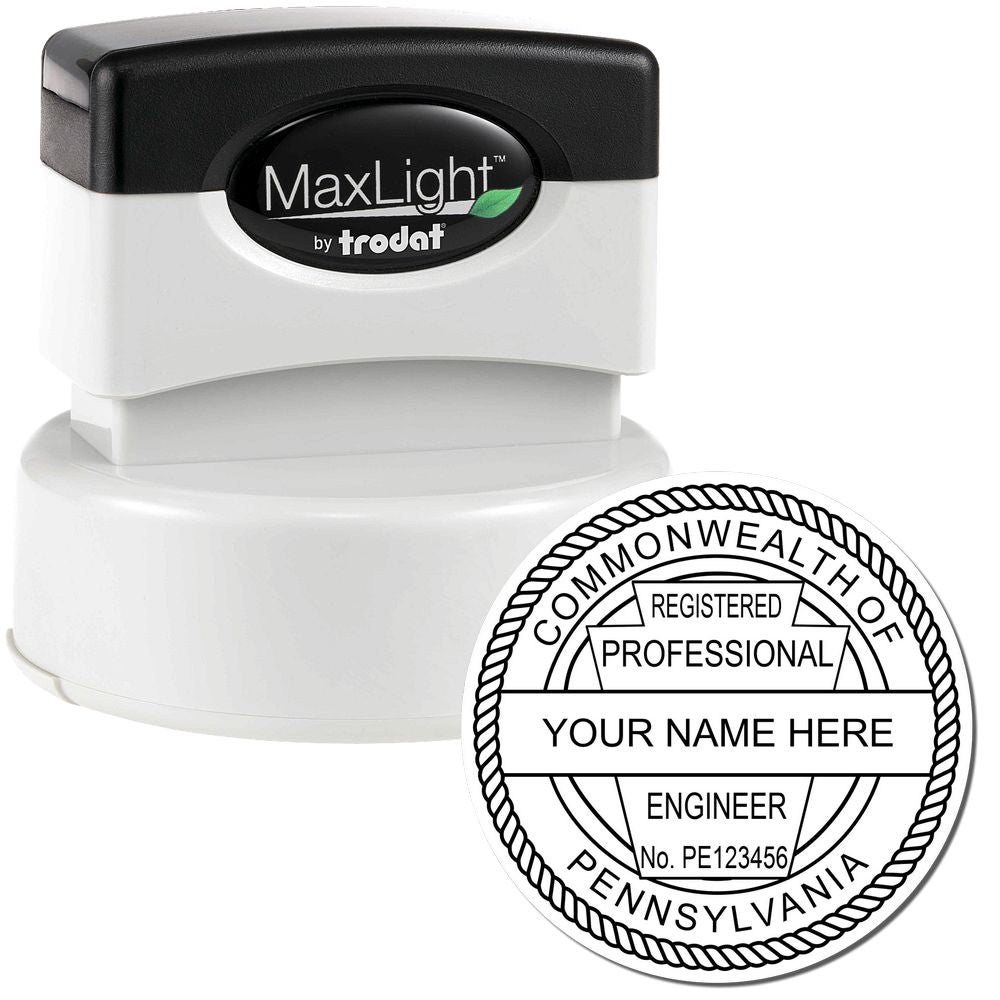
Four items, set by 49 Pa. Code § 37.58(b). The legend is fixed wording rather than a description you can paraphrase.
- The legend Registered Professional Engineer
- A reference to the Commonwealth of Pennsylvania
- Your registration number
- Your name as registered
Two of those four come from your record rather than from the rule, and both should be read back from the register before a die is cut. How a Pennsylvania engineer stamp is laid out goes into how the four sit together on a circular face.



What diameter does the rule set?
1 3/4 inch, stated as a single figure. There is no range and no tolerance language, which puts Pennsylvania among the tighter specifications to buy for.
The practical consequence is that a house standard blank from another state is usually wrong here rather than close enough. A 1 5/8 inch or 2 inch die looks correct on a drawing and still does not meet the stated figure.
Is a smaller pocket seal allowed?
Yes, and it is the only reduction the rule permits. A pocket seal may be brought down to 1 1/2 inch, which is a specific allowance for that format rather than a general tolerance on the main diameter.
Read it as two permitted sizes and nothing between or beyond them. If you keep both, order them together so the artwork matches and the reduced version is proportioned to the full size one.
Which devices may be used?
Section 37.58(d) names four, and attaches a condition to how they may be used. The count and the condition are what the rule fixes, so read that subsection alongside your order rather than assuming a device is covered.
The condition is the part worth attention, because it governs how a derived image relates to the seal you obtained in the first place. Settle it before you commission artwork for anything other than a physical stamp.


How are the signature and the date handled?
A signature may be applied across the seal, and one element on the face is protected from being covered by it. Sections 37.59(2), (4) and (7) are the provisions that carry the detail.
For the artwork that means leaving a signature path that does not run over the protected element. A face crowded to its edges forces the signature onto the one part of the seal the rule keeps clear.
Which documents count as final or complete?
The rule frames it by destination. A document is caught when it is issued to a client for the client's own records, or when it is submitted to a public or governmental agency for final review.
That framing is useful when a set is issued in stages, because it puts the question on where the sheet is going rather than on how finished it looks. The Pennsylvania engineering seal guidelines in detail follow the same sections.
Do the cited rules cover electronic seals?
The seal specification does not set an electronic standard. Sections 37.56a and 37.60 are the provisions cited on the subject, so read those two before issuing a sealed document electronically.
Until you have read them, treat an electronically issued document as a separate question from the physical stamp rather than as the same seal in another format. The dimensional rules above are written for the seal itself.
How often does registration renew?
Every two years, and the period closes on a fixed date rather than on the anniversary of your own registration. Sections 37.18, 37.19 and 37.59(5) are the provisions that set the cycle.
A fixed renewal date is worth diarizing, because a biennial cycle is easy to lose track of and the seal certifies work done under a current registration. The Pennsylvania PE stamp requirements set out in order cover how the credential and the device relate.
Can the seal be used after registration lapses?
The cited sections do not address it. Nothing read for this page states what happens to the device itself during a gap in registration.
Silence is not permission. Sealing certifies work performed under a current registration, so the sound course is to keep the registration current and to stop sealing while it is not. More on the Pennsylvania professional engineer stamp covers what the impression represents.
What should I supply when ordering, and how do I check the result?
Two lines from your record, plus a decision on formats. The legend and the Commonwealth reference are fixed by rule and do not need specifying.
- Your name as registered
- Your registration number
- Whether you want the 1 3/4 inch seal, a 1 1/2 inch pocket version, or both
When the die arrives, stamp a scrap sheet and measure the impression on paper rather than trusting the proof. Photocopy that sheet and read the copy, since the copy is what a reviewing agency holds, then check the registration number digit by digit against the register.

Frequently asked questions
Is a 2 inch seal acceptable in Pennsylvania?
The rule states 1 3/4 inch as a single figure, so a larger die does not meet it. The only departure the rule allows is the reduced pocket version at 1 1/2 inch.
Can I use the 1 1/2 inch size as my everyday seal?
The smaller diameter is tied to the pocket format rather than offered as an alternative for general use. Treat 1 3/4 inch as the working size and the pocket seal as the exception it is described as.
Does my discipline belong on the face?
The four required elements are the legend, a reference to the Commonwealth, your registration number and the name you are registered under. A discipline is not among them, and the legend wording is set by the rule.
Can I sign across the impression?
Yes, and the rule anticipates it. One element on the face is protected from being covered, so leave a clear signature path that avoids it when the artwork is laid out.
Do working drawings that stay in the office need the seal?
The duty attaches when a final or complete document goes to a client to be kept, or to a public or governmental agency for final review. Sheets that reach neither destination have not met that description.
Does a name change mean a new die?
The face carries your name as registered, so once the register changes the old impression no longer matches it. Update the record first, then order from what it says.
Order from the register with your number in front of you, and see the Pennsylvania engineer stamps and seals cut to the 1 3/4 inch specification.